
What’s Up for August 2022? Grab your binoculars for planet viewing, the outlook for the Perseids, and flying with Cygnus the swan.
What are some skywatching highlights in August 2022?
The daily parade of four naked-eye planets in the mornings comes to an end this month. But there are still lots of great highlights, especially if you have access to binoculars. Plus, Saturn and Jupiter are returning to nighttime skies! The outlook for the Perseid meteors isn’t great due to a full moon on the peak night of August 12, but still it’s worth keeping an eye out for early Perseids after midnight the week before. And August is a great month to learn an easy-to-spot constellation – Cygnus the swan.
The morning planet parade we’ve been enjoying the past few months comes to an end in August, with Venus and Saturn making their exits on opposite sides of the sky. But that still leaves Mars and Jupiter high overhead to enjoy.
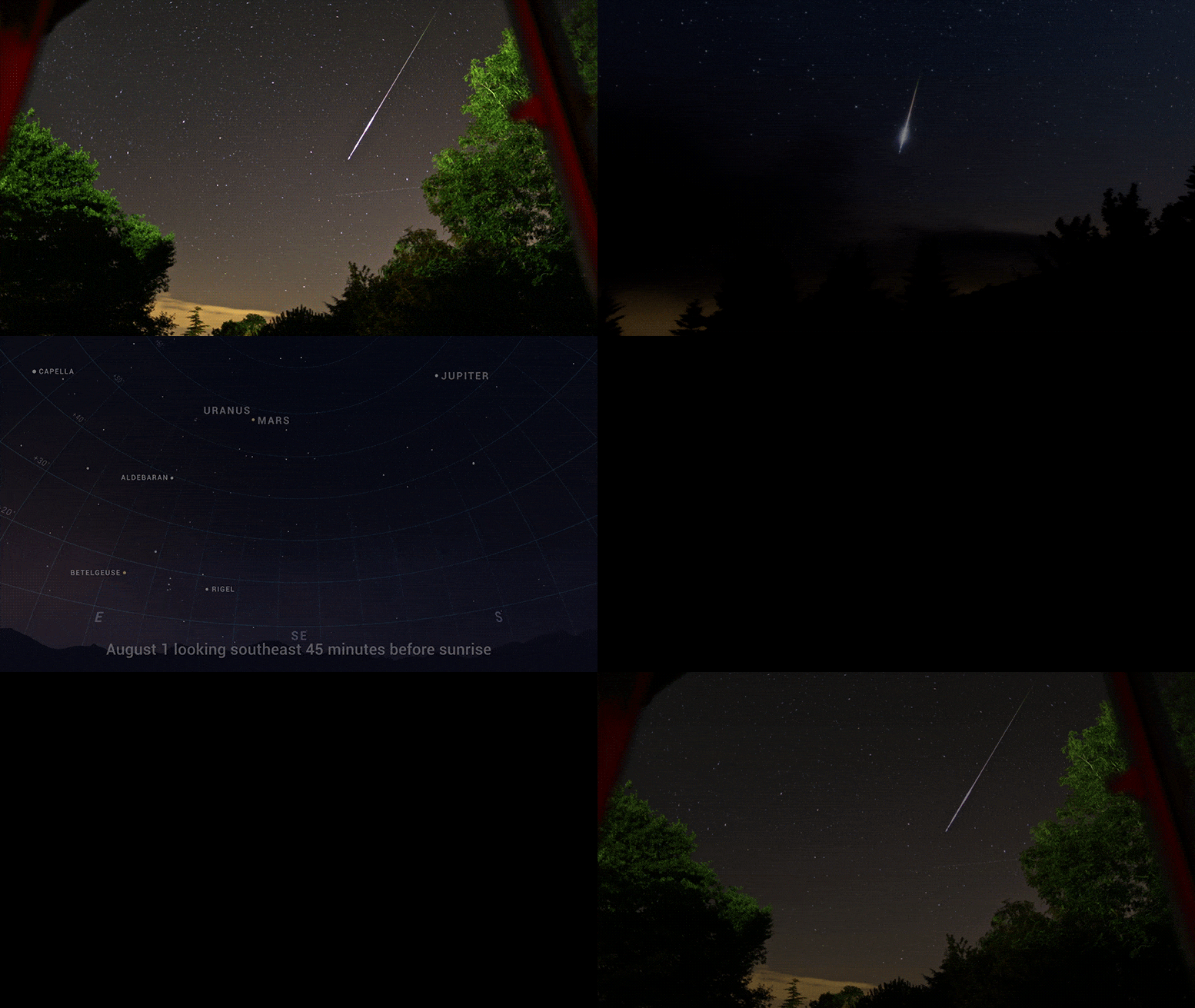
In fact, August begins with a close conjunction of the Red Planet and distant ice giant planet Uranus. Uranus can be difficult to find without a self-guided telescope, but it’s an easy object for binoculars if you know where to look. And on the 1st, you’ll find the tiny, bluish disc of Uranus just northwest of Mars in the morning sky. They’ll easily fit within the same field of view through binoculars.
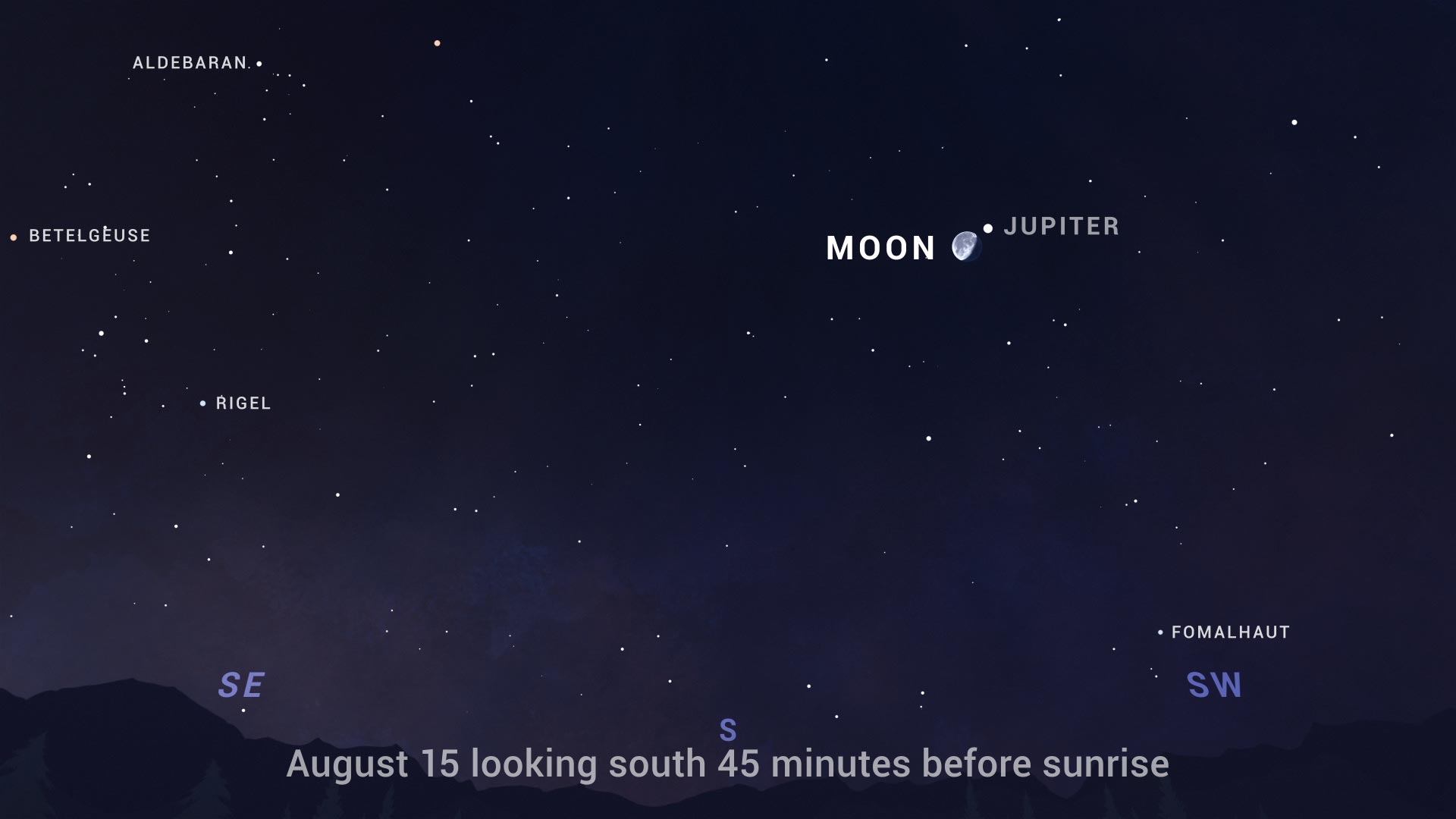
Moving on to the morning of the 15th, you’ll find the Moon only a finger’s width from Jupiter. Like Mars and Uranus, they’ll make a great pairing through binoculars, and you’ll also likely catch a glimpse of Jupiter’s four largest moons.
The Moon then works its way eastward, to join Mars on August 19th. This is another nice pairing for binoculars, plus you’ll find the pair super close to the Pleiades – you may even be able to fit them all into the same view.

Moving to the evening sky, Saturn is transitioning from a late-night and early-morning object to an all-night sight. It’s rising as night falls in August. Look low in the east around 9 p.m. to find it as a steady, yellowish point of light. You’ll find that the Ringed Planet rises a bit earlier each night over the course of the month.
Saturn’s at opposition this month, meaning it’s directly on the opposite side of Earth from the Sun. It’s around this time when the Ringed Planet appears its biggest and brightest for the year.
By the end of the month, you’ll start to notice Jupiter rising around 9 p.m. to join Saturn.
This means Jupiter will be pulling double duty as an early evening object, appearing in the eastern sky, and an early morning one, appearing in the west.
The Perseid meteors are an annual event many of us skywatchers look forward to, as they often produce lots of shooting stars to enjoy. Unfortunately, this year all but the brightest Perseids will be washed out by a full moon on the peak night of August 12.
So, this is probably not the year to make a special trip in order to see the Perseids, but, if you find yourself outside between midnight and dawn on August 13th, don’t forget to look up anyway. Because you never know – you might just catch one of the bright Perseid meteors that defies the glare of the Moon. And don’t forget the occasional early Perseid can streak across the sky as much as a week beforehand.

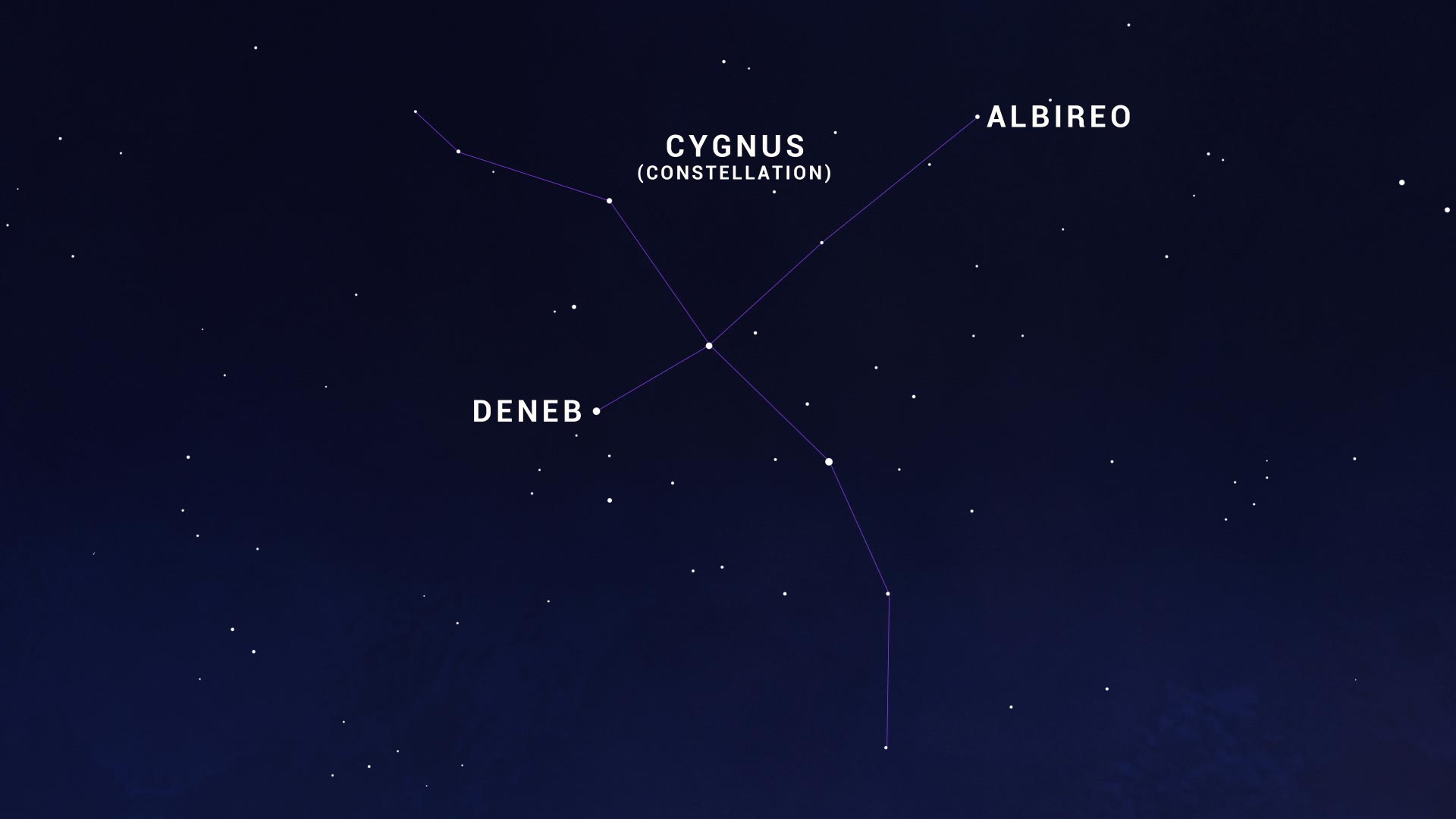
You’ll find the constellation Cygnus, the swan, flying high in the eastern sky after dark in August. Cygnus has an overall shape like a T or cross, and contains a star pattern sometimes called “the Northern Cross.”
Cygnus is anchored by its brightest star, Deneb, which represents the swan’s tail. Deneb is the northernmost of the three stars in the Summer Triangle, and it’s visible even in bright city skies. On the other end of Cygnus from Deneb is double star Albireo, which is a stargazing favorite, as it shows beautiful blue and gold colors through even the most modest telescope.
Now, Cygnus lies right along the plane of the Milky Way, so it’s dense with glittering stars and dark dust clouds, with lots of interest for telescope observers and astrophotographers to enjoy, including the North America Nebula, the Veil Nebula, and the Blinking Planetary Nebula. It also includes the open star clusters M29 and M39, which are visible with binoculars.
However you’re observing the sky where you live, August is a great time to discover the constellation Cygnus, the graceful swan soaring across the dusty lanes of the Milky Way.
Never miss a breakthrough: Join the SciTechDaily newsletter.
Follow us on Google and Google News.