
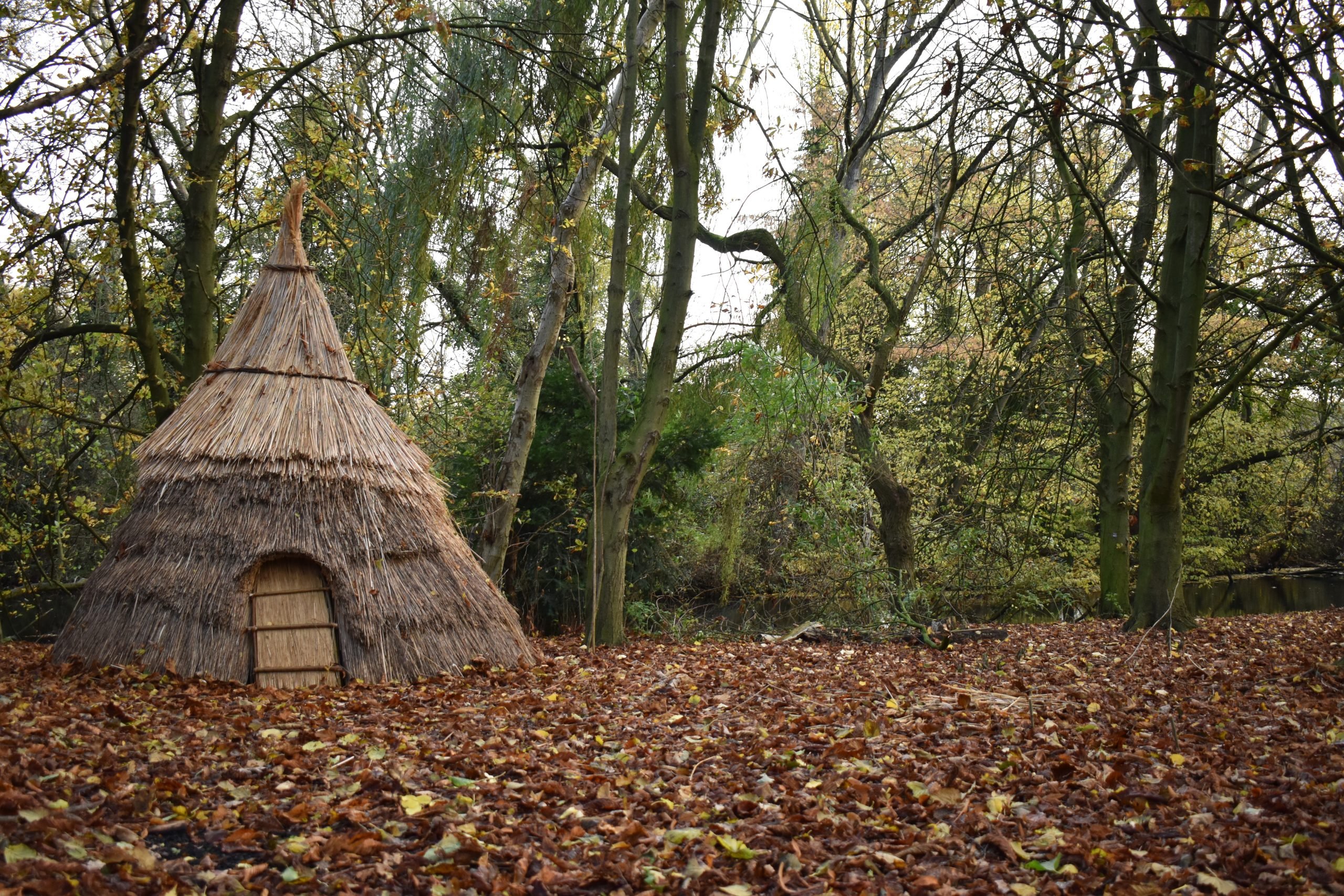
Research at the Mesolithic site of Star Carr in North Yorkshire shows that ancient hunter-gatherers organized their homes into specific activity zones, suggesting a structured approach to domestic life similar to modern home organization, despite their nomadic nature.
Archaeological findings at the renowned Mesolithic site of Star Carr in North Yorkshire suggest that hunter-gatherers maintained an ordered living space by designating specific ‘zones’ for various domestic activities.
The research team from the University of York and the University of Newcastle looked at microscopic evidence from the use of stone tools found inside three structures – potentially cone-like in shape or domed – dating to over 11,000 years ago at the Star Carr site.
They found that there was a range of activities that were likely to have taken place inside the ‘home’, including wood, bone, antler, plant, hide, meat, and fish-related work. The researchers then plotted out spatial patterns for these activities to pinpoint where within the dwelling these activities might have occurred.
Zoning in Ancient Dwellings
Dr Jess Bates, from the University of York’s Department of Archaeology, said: “We found that there were distinct areas for different types of activity, so the messy activity involving butchery, for example, was done in what appears to be a designated space, and separate to the ‘cleaner’ tasks such as crafting bone and wooden objects, tools or jewelry.
“This was surprising as hunter-gatherers are known for being very mobile, as they would have to travel out to find food, and yet they have a very organized approach to creating not just a house but a sense of home.
“This new work, on these very early forms of houses suggests, that these dwellings didn’t just serve a practical purpose in the sense of having a shelter from the elements, but that certain social norms of a home were observed that are not massively dissimilar to how we organize our homes today.”
Previous work has also shown that there is evidence that hunter-gatherers kept their dwellings clean, as well as orderly, with indications that sweeping of the inside of the structure took place.
Early British Dwellings and Social Norms
Star Carr provides the earliest known evidence of British dwellings and some of the earliest forms of architecture. One of the structures found was believed to be shaped like a cone and was constructed out of wood from felled trees, as well as coverings possibly made from plants, like reeds, or animal hides. There is still very little known about why hunter-gatherers would build such structures and continued to throughout the Mesolithic period.
Dr. Bates said: “Not only do we now know that hunter-gatherers were constructing these dwellings, but they had a shared group understanding of how to organize tasks within them.
“In modern society, we are very attached to our homes both physically and emotionally, but in the deep past communities were highly mobile so it is fascinating to see that despite this there is still this concept of keeping an orderly home space.
“This study shows that micro-scale analysis can be a really exciting way of getting at the details of these homes and what these spaces meant to those who lived there.”
Reference: “Spatial organisation within the earliest evidence of post-built structures in Britain” by Jessica Bates, Nicky Milner, Chantal Conneller and Aimée Little, 15 July 2024, PLOS ONE.
DOI: 10.1371/journal.pone.0306908
Never miss a breakthrough: Join the SciTechDaily newsletter.
Follow us on Google and Google News.
5 Comments
Perhaps it’s time to drop the prejudices, imprinted onto our brains by Hollywood movies, about ancient civilisations being unruly and primitive. Then discoveries like this one won’t surprise many.
Agreed. Over and over I shake my head in disbelief that modern scientists and anthropologists actually would assume previous civilizations would be some how lesser than us. Of course you would want to have different areas for different types of activities. And the immediate stereotype that was applied to Neanderthals was ridiculous.
Having lived purely primitively myself, I find that most modern humans believe [falsely] that ancient cultures were little more than dirty, stupid, suffering, barbaric, creatures and that true living and culture didn’t come along until our Industrial- and Agricultural Revolutions happened–which ironically have made us evolve into a sick, stupid, disconnected, destructive, unhappy, barbaric civilization literally exhibiting the pathology of a cancer upon the planet. We’ve destroyed hundreds of thousands of years worth of wisdom and cultures in a blink because of avarice and ego and believe our decadence is a good thing. It’s disgusting.
Hey Kurt, that was pretty well said!
I would be inclined to argue that we have also gained a considerable amount of fascinating knowledge in the last 450 years. The problem is that our society is sill raddled with those psychopathic leaders who have done what all “pack” leaders have always done, but that our 450 years of new learnings has given them the tools that they should not have, from the ability to progandise their stupidities and violences broadly across the globe to using weapons far more violent than the stone axe.