
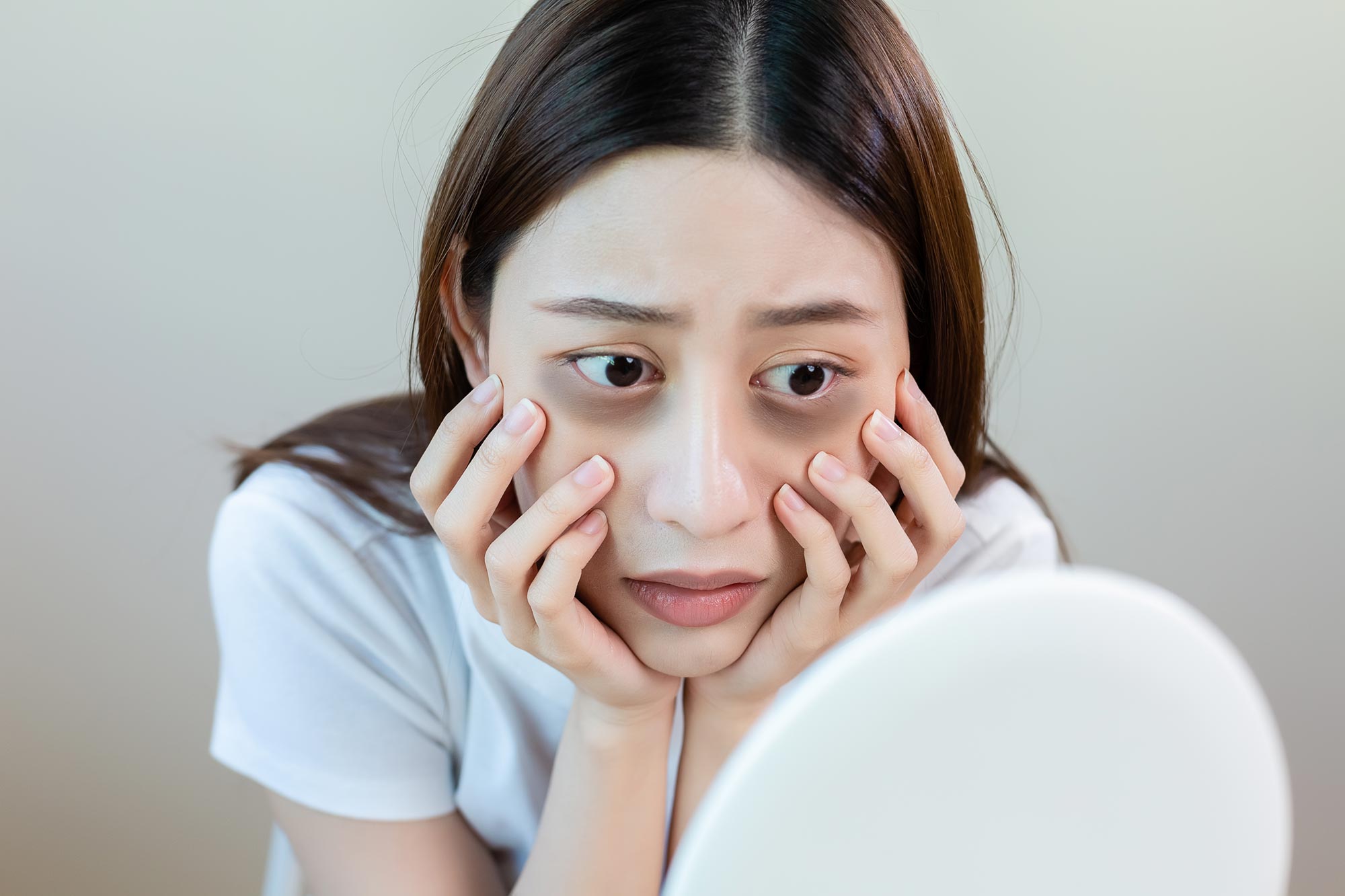
Researchers have identified a potential biological signature of sleep loss in saliva, bringing scientists closer to an objective test for detecting dangerous fatigue.
A driver who has been awake for an entire day can be as impaired as someone who is legally intoxicated. Yet unlike alcohol, there is no roadside test that can objectively determine whether a person is dangerously sleep deprived. Researchers now report evidence that a simple saliva sample may reveal telltale signs of severe sleep loss, raising the possibility of a future test that could identify fatigue-related impairment.
The findings, published in ACS’ Journal of Proteome Research, come from a study that examined how sleep deprivation alters the chemical makeup of saliva. Scientists identified a distinct pattern of molecules that appeared after participants stayed awake for 24 hours, offering what may be the first measurable biological signature of acute sleep loss.
Drowsy driving contributes to thousands of crashes, injuries, and deaths each year, but fatigue is often difficult to detect and can be challenging to prove after an accident. While alcohol and drugs can be measured with breath, blood, or saliva tests, no equivalent tool currently exists for sleep deprivation.
“Until now, sleep deprivation has been impossible to measure biochemically — and yet it is one of the greatest burdens of our time,” says Kraemer, the corresponding author of the study. “This study introduces the first direct biomarkers of sleep loss in saliva under real-world conditions, marking a milestone in forensic investigations.”
Comparing Different Sleep Conditions
The researchers enrolled 20 healthy young adult men who typically sleep seven to nine hours per night. Each participant completed three sleep conditions in random order, with a one-week break between them: total sleep deprivation (one night without sleep), sleep restriction (four nights with two fewer hours of sleep than usual), and a well-rested condition (about eight hours of sleep).
Saliva samples were collected before and after each condition and analyzed for their metabolite content. The researchers identified 10 molecular differences between samples from the sleep deprived and well-rested conditions. However, they found no significant metabolic differences between the sleep restricted and well-rested groups. Using the metabolites that changed after sleep loss, the team trained a predictive model that correctly identified sleep deprived samples 94% of the time.
Some of the model’s errors may have been caused by differences in how individuals recover from sleep loss. For instance, several participants still did not show a fully rested metabolic profile after sleeping for eight hours following a full day of wakefulness. This suggests that eight hours of recovery sleep may not be sufficient for everyone.
The results indicate that a specific pattern of salivary metabolites could serve as a biological “sleepiness fingerprint.” Such a tool could eventually help identify sleep deprivation in situations where objective measurements are needed, including roadside evaluations.
According to Kraemer, the researchers are now conducting a large international study to further test the model. The effort will include more than 1,000 samples collected from shift workers, women, and frequent drivers to determine how well the approach performs across a broader population.
Reference: “Leveraging the Metabolic Fingerprint of Sleep Deprivation and Sleep Restriction for Forensic Applications: A Machine Learning Study in Oral Fluid Metabolomics” by Michael Scholz, Andrea E. Steuer, Akos Dobay, Hans-Peter Landolt and Thomas Kraemer, 6 May 2026, Journal of Proteome Research.
DOI: 10.1021/acs.jproteome.5c01064
The authors acknowledge funding from the Fund for Road Safety (Fonds für Verkehrssicherheit FVS).
Some of the authors have filed a patent related to the method for determining the metabolic sleepiness markers.
Never miss a breakthrough: Join the SciTechDaily newsletter.
Follow us on Google and Google News.