
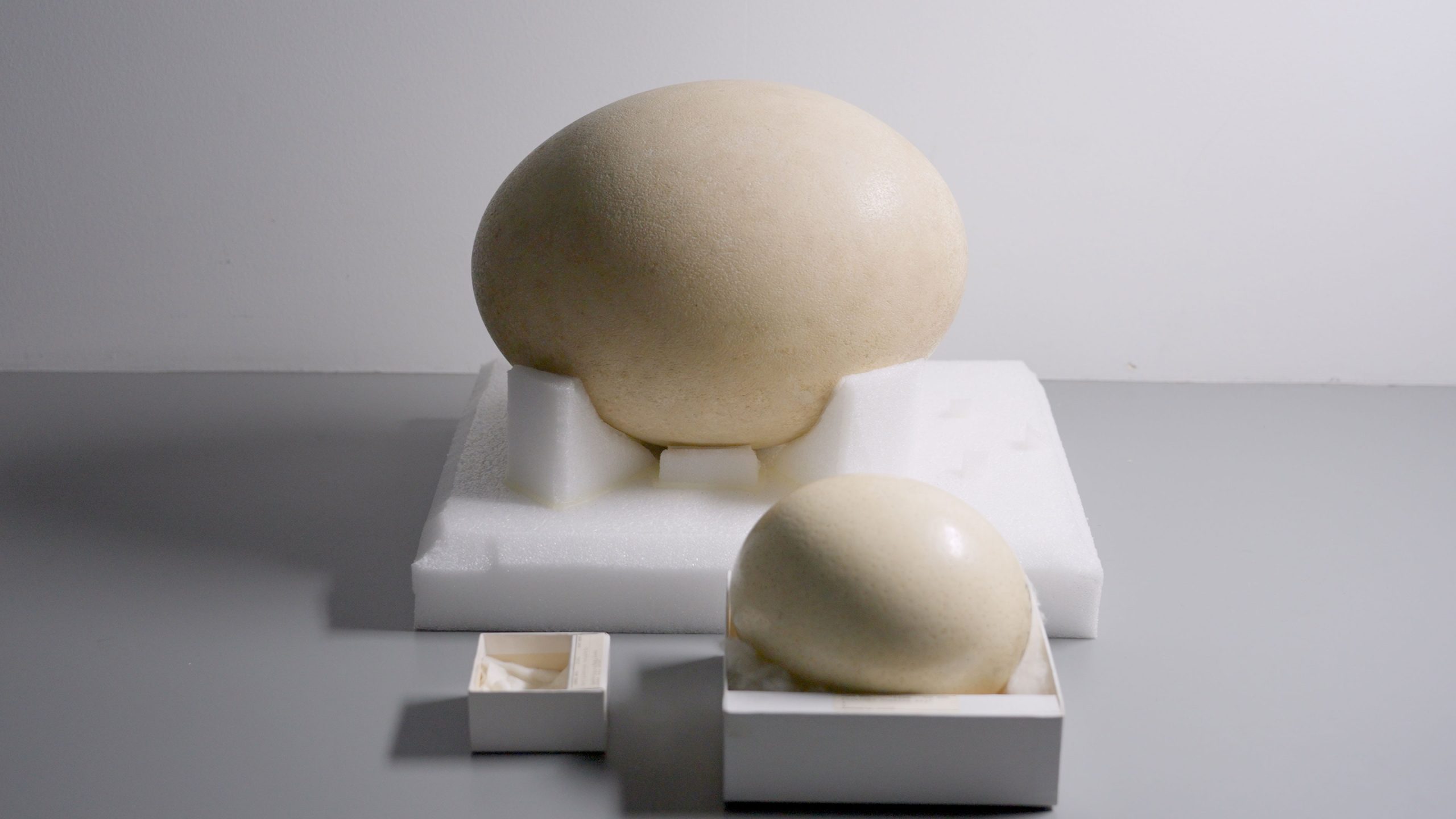
Analysis of living vertebrates shows that changes in brain evolution helped drive major shifts in reproduction across dinosaurs and birds.
A bird egg can look surprisingly oversized for the body that produced it. That puzzle becomes even stranger when viewed through deep time: the largest known bird eggs exceed the largest eggs found from nonavian dinosaurs, even though many of those dinosaurs were far bigger than any living bird.
A new study offers a possible explanation. Researchers from the American Museum of Natural History and Princeton University found a fundamental link between brain size and offspring size, suggesting that species with relatively larger brains tend to produce fewer, larger young.
The findings, published in the journal Royal Society Open Science, draw on reproductive and anatomical data from mammals, birds, and reptiles. The results indicate that growing a large brain requires more energy and developmental investment in each offspring, whether that investment appears as a larger egg or a larger newborn.
The discovery helps explain one of the more unexpected patterns in vertebrate evolution. As birds became smaller than many of their dinosaur ancestors and relatives, their eggs did not simply shrink in proportion. Instead, the evolution of larger brains may have pushed birds toward larger offspring and, in turn, larger eggs.
“At first glance, this seems counterintuitive,” said Stephanie Lechki, the lead author of the study and a postdoctoral fellow at Princeton University. “Many non-avian dinosaurs were enormous, yet even the biggest dinosaur eggs were smaller than the largest bird eggs. Our results suggest that the answer lies in brain evolution. As birds evolved larger brains, they also evolved larger offspring, which required larger eggs.”
Brain size reframes reproduction
Reproductive strategies differ widely across living vertebrates. Birds and mammals usually invest in a smaller number of relatively large offspring, while reptiles, including most dinosaurs, often produce many smaller offspring.
Scientists have previously suggested that these differences might be tied to factors such as metabolic rate or brain size. But much of that work considered mammals and birds separately, making it harder to see whether a broader pattern stretched across major vertebrate groups.
The new study looked at mammals, birds, and reptiles together within a single evolutionary framework. That wider comparison revealed a consistent connection between relative brain size and offspring size across these major groups of land vertebrates.
Dinosaur fossils gain context
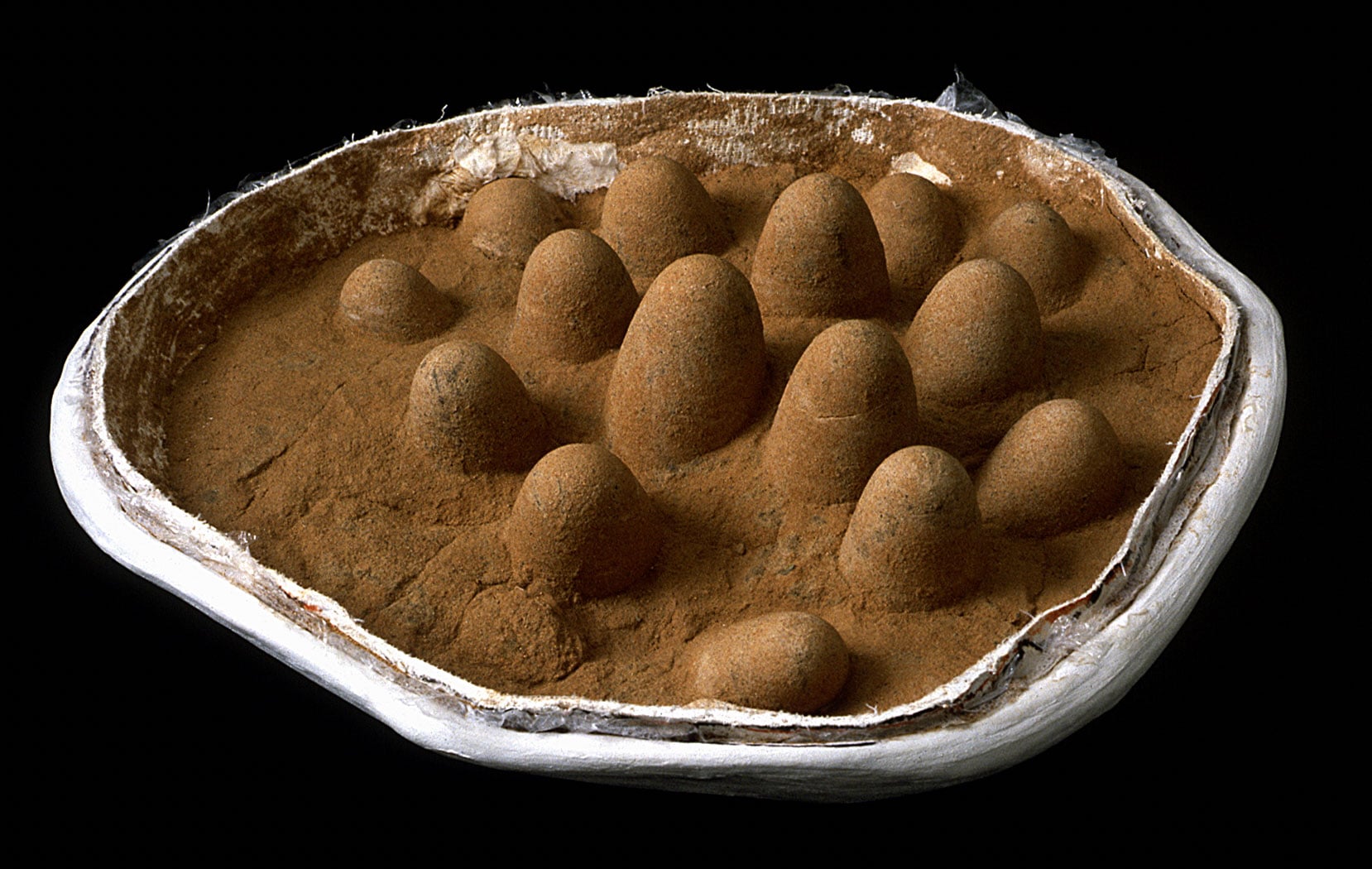
The results also help place important dinosaur reproductive fossils in a broader evolutionary story. Those fossils include nesting oviraptorosaurs uncovered during American Museum of Natural History expeditions to the Gobi Desert in the 1990s.
Such discoveries have changed how scientists understand dinosaur reproduction, but they are often discussed as isolated examples. The new research suggests they may reflect a larger pattern linking brain evolution, reproductive investment, and the transition from dinosaurs to birds.
“This work places those remarkable fossils into a much larger macroevolutionary picture,” said study co-author Roger Benson, the Museum’s Macaulay Curator of Dinosaur Paleobiology. “The relationship between brain size and offspring size may have had cascading effects throughout the dinosaur-to-bird transition. If larger brains required larger offspring, and larger offspring required larger eggs, then other aspects of anatomy and behavior may have evolved in response.”
Bigger eggs could reshape behavior
Larger eggs can affect more than reproduction alone. They may require a wider pelvic canal for laying, nest structures that allow better airflow during incubation, and more parental investment after hatching.
The study suggests that brain enlargement may have indirectly shaped several traits in the lineage that led to modern birds. Changes in egg size could have influenced nesting behavior, pelvic anatomy, and the level of care offspring needed after they emerged.
Fossil evidence still has limits
Some details of reproduction remain difficult to recover from extinct animals. One major challenge is estimating how many times an animal reproduced each year, since that kind of life history information rarely leaves clear evidence in fossils.
Future work will test whether the same evolutionary patterns appear among living species that reproduce multiple times per year. The researchers also plan to examine other physiological factors that may help explain differences in reproductive frequency.
Reference: “Evolutionary drivers of reproductive output variation among amniotes, and the origins of large offspring in birds” by Stephanie Constance Lechki and Roger B. J. Benson, 24 June 2026, Royal Society Open Science.
DOI: 10.1098/rsos.251708
Never miss a breakthrough: Join the SciTechDaily newsletter.
Follow us on Google and Google News.
1 Comment
In Genesis 3:16 , God says to the woman, “I will sharply increase your pain in childbirth; in pain you will bring forth children.
The destruction of the Dinosaur and creation of the mammal.