
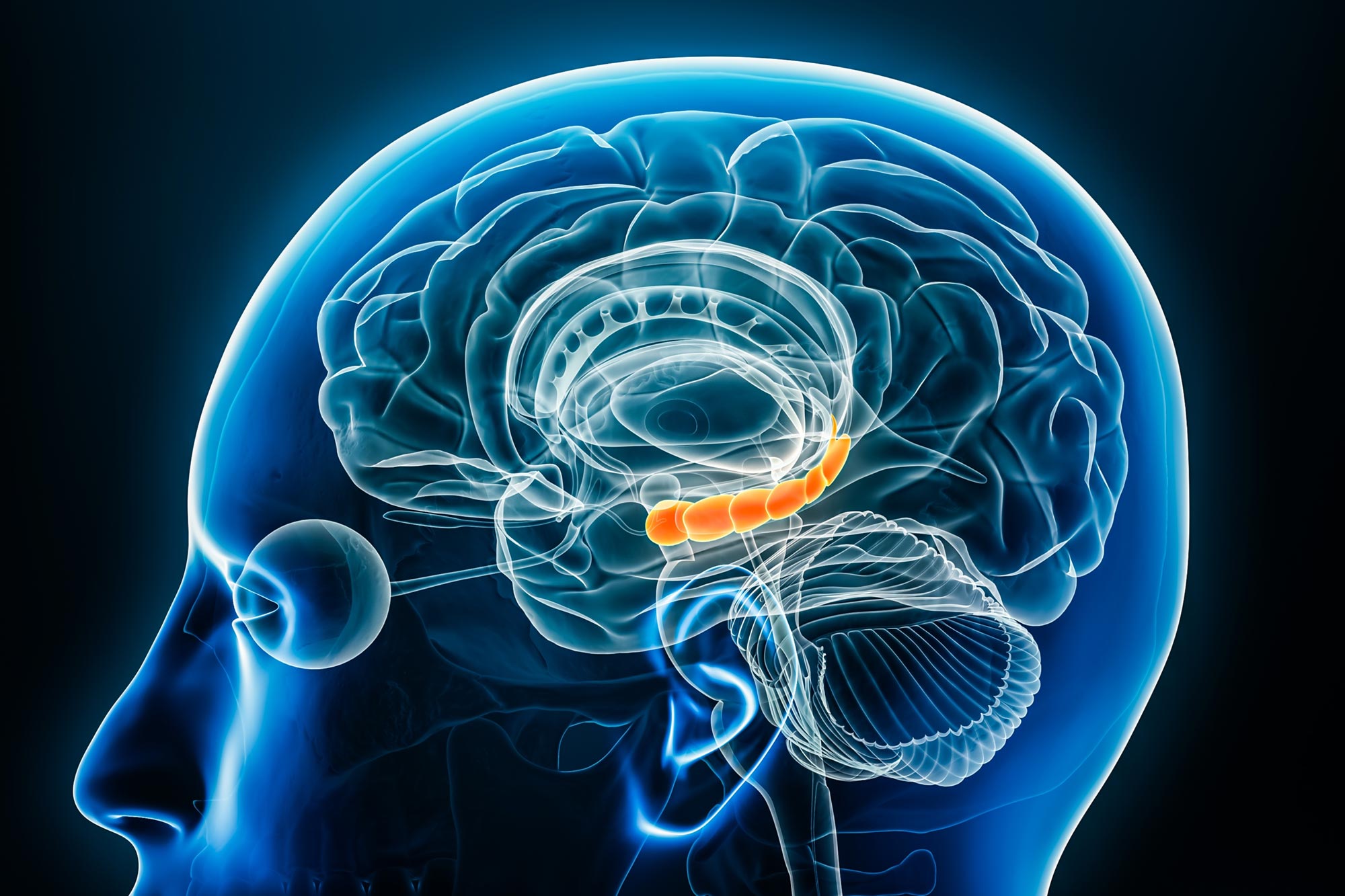
NIH-supported findings reveal a previously unknown aspect of human brain aging that may contribute to cognitive decline and dementia risk later in life.
Beginning in middle age, the immune cell population inside the hippocampus appears to undergo a major and rapid transformation. The hippocampus supports learning and memory, and the National Institutes of Health (NIH) funded findings point to a previously unknown process that may help connect aging with the chronic brain inflammation often seen in neurodegenerative diseases.
“Aging is the single largest risk factor for dementia, but our understanding of how it drives disease is still incomplete,” said Richard Hodes, M.D., director of NIH’s National Institute on Aging (NIA). “This previously hidden microglial shift, now uncovered by innovations in technology and thinking, may be an important clue to help us complete the puzzle.”
Microglia begin disappearing in midlife
Researchers from the University of California, San Diego, the New York Genome Center and the University of California, Irvine used advanced single-cell methods to examine postmortem hippocampal tissue from 40 neurologically healthy adults between 20 and 95 years old. Their analysis suggests that microglia, the brain’s main resident immune cells, steadily decrease from about age 50 to 75. Cells with stronger inflammatory signatures and features resembling immune cells derived from the peripheral blood appear to take their place.
The finding challenges the long-standing assumption that microglia, which first develop during embryonic life, continually renew themselves and remain in the brain throughout a person’s life.
Cell origins reveal a hidden transition
To examine brain aging in greater detail, the researchers combined conventional measurements of gene activity with newer techniques that mapped the genome’s three-dimensional structure and its epigenome, the collection of chemical modifications that help regulate how genes function.
“Gene expression tells us what a cell is doing today, but epigenetic signatures preserve information about where a cell came from,” said first author Nathan Zemke, Ph.D., director of single-cell genomics at the UC San Diego Center for Epigenomics. “By combining these approaches, we uncovered a major shift in the identity and lineage of immune cells in the aging human brain’s immune cells that gene expression data alone would not have revealed.”
Aging disrupts more than immune cells
The analysis also suggested that cells responsible for maintaining the protective blood-brain barrier deteriorate as people age. Across numerous types of brain cells, the researchers also observed broad and coordinated changes in the organization of the genome.
“The progressive structural disruptions were closely linked to shifts in gene regulation and cell identity, potentially revealing a fundamental feature of aging in the human brain,” said Bing Ren, Ph.D., a corresponding author of the study, scientific director and CEO of the New York Genome Center, and professor of genetics and development at Columbia University.
Disease consequences remain uncertain
Further research will examine what causes resident microglia to disappear and whether the newly identified immune cell transition plays a direct role in Alzheimer’s disease or other neurological disorders associated with aging.
“Understanding these cellular transitions may provide new opportunities to develop interventions that preserve brain function and reduce vulnerability to neurodegenerative disease,” said Xiangmin Xu, Ph.D., professor and director of the Center for Neural Circuit Mapping at UC Irvine, and a corresponding author of the study.
Reference: “Epigenetic and 3D genome reprogramming during the aging of the human hippocampus” by Nathan R. Zemke, Seoyeon Lee, Sainath Mamde, Bing Yang, Nicole Berchtold, B. Maximiliano Garduño, Hannah S. Indralingam, Weronika M. Bartosik, Pik Ki Lau, Keyi Dong, Emily Hsu, Amanda Yang, Yasmine Tani, Chumo Chen, Qiurui Zeng, Varun Ajith, Liqi Tong, Chanrung Seng, Daofeng Li, Ting Wang, Jingtian Zhou, Joseph R. Ecker, Christopher K. Glass, Carl W. Cotman, Xiangmin Xu and Bing Ren, 23 July 2026, Science.
DOI: 10.1126/science.adt8307
NIH supported this research through NIA grants R01AG067153 and R01AG082127 and the NIH Common Fund 4D Nucleome (4DN) program grant 1U01DA052769.
Never miss a breakthrough: Join the SciTechDaily newsletter.
Follow us on Google and Google News.
3 Comments
Really? We need a medical researcher MD to tell us that memory starts to fail as you age?
Sheared Cock Holmes obvious detective!
There’s nothing you can do to stop this natural process. Unless you can do something to stop it, reverse it, or change the course, your observations mean nothing.
You are quite ignorant.
You have no idea what you re talking about.