
A single biomarker can accurately indicate the presence of underlying neurodegeneration in people with cognitive issues.
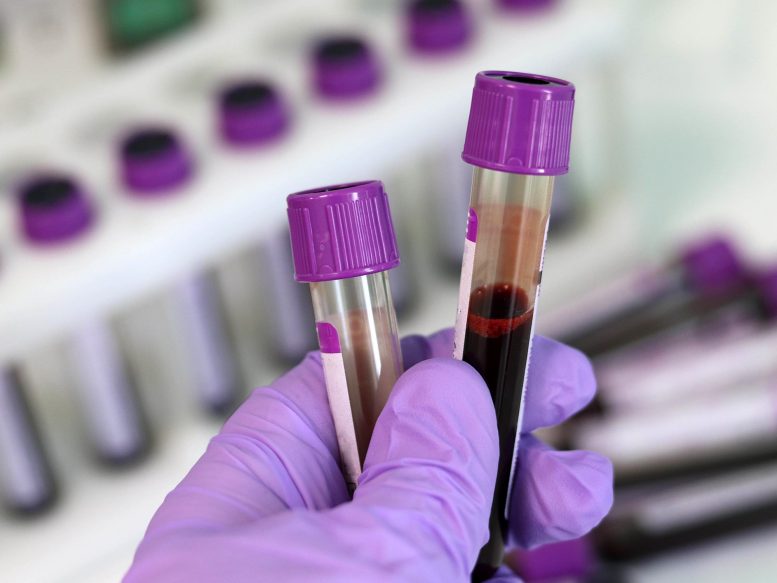
Levels of a protein called neurofilament light chain (NfL) in the blood can identify those who might have neurodegenerative diseases such as Down’s syndrome dementia, motor neuron disease (ALS) and frontotemporal dementia, when clinical symptoms are not definitive.
Published in Nature Communications and part-funded by the NIHR Maudsley Biomedical Research Centre, the research determined a set of age-related cut-off levels of NfL which could inform its potential use in primary care settings through a simple blood test.
A Universal Screening Tool for Brain Disorders
Joint Senior Author on the study, Dr. Abdul Hye from the NIHR Maudsley Biomedical Research Centre at King’s College London and South London and Maudsley NHS Foundation Trust said: “For the first time we have shown across a number of disorders that a single biomarker can indicate the presence of underlying neurodegeneration with excellent accuracy. Though it is not specific for any one disorder, it could help in services such as memory clinics as a rapid screening tool to identify whether memory, thinking or psychiatric problems are a result of neurodegeneration.”
Neurodegenerative diseases are debilitating conditions that result in ongoing degeneration or death of nerve cells, leading to problems in thought, attention, and memory. There are currently around 850,000 people with dementia in the UK which is projected to rise to 1.6 million by 2040. In order to help identify the onset of these debilitating diseases and put in place preventative measures as early as possible there has been a drive to develop reliable and accessible biomarkers that can recognize or rule out whether the processes in the brain that are responsible for neurodegeneration are occurring.
Why NfL Is Different
Current biomarkers used to identify neurodegenerative disorders are taken from the fluid that surrounds the brain and spinal column (cerebrospinal fluid – CSF) which has to be extracted using an invasive procedure called lumbar puncture. Advances have been made to use biomarkers from the blood which would provide a more accessible and comfortable assessment. A central and irreversible feature in many neurodegenerative disorders is damage to the nerve fiber which results in the release of neurofilament light chain (NfL). Using ultrasensitive tests, NfL can be detected in blood at low levels and is increased in a number of disorders, unlike phosphorylated tau which is specific for Alzheimer’s disease. This means NfL can be of use in the diagnostic process of many neurodegenerative diseases most notably in this study Down’s syndrome dementia, ALS, and frontotemporal dementia.
Co-author Professor Ammar Al-Chalabi from at King’s College London and co-lead of the Psychosis and Neuropsychiatry research theme at the NIHR Maudsley BRC said “For neurodegenerative diseases like Alzheimer’s, Parkinson’s or motor neuron disease, a blood test to allow early diagnosis and help us monitor disease progression and response to treatment would be very helpful. Neurofilament light chain is a promising biomarker that could speed diagnosis of neurodegenerative diseases and shorten clinical trials.”
The study examined 3138 samples from King’s College London, Lund University and Alzheimer’s Disease Neuroimaging Initiative, including people with no cognitive impairment, people with neurodegenerative disorders, people with Down syndrome and people with depression. The study showed that concentrations of NfL in the blood were higher across all neurodegenerative disorders compared to those with no cognitive problems, the highest being in people with Down’s syndrome dementia, motor neuron disease, and frontotemporal dementia.
The study also showed that although blood based NfL could not differentiate between all the disorders, it could provide insight into different groups within certain disorders. For example, in those with Parkinson’s a high concentration of NfL indicated atypical Parkinson’s disorder, and in patients with Down syndrome, NfL levels differentiated between those with and without dementia.
NfL’s Role in Down Syndrome and Alzheimer’s
Co-author Andre Strydom, Professor in Intellectual Disabilities at King’s College London said: “This study shows that neurofilament light chain levels were particularly increased in adults with Down syndrome who have a genetic predisposition for Alzheimer’s disease. Furthermore, we showed that those individuals with a dementia diagnosis following the onset of Alzheimer’s disease had higher levels than those who did not. This suggests that the new marker could potentially be used to improve the diagnosis of Alzheimer’s in people with Down syndrome, as well as to be used as biomarker to show whether treatments are effective or not. It is exciting that all that could be needed is a simple blood test, which is better tolerated in Down syndrome individuals than brain scans.”
The study assessed age-related thresholds or cut-offs of NfL concentrations that could represent the point at which an individual would receive a diagnosis. These age-related cut-off points were 90% accurate in highlighting neurodegeneration in those over 65 years of age and 100% accurate in detecting motor neurone disease and Down syndrome dementia in the King’s College London samples, with a very similar result in the Lund samples. Importantly, NfL was able to distinguish individuals with depression from individuals with neurodegenerative disorders which commonly present with primary psychiatric disorders in the onset of disease development such as frontotemporal dementia.
Joint-Senior author Professor Oskar Hansson from Lund University said “Blood tests have great potential to improve the diagnosis of dementia both in specialized memory clinics and in primary care. Plasma NfL can be extremely useful in a number of clinical scenarios which can greatly inform doctors, as shown in this large study.”
Non-Invasive Diagnostics and Treatment Tracking
Dr. Hye said “Blood-based NfL offers a scalable and widely accessible alternative to invasive and expensive tests for dementia. It is already used as a routine assessment in some European countries such as Sweden or Netherlands, and our age-related cut-offs can provide a benchmark and quick accessible test for clinicians, to indicate neurodegeneration in people who are exhibiting problems in thinking and memory.”
Lead author Dr. Nicholas Ashton from King’s College London concludes “We are entering an exciting period where blood tests like plasma NfL, in combination with other emerging blood biomarkers like phosphorylated tau (p-tau), are starting to give us a meaningful and non-invasive insight into brain disorders.”
Reference: “A multicentre validation study of the diagnostic value of plasma neurofilament light” by Nicholas J. Ashton, Shorena Janelidze, Ahmad Al Khleifat, Antoine Leuzy, Emma L. van der Ende, Thomas K. Karikari, Andrea L. Benedet, Tharick A. Pascoal, Alberto Lleó, Lucilla Parnetti, Daniela Galimberti, Laura Bonanni, Andrea Pilotto, Alessandro Padovani, Jan Lycke, Lenka Novakova, Markus Axelsson, Latha Velayudhan, Gil D. Rabinovici, Bruce Miller, Carmine Pariante, Naghmeh Nikkheslat, Susan M. Resnick, Madhav Thambisetty, Michael Schöll, Gorka Fernández-Eulate, Francisco J. Gil-Bea, Adolfo López de Munain, Ammar Al-Chalabi, Pedro Rosa-Neto, Andre Strydom, Per Svenningsson, Erik Stomrud, Alexander Santillo, Dag Aarsland, John C. van Swieten, Sebastian Palmqvist, Henrik Zetterberg, Kaj Blennow, Abdul Hye and Oskar Hansson, 7 June 2021, Nature Communications.
DOI: 10.1038/s41467-021-23620-z
Never miss a breakthrough: Join the SciTechDaily newsletter.
Follow us on Google and Google News.