
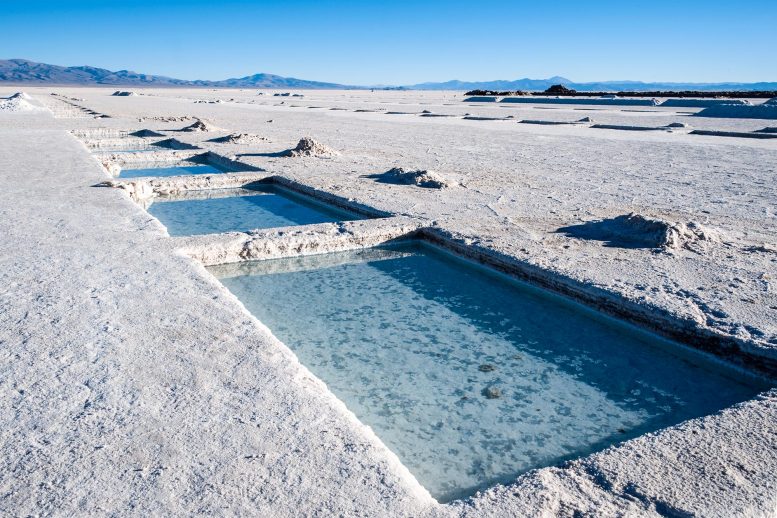
Naturally occurring lithium in public drinking water may have an anti-suicidal effect – according to a new study from Brighton and Sussex Medical School (BSMS) and the Institute of Psychiatry, Psychology & Neuroscience at King’s College London.
Published in the British Journal of Psychiatry, the study collated research from around the world and found that geographical areas with relatively high levels or concentration of lithium in public drinking water had correspondingly lower suicide rates.
Professor Anjum Memon, Chair in Epidemiology and Public Health Medicine at BSMS and lead author of the study, said: “It is promising that higher levels of trace lithium in drinking water may exert an anti-suicidal effect and have the potential to improve community mental health. The prevalence of mental health conditions and national suicide rates are increasing in many countries. Worldwide, over 800,000 people die by suicide every year, and suicide is the leading cause of death among persons aged 15-24 years.”
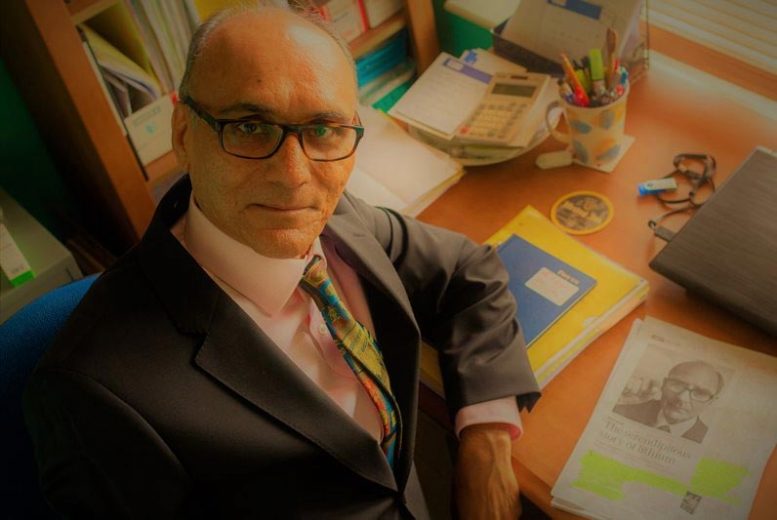
“In these unprecedented times of COVID-19 pandemic and the consequent increase in the incidence of mental health conditions, accessing ways to improve community mental health and reduce the incidence of anxiety, depression, and suicide is ever more important.”
Lithium, sometimes referred to as the ‘Magic Ion’, is widely and effectively used as a medication for the treatment and prevention of manic and depressive episodes, stabilizing mood, and reducing the risk of suicide in people with mood disorders. Its anti-aggressive properties can help reduce impulsivity, aggression, violent criminal behavior, and chronic substance abuse.
Lithium is a naturally occurring element and is found in variable amounts in vegetables, grains, spices, and drinking water. It is present in trace amounts in virtually all rocks, and is mobilized by weathering into soils, ground, and standing water, and thus into the public water supply.
The health benefits and curative powers of naturally occurring lithium in water have been known for centuries. The Lithia Springs, an ancient Native American sacred medicinal spring, with its natural lithium-enriched water, is renowned for its health-giving properties. In fact, the popular soft drink 7-Up contained lithium when it was created in 1929.
Recent studies have also linked lithium to reduced incidence of Alzheimer’s disease and other dementias. This raises the potential for its preventative use to combat the risk of dementia.
Professor Allan Young, Chair of Mood Disorders at King’s College London, said: “This synthesis and analysis of all available evidence confirms previous findings of some individual studies and shows a significant relationship between higher lithium levels in drinking water and lower suicide rates in the community. The levels of lithium in drinking water are far lower than those recommended when lithium is used as medicine although the duration of exposure may be far longer, potentially starting at conception. These findings are also consistent with the finding in clinical trials that lithium reduces suicide and related behaviors in people with a mood disorder.”
Professor Memon said: “Next steps might include testing this hypothesis by randomized community trials of lithium supplementation of the water supply, particularly in communities (or settings) with demonstrated high prevalence of mental health conditions, violent criminal behavior, chronic substance abuse and risk of suicide. This may provide further evidence to support the hypothesis that lithium could be used at the community level to reduce or combat the risk of these conditions.”
Professor Carmine Pariante from the Royal College of Psychiatrists, added: “This study shows that the boundaries between medication and nutritional interventions are not as rigid as we used to think, opening up the possibility of new treatments that span both domains. More knowledge of the beneficial properties of Lithium and its role in regulating brain function can lead to a deeper understanding of mental illness and improve the wellbeing of patients with depression and other mental health problems.”
The study involved systematic review and meta-analysis of all previous studies on the subject – conducted in Austria, Greece, Italy, Lithuania, UK, Japan and USA – which correlated naturally occurring lithium levels in drinking water samples and suicide rates in 1,286 regions/counties/cities in these countries.
The study is published in the British Journal of Psychiatry. It was supported by BSMS, and part-funded by the National Institute for Health Research (NIHR) Biomedical Research Centre at South London and Maudsley NHS Foundation Trust and King’s College London.
Reference: “Association between naturally occurring lithium in drinking water and suicide rates: systematic review and meta-analysis of ecological studies” by Anjum Memon, Imogen Rogers, Sophie M. D. D. Fitzsimmons, Ben Carter, Rebecca Strawbridge, Diego Hidalgo-Mazzei and Allan H. Young, 27 July 2020, British Journal of Psychiatry.
DOI: 10.1192/bjp.2020.128
Never miss a breakthrough: Join the SciTechDaily newsletter.
Follow us on Google and Google News.
12 Comments
Much as I am encouraged by this news, anything that helps is better than nothing. Why are we still so focused on treating the symptoms? Rather than the causes. Chemicals are not always the solution. Enviromental and societal issues have been shown to have a huge impact on mental health in most cases. Albeit not all cases. Obviously COVID does not help in addressing enviromental or societal issues. Surely a better society and environment for all would be more desirable than BIG BROTHER drugging the water so we all become compliant.
Yes, life styles and population densities may have more to due with suicide than what’s in the water. The apparent correlation between lithium in drinking water and suicide may well be spurious, and was not addressed. Stressful urban life styles are associated with better selection and management of drinking water than in areas such as depicted in the picture at the top of the article. The proper way to do a study of this type is to select cities of similar size and prosperity, measure the lithium in the municipal water supplies, and plot suicide rates against the lithium concentration. Although, there are well-known cultural differences in suicide rates that is a confounding variable.
Mate; don’t be sensible!
I wonder what Dr. GABOR MATE would think of this mind control scheme? I myself, a 84 year old grandmother find this a terrifying idea. Raising our children differently with love, our time & acceptance could forestall a Hugh amount of depression. In case this study hasn’t factored in the body – mind connection i think it imperative to do so.
Time to get a High Grade Filter I don’t want big corporations going to drug me with those things.
If you only knew..
Between force feeding lithium via the water supply and liberalizing the use of cannabis we will be easy little sheep to herd up. If they could cure cancer with an additive to the water, I’d consider it. In the meantime, if you need lithium talk to your doctor.
Someone is seriously suggesting dosing drinking water with lithium? A mind altering substance. They realize we can’t even convince people that fluoride is a safe additive right?!
Fluoride in water and toothpaste? That’s what the teeth of my generation display fluorosis and yellow staining. I lost my clean-toothed smile 60 years ago when some idiot started dumping sodium fluoride in our drinking water. It didn’t my teeth protect one little bit from the damage caused by eating sweets as a young teenager . However I got most of the damage sorted out for no expense with fillings by the National Health Service dentist in “socialist” UK, which also paid my university tuition fees and a cost of living grant. Bad luck, USA; 1783 was a bad year for you.
Lithium in drinking water? Don’t be bloody daft!
Hi. Can someone please tell me the source of the main picture, the amazing art, that is on the front page, please??
It has long been known that some of the most dramatic cures at various “healing springs” were related to the high mineral content of the water, which patient’s drank. Many people carried large barrels of the mineral water home with them. Often the return of their malady coincided with the the water being used up. I think there is a significant difference in diagnosis of manic depression in locations that have higher levels of minerals, and specifically, higher levels of lithium. Finding lower rates of suicide is not surprising, given these facts. It would appear possible that a significant number of people who have the genetics to develop bipolar illness may never have severe enough symptoms to prompt a diagnosis if the grow up drinking water that contains a low level of lithium. I have often wondered if it might be appropriate to provide lithium at levels that doesn’t cause blood to show therapeutic levels of lithium to individuals known to have high genetic loading for bipolar illness or schizophrenia. At levels that are known to not be dangerous, preventing the first episode of mental illness with trace levels of lithium would be much better than having to administer much higher doses for the rest of someone’s life after the suffer the disruption of a serious manic or depressive episode.
It has been known for a very long time that bipolar illness is less frequently diagnosed in locations with higher trace amounts of lithium in the water supply. In fact, a significant part of tge efficacy of “healing springs” can be attributed to the high level of lithium, along with the other minerals in the water. There was some speculation that low dose lithium might actually prevent the first episode of depression or mania in some people who have significant genetic loading.