
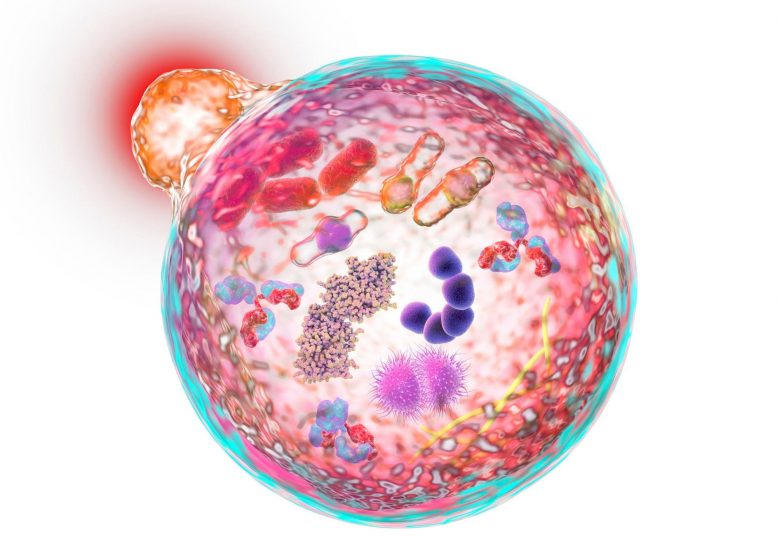
Patients with a unique cellular disorder are helping researchers understand a series of health complications better.
For the first time, researchers led by Newcastle University, UK have identified a group of patients with neurological disease who lack a critical cell process called autophagy. The work is published today (June 23, 2021) in the New England Journal of Medicine.
These patients provide a unique insight into the role of autophagy in human physiology which may have important implications for research and therapies in many conditions, including neurodegeneration and cancer.
Autophagy
Many cells in our body, such as those which make up our brain, need to last a lifetime. To do this, our cells have developed ways of protecting themselves. This includes a process called autophagy, which literally means “self-eating,” where damaged components are collected together and removed from the cell.
This process is very important for the body to function properly as an accumulation of damage in cells has been linked to several diseases, including dementia.

Autophagy is also the route used by cells to maintain nutrient levels and has long been considered an essential process based on previous studies in genetically modified mice which have an absence of autophagy and die within 24 hours after birth. In a similar way, failure of the autophagy pathway in humans was thought to mean that people could not survive.
A Genetic Clue in Five Global Families
In the study, researchers found that in five families, a change in a key gene essential for autophagy causes a very specific form of neurological disease. In exceptional circumstances, it appears that these patients may survive into adulthood despite defective autophagy and it is this group the researchers have identified.
Using state-of-the-art DNA sequencing technologies, researchers identified disease-causing sequence changes in the ATG7 gene in 12 patients with neurological disease from five families.
Analysis of patient samples by the Newcastle team and colleagues in Helsinki revealed that the mutations caused a reduction or complete loss of ATG7 protein. This was followed up with further studies in mouse and yeast cells, confirming a severe defect in autophagy.
A Paradigm Shift in Understanding Survival Without Autophagy
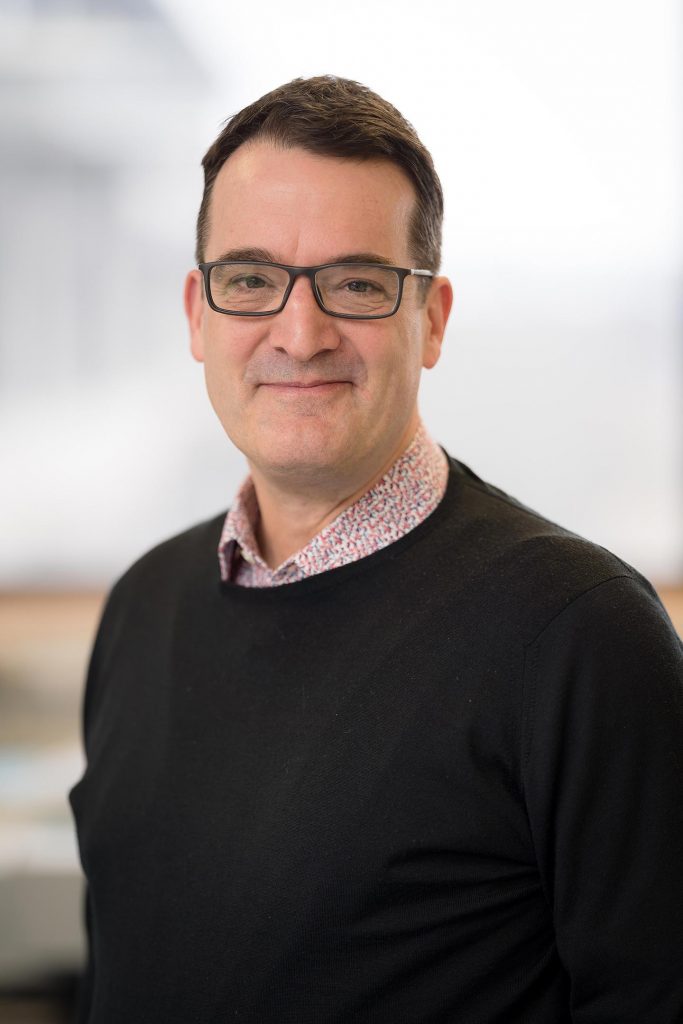
Rob Taylor is a Professor of Mitochondrial Pathology at Newcastle University, Head of the Newcastle NHS Highly Specialised Mitochondrial Diagnostic Laboratory, and a Consultant Clinical Scientist in The Newcastle upon Tyne Hospitals NHS Foundation Trust and senior author on the study. He said: “This discovery challenges the understanding that humans cannot survive if their cells completely fail to carry out autophagy. What we have learned from studying patients carrying genetic alterations in a specific autophagy gene is the crucial role of autophagy in brain development and that this can adapt to the loss of a key component.”
The patients were spread across the world, with families identified in the UK, France, Switzerland, Germany, and Saudi Arabia. The UK family from the North-East of England were identified by a diagnostic sequencing program funded by The Lily Foundation, the UK’s leading mitochondrial disease charity and the largest charitable funder of mitochondrial research in Europe. This sequencing project, developed with the support of Newcastle University, has successfully provided a genetic diagnosis for >70% of recruited families.
MRI Insights and Clinical Potential
Professor Taylor explained: “Investigating brain MRI images, we observed that the same regions of the brain were affected in all the patients, changes that underpin the patients’ ataxia and intellectual disability, highlighting the importance of autophagy in how the brain forms. As we build on our findings and continue to develop a better understanding of possible compensatory mechanisms in these patients, it means we can explore the potential for treatments that specifically target these regions of the brain. This approach may one day help meet the clinical needs of individuals with common, late-onset disorders such as Alzheimer’s disease and dementia where impaired autophagy contributes to disease.”
Jack Collier is the lead author on the paper and as a PhD student at Newcastle University, carried out key experiments including electron microscopy and cutting-edge high-resolution iSIM confocal microscopy, as well as molecular techniques to investigate patient samples.
He said: “Since previous studies on ATG7 suggested that it may be essential for human survival, we were surprised to find genetic changes affecting this gene in patients, especially given that a number of them have survived into adult life.
“Identifying numerous families was extremely important as it enabled us to understand how patients are affected by this disorder. Using cells from each family, we have shown that these patients are unable to properly execute the autophagy pathway, which impairs the recycling of proteins and leads to neurodevelopmental problems.”
Susan* from the North East of England, is the mother of two girls affected. She explains: “A firm diagnosis has answered the ‘why’ question we have been asking for 30 years and provided an understanding that we never thought we’d have. On a practical level, it helps in conversations with social care and medical professionals, and looking to the future we may be able to learn from sharing experiences with others with the same condition. It’s also good to know that the findings may be a stepping-stone to new research helping people with other issues.”
The researchers intend to continue future studies with this group of patients as they provide a unique insight into the role of autophagy in human physiology.
*Name changed to protect privacy
Reference: “Developmental Consequences of Defective ATG7-mediated Autophagy in Humans” by Jack J. Collier, Ph.D.; Claire Guissart, Pharm.D.; Monika Oláhová, Ph.D.; Souphatta Sasorith, Ph.D.; Florence Piron-Prunier, M.Sc.; Fumi Suomi, Ph.D.; David Zhang, M.Sc.; Nuria Martinez-Lopez, Ph.D.; Nicolas Leboucq, M.D.; Angela Bahr, Ph.D.; Silvia Azzarello-Burri, M.D.; Selina Reich, M.Sc.; Ludger Schöls, M.D.; Tuomo M. Polvikoski, Ph.D.; Pierre Meyer, M.D.; Lise Larrieu, M.Sc.; Andrew M. Schaefer, M.R.C.P.; Hessa S. Alsaif, B.Sc.; Suad Alyamani, M.D.; Stephan Zuchner, Ph.D.; Inês A. Barbosa, Ph.D.; Charu Deshpande, F.R.C.P.; Angela Pyle, Ph.D.; Anita Rauch, M.D.; Matthis Synofzik, M.D.; Fowzan S. Alkuraya, M.D.; François Rivier, M.D.; Mina Ryten, Ph.D.; Robert McFarland, Ph.D.; Agnès Delahodde, Ph.D.; Thomas G. McWilliams, Ph.D.; Michel Koenig, M.D. and Robert W. Taylor, Ph.D., 24 June 2021, New England Journal of Medicine.
DOI: 10.
Never miss a breakthrough: Join the SciTechDaily newsletter.
Follow us on Google and Google News.