
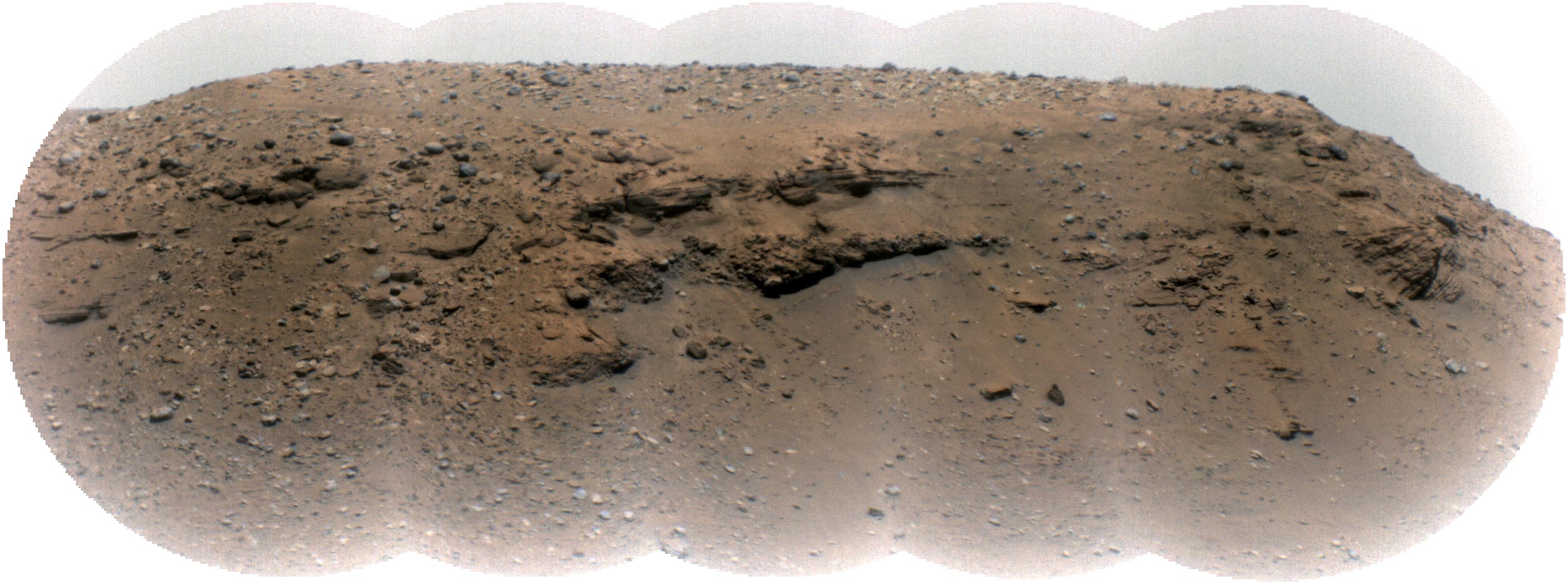
A Perseverance rover scientist’s favorite shot from the young Mars mission provides a new angle on an old and intriguing surface feature.
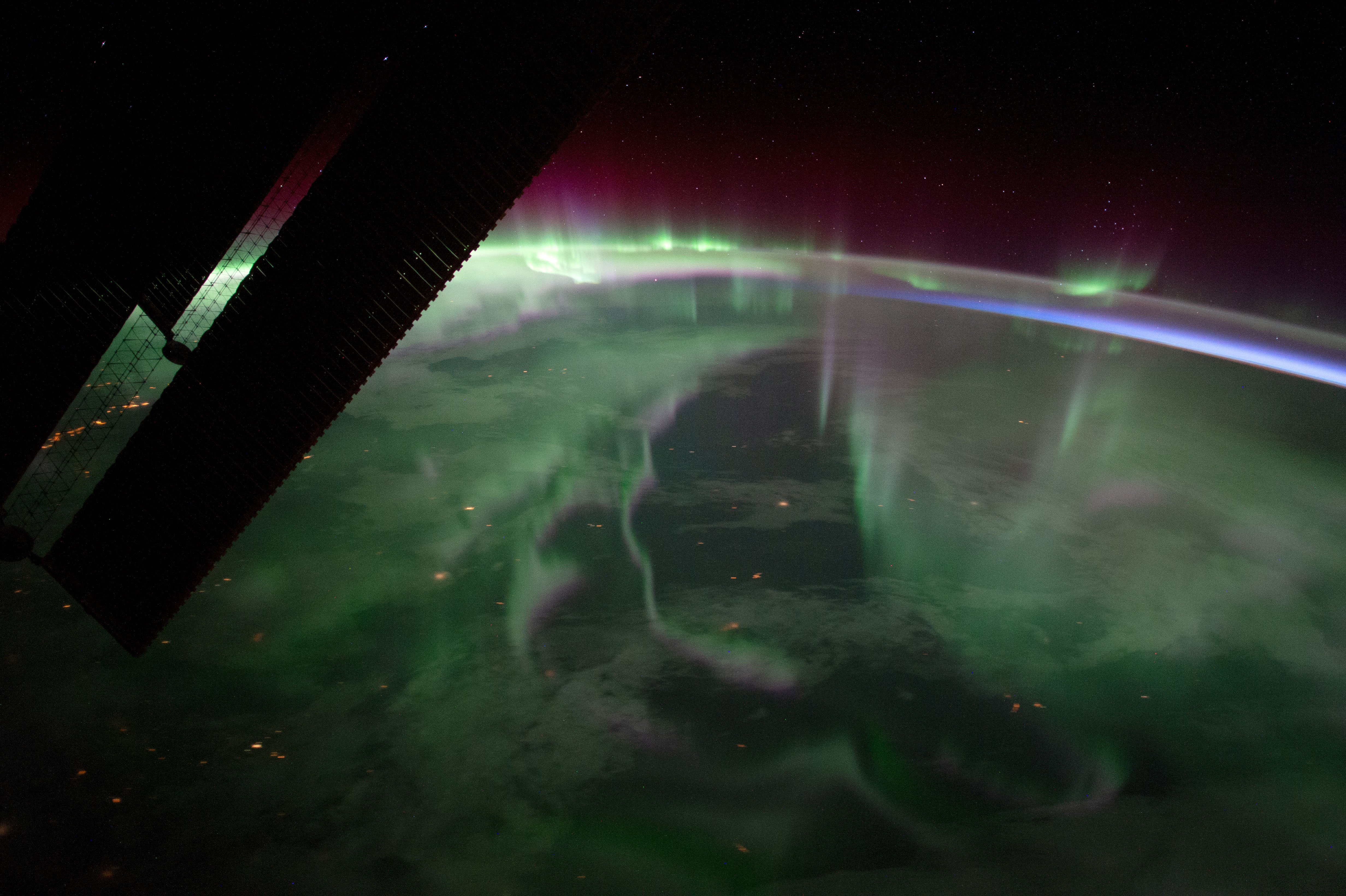
Ask any space explorer, and they’ll have a favorite image or two from their mission. For Apollo 8’s Bill Anders, it was a picture looking back at the Earth from near the Moon. Astronaut Randy Bresnik prizes a photo of an aurora he took while aboard the International Space Station. And for Vivian Sun, a scientist at NASA’s Jet Propulsion Laboratory in Southern California, it’s an image NASA’s Perseverance Mars rover took of one of Jezero Crater’s escarpments (long, steep slopes at the edge of a plateau) – so far away but yet so tantalizingly close.

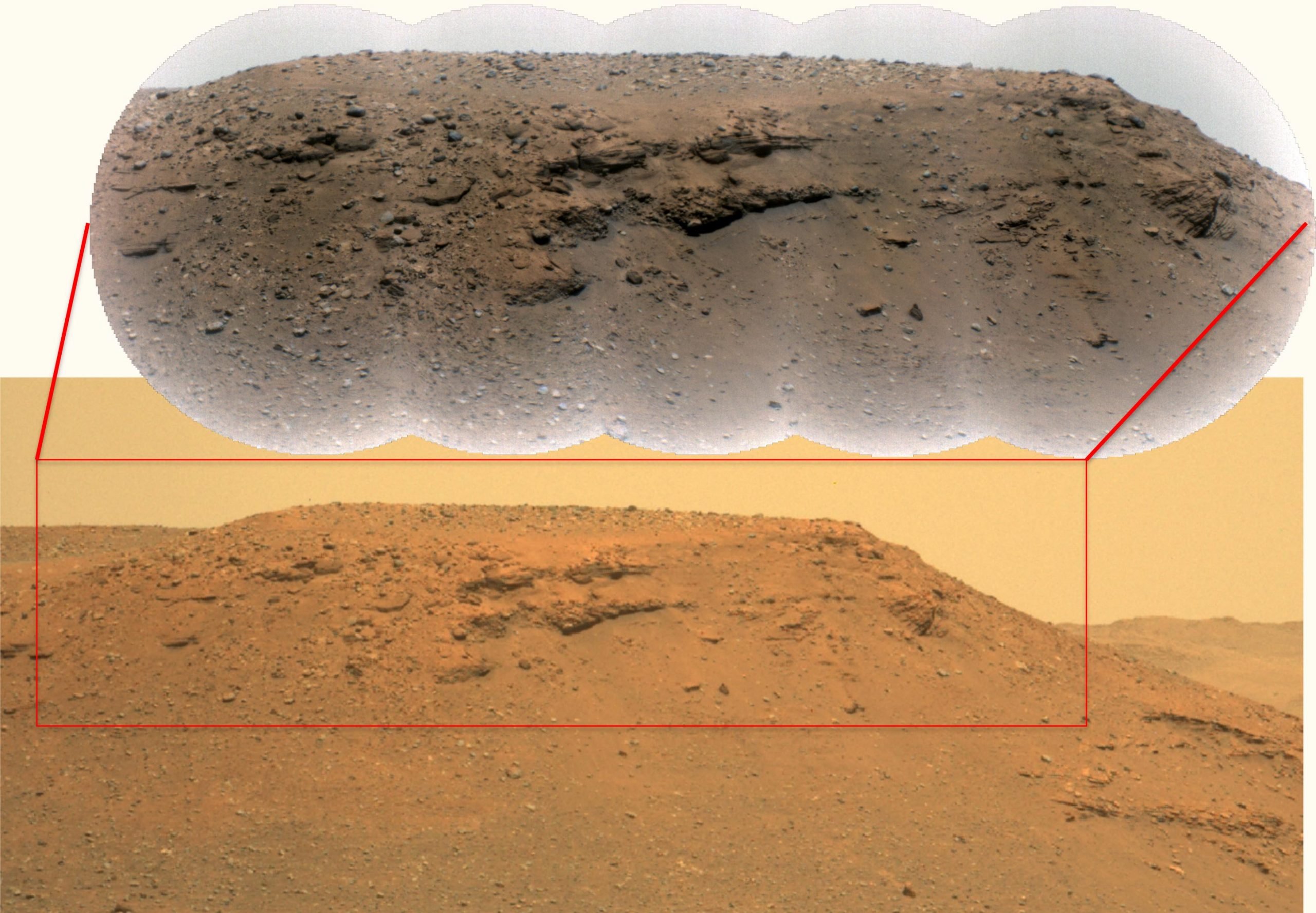
Sun knows that close-ups of what the rover’s science team has named the “Delta Scarp” and its conglomerates (coarse-grained pebbles mixed with sand turned to rock) and cross-bedding (tilted layers of sedimentary rock) may, at first glance, seem like something only a geologist could love. But, the co-lead of Perseverance’s first science campaign wants to assure you that whatever it may lack in cinematic panache, this Martian mosaic makes up for in geologic importance.
“I’ve been studying Jezero Crater for years and must have looked at orbital images of the Delta Scarp over a thousand times,” said Sun. “But you can only learn so much from orbit, and when this image of the scarp came down to Earth from the rover after landing, it literally took my breath away. This is a favorite because for the first time I could see actual evidence of the conglomerates and cross-bedding we had hypothesized.”
Traces of Ancient Water
Conglomerates are cemented together in a watery environment, and cross-bedding can be evidence of water movement recorded by waves or ripples of loose sediment the water passed over long ago. Both features are precisely the kind Sun and the science team hoped to find in Jezero. About 3.8 billion years ago, the crater was likely home to a body of water the size of Lake Tahoe, along with a river and a fan-shaped delta formed by sedimentary deposits from that river.
“We’ve known for a while that billions of years ago the Jezero’s Delta Scarp was home to a rushing river,” said Sun. “Now we know we’ll be able to see evidence of this river system up close, getting a better idea of its size and strength of the water rushing through it. And because the river deposited sediments and other material at the scarp from not only inside Jezero but outside as well, it should be an amazing location to look for signs of ancient life.”
The mission expects to explore the Delta Scarp region during Perseverance’s second science campaign, sometime next year. At present, the rover is in the opening days of its first science campaign, exploring a 1.5-square-mile (4-square-kilometer) patch of crater floor that may contain Jezero’s deepest (and most ancient) layers of exposed bedrock, along with other intriguing geologic features. It is during this initial campaign that they’ll collect the first samples from another planet for return to Earth by a future mission.
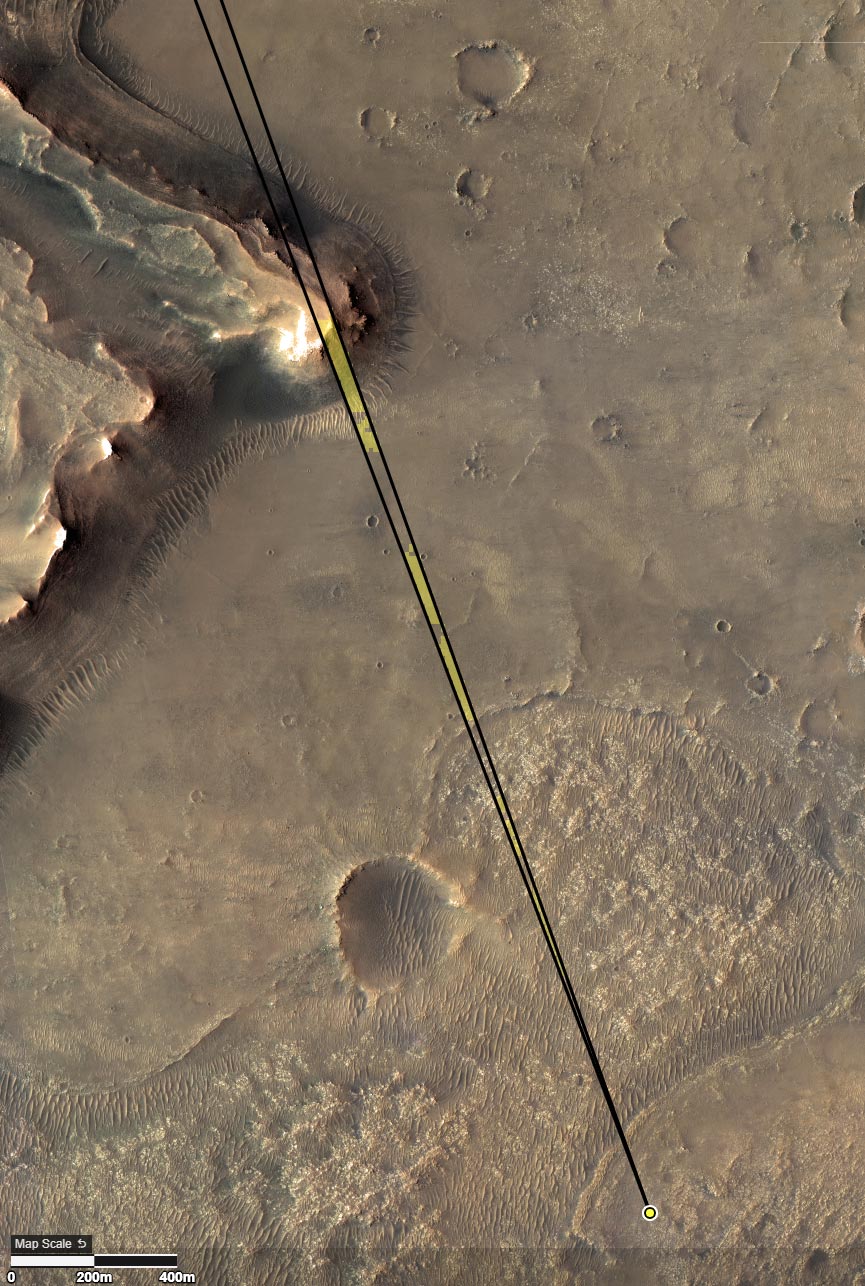
As for Sun’s favorite picture, it shows a 377-foot-wide (115-meter-wide) portion of the scarp. It was stitched together from five images taken by the rover’s Remote Microscopic Imager (RMI) camera on March 17, 2021 (the 26th Martian day, or sol of the mission), from 1.4 miles (2.25 kilometers) away.
Part of the SuperCam instrument, the RMI can spot an object the size of softball from nearly a mile away, allowing scientists to take images of details from long distances. It can also observe dust grains as small as four-thousandths of an inch (100 microns). Perched atop the rover’s mast, SuperCam’s 12-pound (5.6-kilogram) sensor head can perform five types of analyses to study Mars’ geology and help scientists choose which rocks the rover should sample in its search for signs of ancient microbial life.
More About the Mission
A key objective for Perseverance’s mission on Mars is astrobiology, including the search for signs of ancient microbial life. The rover will characterize the planet’s geology and past climate, pave the way for human exploration of the Red Planet, and be the first mission to collect and cache Martian rock and regolith (broken rock and dust).
Subsequent NASA missions, in cooperation with ESA (European Space Agency), would send spacecraft to Mars to collect these sealed samples from the surface and return them to Earth for in-depth analysis.
The Mars 2020 Perseverance mission is part of NASA’s Moon to Mars exploration approach, which includes Artemis missions to the Moon that will help prepare for human exploration of the Red Planet.
JPL, which is managed for NASA by Caltech in Pasadena, California, built and manages operations of the Perseverance rover.
Never miss a breakthrough: Join the SciTechDaily newsletter.
Follow us on Google and Google News.
1 Comment
I’m surprised that a science oriented website would discuss a rock and not use input from a geologist or mineralogist or mineral collector. The description of the rock having “spherules” is comical as no one involved with rocks and minerals would describe it this way. Also, the rock appears to be similar to some forms of hematite/goethite commonly found on Earth. Rocks on earth commonly have this feature and I’ve never seen it described as spherules. Mammillary or botryoidal – yes, spherules – never.