
Close Menu
    Facebook X (Twitter) Instagram
    SciTechDaily
    • Biology
    • Chemistry
    • Earth
    • Health
    • Physics
    • Science
    • Space
    • Technology
    Facebook X (Twitter) Pinterest YouTube RSS
    SciTechDaily
    Home»Science»Serial Dependence Bias: Guessing Coins’ Value Quickly Demonstrates Cognitive Bias Mechanism
    Science

    Serial Dependence Bias: Guessing Coins’ Value Quickly Demonstrates Cognitive Bias Mechanism

    By Osaka Metropolitan UniversityFebruary 19, 2023No Comments3 Mins Read
    Facebook Twitter Pinterest Telegram LinkedIn WhatsApp Email Reddit
    Share
    Facebook Twitter LinkedIn Pinterest Telegram Email Reddit
    Assorted Coins Money
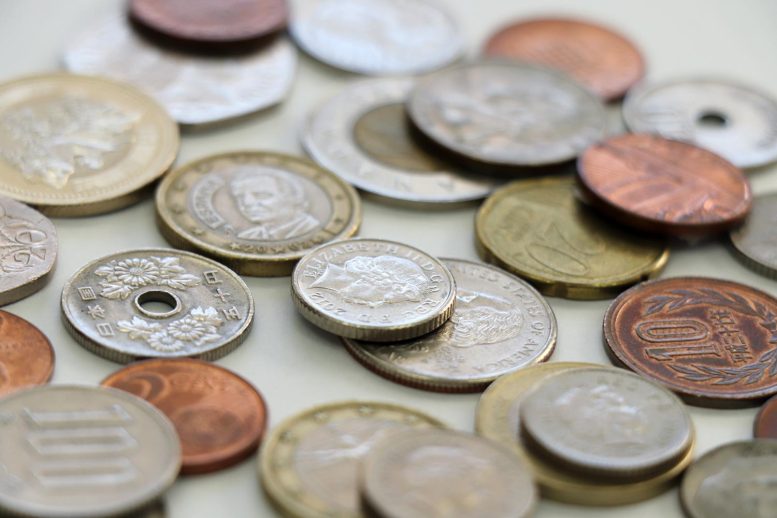
    Study participants were asked to guess the number, or the value of coins displayed on screen for half a second. Because guessing the value of the coins required some cognitive processing, researchers were able to test the effects of serial dependence bias for perceptual and cognitive processing separately. Credit: Osaka Metropolitan University

    Does serial dependence bias affect higher- or lower-order processing of perception?

    A study led by Professor Shogo Makioka explored the serial dependence bias, finding that a person’s prior decisions, not just sensory perception, influence their subsequent decisions. This insight, suggesting that higher-order cognitive processing is responsible for serial dependence, has implications for understanding decision-making and reducing human error.

    Serial dependence is a bias affecting perceptual experience, in which what you currently perceive tends to be biased toward what you have perceived immediately before. This phenomenon has been observed in tasks using different stimuli, including tilt perception, number perception, and motion perception, but it was not known if this bias occurred during sensory perception or cognition.

    A research team conducted experiments on the serial dependence of number perception using coins, to see if serial perception bias occurred in lower-order perceptual or higher-order perceptual and cognitive processing. The team was led by Professor Shogo Makioka from the Osaka Metropolitan University Graduate School of Sustainable System Sciences.

    Experiments were conducted in which between 8 to 32 Japanese coins of three types—silver one yen, gold five yen, and copper ten yen—were displayed on screen for half a second. In the first experiment, the 24 participants guessed the total number of coins that appeared on the screen 250 times; in the second experiment, participants saw coins appear on the screen, but guessed the total value of the money displayed 250 times.

    Findings on Higher-Order Cognitive Influence

    Serial dependence was confirmed for both tasks: it was found that a participant’s last guess, not the coins that they had just seen for half a second, had the greatest effect on how they answered. These results indicate that higher-order cognitive processing has a greater influence on the occurrence of serial dependence. These findings were published recently in the journal Scientific Reports.

     “The results of this study show that our perceptual experiences and our decisions themselves influence our next decisions, which may be useful in capturing the tendency to misjudge and misunderstand in our daily lives,” explained Professor Makioka. “We believe that research advances on biases—such as the serial dependence bias—should be applied to how information is presented and can be used to create an environment that minimizes human error.”

    Reference: “Serial dependence in estimates of the monetary value of coins” by Yukihiro Morimoto and Shogo Makioka, 23 November 2022, Scientific Reports.
    DOI: 10.1038/s41598-022-24236-z

    Never miss a breakthrough: Join the SciTechDaily newsletter.
    Follow us on Google and Google News.

    Memory Osaka Metropolitan University Perception Psychology
    Share. Facebook Twitter Pinterest LinkedIn Email Reddit

    Related Articles

    How Do You See the World? People With Creative Personalities Really Do See the Things Differently

    Study Finds Listening to Music Near Bedtime Is Disruptive To Sleep

    Special “Time Neurons” in the Human Brain Encode Specific Moments in Time

    What Is Your Earliest Memory? Can Start From the Age of Two-and-a-Half According to New Research

    Where Do We Place the Blame for the COVID-19 Pandemic?

    Screams of “Joy” Are Often Mistaken for “Fear” When Heard Out of Context

    False Memories of Crime Appear Real to Others When Told

    You Are Fake News – People Misremember Numerical Facts to Fit Their Biases

    Fake News Can Lead to False Memories

    Leave A Reply Cancel Reply

    • Facebook
    • Twitter
    • Pinterest
    • YouTube

    Don't Miss a Discovery

    Subscribe for the Latest in Science & Tech!

    Trending News

    “I Couldn’t Do It Anymore” – Antarctic Guides Quit Their Dream Jobs After Witnessing Tourism’s Damage

    Scientists Say Eating Less Protein May Help You Live Longer

    Scientists Solve a Long-Standing Mystery About Bird and Dinosaur Eggs

    Belly Fat and Low Vitamin D May More Than Double the Risk of Early Death

    Lost in Space: Rare Cosmic Flare Exposes a Wandering Black Hole Far From Its Galaxy’s Center

    Dark Matter May Be Leaving a Signal in Earth’s Atmosphere

    Scientists Discover a 300-Million-Year-Old Geological Time Capsule Inside Fossilized Wood

    Oral Weight Loss Pill Helps Patients Lose up to 12% of Body Weight

    Follow SciTechDaily
    • Facebook
    • Twitter
    • YouTube
    • Pinterest
    • Newsletter
    • RSS
    SciTech News
    • Biology News
    • Chemistry News
    • Earth News
    • Health News
    • Physics News
    • Science News
    • Space News
    • Technology News
    Recent Posts
    • Industrial Chicken Farming Is Supercharging the Spread of a Dangerous Foodborne Bacterium
    • Honeybee Queens May Pass Toxic Chemicals to the Next Generation
    • This Common Amino Acid May Help the Body Fight Cancer and Viruses
    • Schizophrenia’s Brain Damage May Start in One Key Region
    • A Simple Treatment Could Save Extremely Premature Babies From Blindness
    Copyright © 1998 - 2026 SciTechDaily. All Rights Reserved.
    • Science News
    • About
    • Contact
    • Editorial Board
    • Privacy Policy
    • Terms of Use

    Type above and press Enter to search. Press Esc to cancel.