

Close Menu
    Facebook X (Twitter) Instagram
    SciTechDaily
    • Biology
    • Chemistry
    • Earth
    • Health
    • Physics
    • Science
    • Space
    • Technology
    Facebook X (Twitter) Pinterest YouTube RSS
    SciTechDaily
    Home»Health»Warning: Sleep Apnea, Lack of Deep Sleep May Be Wrecking Your Brain
    Health

    Warning: Sleep Apnea, Lack of Deep Sleep May Be Wrecking Your Brain

    By American Academy of NeurologyMay 12, 2023No Comments5 Mins Read
    Facebook Twitter Pinterest Telegram LinkedIn WhatsApp Email Reddit
    Share
    Facebook Twitter LinkedIn Pinterest Telegram Email Reddit
    Tired Bad Sleep Poor Brain Health
    A recent study suggests that individuals with sleep apnea who spend less time in deep sleep may be more likely to exhibit brain biomarkers associated with an increased risk of stroke, Alzheimer’s disease, and cognitive decline. Involving 140 participants with obstructive sleep apnea, the study found that a decrease in slow-wave sleep was linked to increased white matter hyperintensities and reduced axonal integrity, both indicative of early cerebrovascular disease. Further research is needed to determine whether sleep issues affect these brain biomarkers, or if the reverse is true, and whether improving sleep quality or treating sleep apnea can influence these biomarkers’ trajectory.

    A study in Neurology reveals an association between sleep apnea, reduced deep sleep, and brain biomarkers linked to stroke, Alzheimer’s disease, and cognitive decline. The research does not establish causation, but highlights the need for further investigation into sleep quality improvement and sleep apnea treatment to potentially affect these biomarkers’ trajectory.

    People who have sleep apnea and spend less time in deep sleep may be more likely to have brain biomarkers that have been linked to an increased risk of stroke, Alzheimer’s disease, and cognitive decline, according to new research published in the May 10, 2023, online issue of Neurology, the medical journal of the American Academy of Neurology. The study does not prove that these sleep disturbances cause the changes in the brain, or vice versa. It only shows an association.

    The study looked at sleep factors and biomarkers of the health of the brain’s white matter. The biomarkers measure how well the brain’s white matter is preserved, which is important to connect different parts of the brain. One of the biomarkers, white matter hyperintensities, are tiny lesions visible on brain scans. White matter hyperintensities become more common with age or with uncontrolled high blood pressure. The other biomarker measures the integrity of the axons, which form the nerve fibers that connect nerve cells.
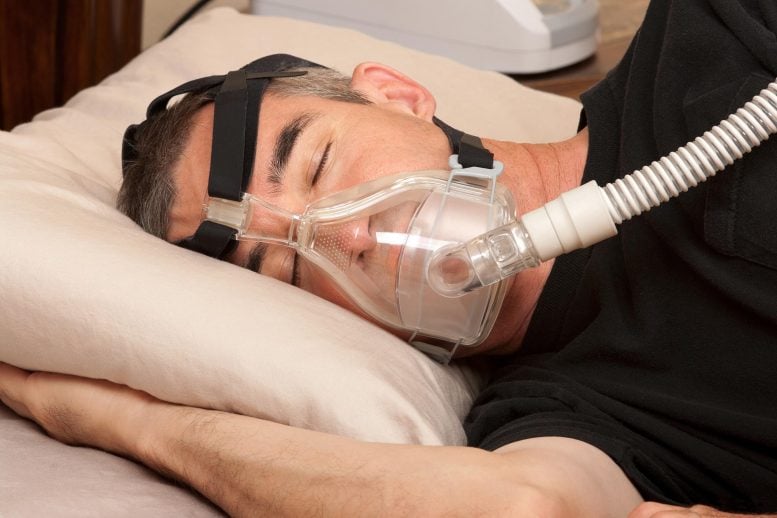
    CPAP Machine Sleep Apnea
    Sleep apnea is a prevalent condition where your breathing repeatedly pauses and resumes during sleep, leading to insufficient oxygen supply in your body. If you’ve been informed of your snoring or gasping episodes during sleep or if you’re encountering symptoms like excessive daytime sleepiness, it is advisable to consult your healthcare provider regarding potential sleep apnea. They can provide valuable guidance and necessary support. Breathing devices such as continuous positive air pressure (CPAP) machines (pictured here) and lifestyle changes are common sleep apnea treatments.

    Association Between Sleep Quality and Brain Aging

    “These biomarkers are sensitive signs of early cerebrovascular disease,” said study author Diego Z. Carvalho, MD, MS, of the Mayo Clinic in Rochester, Minnesota, and a member of the American Academy of Neurology. “Finding that severe sleep apnea and a reduction in slow-wave sleep are associated with these biomarkers is important since there is no treatment for these changes in the brain, so we need to find ways to prevent them from happening or getting worse.”

    The study involved 140 people with obstructive sleep apnea with an average age of 73 who had a brain scan and also an overnight study in a sleep lab. The participants did not have cognitive issues at the start of the study and had not developed dementia by the end of the study. A total of 34% had mild, 32% had moderate and 34% had severe sleep apnea.

    Impact of Deep Sleep on White Matter Health

    The sleep study examined how long people spent in slow-wave sleep, which is also called non-REM stage 3, or deep sleep, and is considered one of the best markers of sleep quality. The researchers found that for every 10-point decrease in the percentage of slow-wave sleep, there was an increase in the amount of white matter hyperintensities similar to the effect of being 2.3 years older. The same decrease was also associated with reduced axonal integrity similar to the effect of being three years older.

    People with severe sleep apnea had a higher volume of white matter hyperintensities than those with mild or moderate sleep apnea. They also had reduced axonal integrity in the brain.

    The researchers accounted for age, sex, and conditions that could affect risk of brain changes, such as high blood pressure and high cholesterol.

    “More research is needed to determine whether sleep issues affect these brain biomarkers or vice versa,” Carvalho said. “We also need to look at whether strategies to improve sleep quality or treatment of sleep apnea can affect the trajectory of these biomarkers.”

    The split-night design of the sleep study led to a limitation of this overall study. Participants’ sleep was observed and their sleep factors measured until they met criteria for the diagnosis of obstructive sleep apnea, mostly in the first two to three hours of sleep. Then they received a positive airway pressure machine for the rest of the night. So the sleep measurements may not be representative of a full night of sleep.

    Reference: “Association of Polysomnographic Sleep Parameters With Neuroimaging Biomarkers of Cerebrovascular Disease in Older Adults With Sleep Apnea” by Diego Z. Carvalho, Stuart J. McCarter, Erik K. St Louis, Scott A Przybelski, Kohl L. Johnson Sparrman, Virend K. Somers, Brad F Boeve, Ronald C Petersen, Clifford R. Jack, Jonathan Graff-Radford and Prashanthi Vemuri, 10 May 2023, Neurology.
    DOI: 10.1212/WNL.0000000000207392

    The study was supported by the National Institutes of Health, Gerald and Henrietta Rauenhorst Foundation, Millis Family, Alexander Family Alzheimer’s Disease Research Professorship of the Mayo Foundation, Alzheimer’s Association, Liston Award, Elsie and Marvin Dekelboum Family Foundation, and Schuler Foundation.

    Never miss a breakthrough: Join the SciTechDaily newsletter.
    Follow us on Google and Google News.

    American Academy of Neurology Biomarkers Brain Neuroscience Popular Sleep Apnea Sleep Science
    Share. Facebook Twitter Pinterest LinkedIn Email Reddit

    Related Articles

    Is Sleep Apnea Silently Reshaping Your Brain?

    Neurological Shadows: The Cognitive Costs of Sleep Apnea Unraveled

    Don’t Sleep on This: Study Links Sleep Apnea to Smaller Brain Volume

    Are Your Sleep Habits Putting You at Risk for a Stroke? Find Out Now!

    Antioxidant Flavonols – From Fruit, Tea and Wine – Linked to Slower Memory Decline

    Eating Omega-3 Fatty Acids in Midlife May Sharpen Thinking Skills and Improve Brain Structure

    Shift Work Has Long-Term Negative Health Consequences

    Long-Term Benzodiazepine (Xanax, Klonopin, Ativan) Use Destroys Neural Connections in the Brain

    Hit the Sleep “Sweet Spot” To Keep Brain Sharp: Too Little and Too Much Sleep Linked to Cognitive Decline

    Leave A Reply Cancel Reply

    • Facebook
    • Twitter
    • Pinterest
    • YouTube

    Don't Miss a Discovery

    Subscribe for the Latest in Science & Tech!

    Trending News

    Just a Few Breathless Minutes a Day Could Slash Your Risk of 8 Major Diseases

    This Simple Habit Could Cut Your Risk of Dementia by 30%

    Scientists Debunk Rattlesnake Myth That Fooled Hikers and Doctors for Decades

    Scientists Discover Plants Can “Count” – and May Be Smarter Than We Thought

    New Research Reveals Ancient Mars May Have Been Warm, Wet – and Possibly Alive

    This Surprising Daily Habit Could Cut Dementia Risk by 35%

    Just 10 Minutes a Day: Scientists Say This Ancient Chinese Practice Shows Powerful Blood Pressure Benefits

    Scientists Say This Popular Food Could Help Your Body Get Rid of Microplastics

    Follow SciTechDaily
    • Facebook
    • Twitter
    • YouTube
    • Pinterest
    • Newsletter
    • RSS
    SciTech News
    • Biology News
    • Chemistry News
    • Earth News
    • Health News
    • Physics News
    • Science News
    • Space News
    • Technology News
    Recent Posts
    • What Causes Chronic Pain? Scientists Identify Key Culprit in the Brain
    • Semaglutide Shows Surprising Mental Health Benefits in Massive 100,000-Person Study
    • This Little-Known Japanese Fruit Could Help Stop Lung Cancer Before It Starts
    • Scientists Uncover Giant Lava Fields From an Active Underwater Volcano
    • Baffling Geologists for 150 Years: New Study Finally Solves Green River Mystery
    Copyright © 1998 - 2026 SciTechDaily. All Rights Reserved.
    • Science News
    • About
    • Contact
    • Editorial Board
    • Privacy Policy
    • Terms of Use

    Type above and press Enter to search. Press Esc to cancel.