
Study suggests physicians may need to follow patients with both conditions more closely.
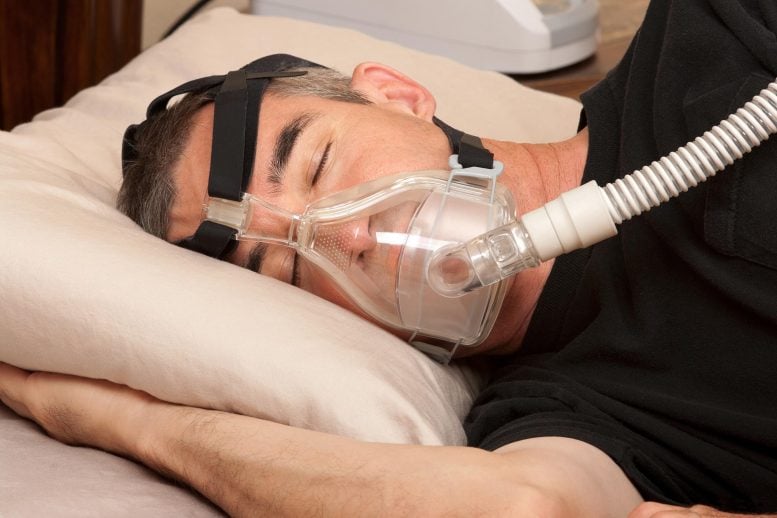
A study led by the National Institutes of Health’s RECOVER Initiative and supported by NYU Langone Health found that sleep apnea significantly increases the risk of long COVID in adults. The research team analyzed data from over 2 million patients across three networks and found that a prior diagnosis of sleep apnea led to a 12% increase in long-term symptoms in the PCORnet group and a 75% increase in the N3C group. The increased risk persisted even when accounting for other known factors contributing to long COVID, such as obesity, hypertension, diabetes, and hospitalization during initial infection. Interestingly, the risk of long COVID associated with sleep apnea disappeared in children when controlling for other factors.
Sleep apnea may significantly increase the risk for long COVID in adults, according to a study led by the National Institutes of Health’s RECOVER Initiative and supported by NYU Langone Health as home to the effort’s Clinical Science Core (CSC).
As of April 2023, more than 100 million Americans had been infected with the virus that causes COVID-19. As of April the U.S. Government’s Household Pulse survey estimated that about 6 percent of U.S. adults are experiencing symptoms associated with long COVID, including brain fog, fatigue, depression, and sleep problems. Past studies have shown that patients with obstructive sleep apnea (OSA) tend to have more severe illness when initially infected with COVID-19. OSA affects about 1 in 8 adults but is often underdiagnosed.
To better understand links between sleep apnea and long-term COVID symptoms, the research team reviewed data across three RECOVER research networks of patients who had tested positive for COVID-19 between March 2020 and February 2022, according to their health records. Two networks included adult patients – the National Patient-Centered Clinical Research Network (PCORnet) with 330,000 patients – and the National COVID Cohort Collaborative (N3C) with 1.7 million patients. The third patient cohort in the study analysis included the pediatric-focused network PEDSnet, made up of 102,000 children.
Sleep Apnea’s Impact on Long COVID Risk
Published online on May 11 in the journal Sleep, this study found that a prior diagnosis of sleep apnea in the PCORnet group came with a 12 percent increase in risk for long-term symptoms months after patients’ initial infections. In the N3C patient group, in which patients had higher levels of other chronic conditions than those in PCORnet, sleep apnea came with a 75 percent increase in risk for long COVID compared to those without sleep apnea. The observed increases in risk for long COVID in adults with sleep apnea remained significant even when the research team accounted for obesity, hypertension, diabetes, and hospitalization at the time of their initial COVID infection, all known to independently contribute to risk for long COVID.
The researchers hypothesize that the differences in the percentage increases in long COVID risk between the study groups may be further explained by variations in definitions of long COVID, study populations, and in analysis methods of patient records, across the large study. In contrast to the patterns seen in adults, the contribution of sleep apnea to the risk of long COVID disappeared in children when the researchers controlled for other risk factors, including obesity.
“A strength of the work is that the link between sleep apnea and long COVID persisted regardless of how the researchers in our study defined long COVID or gathered data,” says senior study author Lorna Thorpe, PhD, MPH, Professor and Director of the Division of Epidemiology at NYU Langone Health. She is also co-lead of efforts to understand long COVID using electronic health record networks for the RECOVER CSC at NYU Langone. “This study is the first collaboration of this focus and scale to find that adults with sleep apnea are at greater risk for long COVID.”
RECOVER—Researching COVID to Enhance Recovery—is dedicated to understanding why some people develop long-term symptoms following a COVID infection, and how to detect, treat, and prevent long COVID. As the CSC, NYU Langone Health is charged with integrating research activities of clinical sites around the country.
“There’s still so much to uncover about long COVID, but this study will inform clinical care by identifying patients that should be watched more closely,” says corresponding author Hannah Mandel, a senior research scientist for the electronic health record studies arm of the RECOVER CSC at NYU Langone Health. “People with sleep apnea who get infected with COVID should seek early treatment, pay attention to their symptoms, and keep up with their vaccinations to lower the risk of infection in the first place.”
Gender Differences in Long COVID Risk
Interestingly, in the N3C study group, long COVID risk was higher among women with sleep apnea compared to men with sleep apnea. Investigators identified an 89% increased likelihood for having long COVID in women, compared to a 59% increased chance for men. The reasons for this are not clear, but women with diagnosed sleep apnea in their medical records may have more severe conditions than men, in part because women with sleep apnea tend to go undiagnosed with OSA for longer.
Reference: “Risk of post-acute sequelae of SARS-CoV-2 infection associated with pre-coronavirus disease obstructive sleep apnea diagnoses: an electronic health recordbased analysis from the researching coronavirus disease to enhance recovery initiative” by Hannah L Mandel, Gunnar Colleen, Sajjad Abedian, Nariman Ammar, L Charles Bailey, Tellen D Bennett, M Daniel Brannock, Shari B Brosnahan, Yu Chen, Christopher G Chute, Jasmin Divers, Michael D Evans, Melissa Haendel, Margaret A Hall, Kathryn Hirabayashi, Mady Hornig, Stuart D Katz, Ana C Krieger, Johanna Loomba, Vitaly Lorman, Diego R Mazzotti, Julie McMurry, Richard A Moffitt, Nathan M Pajor, Emily Pfaff, Jeff Radwell, Hanieh Razzaghi, Susan Redline, Elle Seibert, Anisha Sekar, Suchetha Sharma, Tanayott Thaweethai, Mark G Weiner, Yun Jae Yoo, Andrea Zhou and Lorna E Thorpe on behalf of the RECOVER Consortium, 11 May 2023, Sleep.
DOI: 10.1093/sleep/zsad126
The study was funded by RECOVER (OT2HL161847) and received additional support from the National Center for Advancing Translational Sciences (UL1TR002494). For more information on RECOVER, visit https://recovercovid.org. In addition, the CSC at NYU Langone Health is co-led by RECOVER co-principal investigators Stuart D. Katz, MD, Helen L. and Martin S. Kimmel Professor of Advanced Cardiac Therapeutics and founding director of NYU Langone’s heart failure program; Leora Horwitz, MD, director of the Center for Healthcare Innovation and Delivery Science; Andrea B. Troxel, ScD, director of the Division of Biostatistics and professor in the Department of Population Health; and Rachel S. Gross, MD, director of pediatric research for RECOVER CSC and assistant professor of pediatrics and population health at the NYU Grossman School of Medicine and Bellevue Hospital Center.
Along with Thorpe and Mandel, study authors from the NYU Langone Health were Gunnar Colleen, Yu Chen, and Jeff Radwell in the Department of Population Health, Stuart Katz in the Division of Cardiology, Jasmin Divers in the Department of Medicine at New York University Long Island School of Medicine, and Shari Brosnahan in the Division of Pulmonary, Critical Care and Sleep Medicine. Authors at Weill Cornell Medicine included Sajjad Abedian in the Information Technologies and Services Department; Ana Krieger in the departments of Medicine, Neurology and Genetic Medicine; and Mark Weiner in Department of Medicine. At the Children’s Hospital of Philadelphia, authors included L Charles Bailey, Kathryn Hirabayashi, Vitaly Lorman, and Hanieh Razzaghi at the Applied Clinical Research Center. From the University of Colorado’s Anschutz Medical Campus, authors included Melissa Haendel and Julie McMurry of Biomedical Informatics.
Additional co-authors included Margaret Hall, Richard Moffitt, and Yun Jae Yoo in the Department of Biomedical Informatics at Stony Brook University; and Johanna Loomba, Andrea Zhou, and Suchetha Sharma in the Integrated Translational Health Research Institute at the University of Virginia; Nariman Ammar at the University of Tennessee Health Science Center College of Medicine, Tellen Bennett in the Department of Pediatrics at Children’s Hospital Colorado, M Daniel Brannock of the Center for Data Science and AI in Durham, Christopher Chute of Johns Hopkins School of Medicine, Michael Evans of the Clinical and Translational Science Institute at the University of Minnesota, Mady Hornig of Columbia University’s Mailman School of Public Health, Diego Mazzotti of the Division of Pulmonary Critical Care and Sleep Medicine at the University of Kansas Medical Center, Nathan Pajor of the University of Cincinnati College of Medicine, Emily Pfaff of University of North Carolina at Chapel Hill School of Medicine, Susan Redline of Brigham and Women’s Hospital, Elle Seibert of Rose International, Anisha Sekar of the Patient-Led Research Collaborative in Washington, D.C., and Tanayott Thaweethai of Massachusetts General Hospital and Harvard Medical School, and Andrea Zhou of the Integrated Translational Health Research Institute at of the University of Virginia, on behalf of the RECOVER Consortium.
Never miss a breakthrough: Join the SciTechDaily newsletter.
Follow us on Google and Google News.