
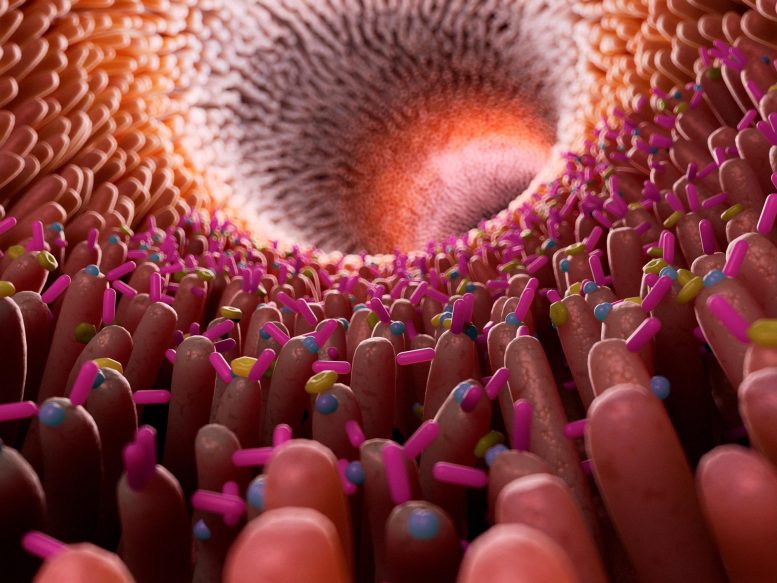
A team of scientists from Western University and the University of Arkansas have discovered a unique blood marker that shows a link between gut bacteria and autism in some children.
Results of a recent clinical study by researchers from Western University and University of Arkansas reveal the presence of a unique blood marker, which may further the understanding of possible gut linked environmental contributors to autism. The findings may also forecast potential blood tests for early screening to identify and potentially treat the condition, even before symptoms present.
The discovery, made by Drs. Richard Frye and Stepan Melynk of Arkansas Children’s Hospital Research Institute in Little Rock, Arkansas and Western’s Dr. Derrick MacFabe, found evidence of abnormal energy metabolism in a large subgroup of autistic children, which was consistent with previous biological breakthroughs made by MacFabe and his team over the past decade, further proving that these metabolic abnormalities may arise, not only from genetic factors, but from compounds produced by certain types of bacterial species often found to be increased in the gut of persons with autism.
The paper, entitled “Unique acyl-carnitine profiles are potential biomarkers of acquired mitochondrial disease in autism spectrum disorders,” was recently published in the prestigious peer-reviewed open-access journal Translational Psychiatry.
Recent evidence suggests that biological abnormalities in many persons with autism spectrum disorders (ASD) are not restricted to the brain but can involve other body systems including the immune, energy generation, detoxification, and digestive systems. These abnormalities may be due to impaired function of mitochondria, the energy producers of cells. ASD is a family of developmental conditions of impaired language and social development, as well as repetitive behaviors and restricted interests.
“Autism spectrum disorders affect up to one in 88 individuals,” says MacFabe. “And the number appears to be increasing. Many have digestive and metabolic issues, but how they may relate to ASD behaviors and the increase of occurrence were unclear.”
In this study of 213 children, the research team found that 17 percent of children with ASD had a unique pattern of blood markers of fat metabolism, called acyl-carnitines, as well as other evidence of abnormal cellular energy function, like reduced glutathione.
“This study suggests that autism in some patients can arise from alterations in mitochondrial function and fat metabolism following environmental exposure to propionic acid produced from ASD-associated gut bacteria,” explains MacFabe.
Reference: “Unique acyl-carnitine profiles are potential biomarkers for acquired mitochondrial disease in autism spectrum disorder” by R E Frye, S Melnyk and D F MacFabe, 22 January 2013, Translational Psychiatry.
DOI: 10.1038/tp.2012.143
MacFabe serves as the Director of the Kilee Patchell-Evans Autism Research Group, which was co-founded in 2003 by MacFabe and David Patchell-Evans, Founder and CEO of GoodLife Fitness. Patchell-Evans provided the initial funding and continues to be the major supporter of this multidisciplinary research team.
Never miss a breakthrough: Join the SciTechDaily newsletter.
Follow us on Google and Google News.