
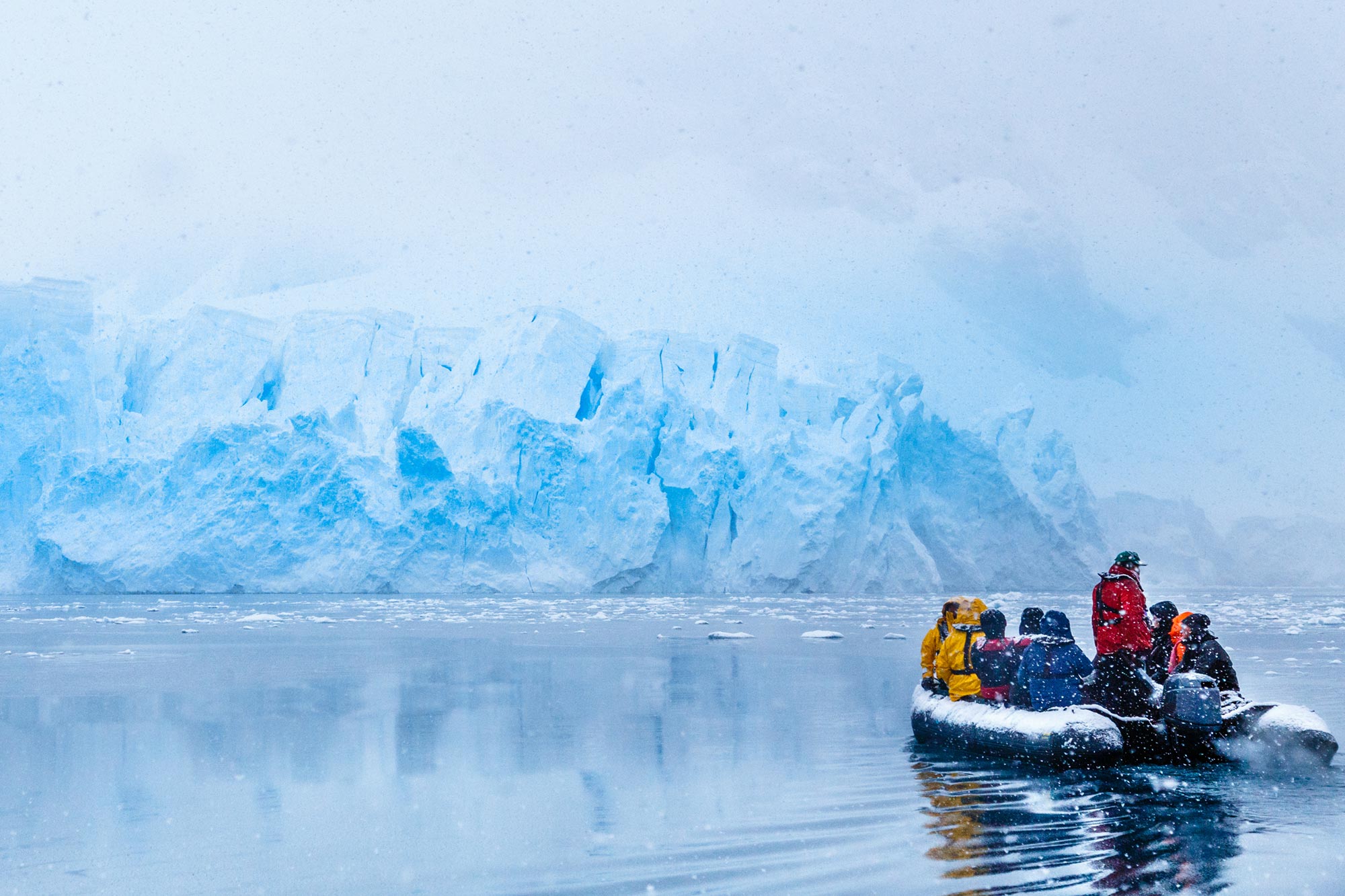
Antarctic guides walked away from their dream jobs after tourism’s environmental damage became impossible to ignore.
“You’d see massive glacier calvings, and you’d just want to cry. But all the guests would be cheering. And you’d be like … ‘Can you not put two and two together?’”
Those are the words of a former Antarctic tour guide we interviewed. For anyone interested in nature, few jobs sound more enviable. You spend months among penguins, orcas, and glaciers, helping visitors experience one of the world’s most extraordinary and unspoiled places.
But for some guides, like those we quote in this article, that privilege slowly became impossible to reconcile with their beliefs. Watching climate change unfold while helping thousands more visitors reach the continent eventually led them to leave the jobs they’d once dreamed of.
Antarctica’s Tourism Paradox
Antarctic tourism is growing fast, with over 120,000 visits in 2025-26 and up to 450,000 expected each summer within a decade. Our new study reveals how Antarctic tour guides grapple with the dilemma at the heart of their work—bringing more and more people to an ecologically vulnerable area and helping cause some of the greatest CO2 emissions of any form of tourism.
“I was down there on the hottest day ever recorded in 2020. Hiking up a glacier in my T-shirt, driving boats without gloves. It was really sad. The impacts of climate change absolutely hit you in the face.”
We interviewed 25 former Antarctic guides who decided to quit their jobs (all quotes are anonymized). These guides couldn’t align their morals with the effects of tourism they were witnessing day after day.
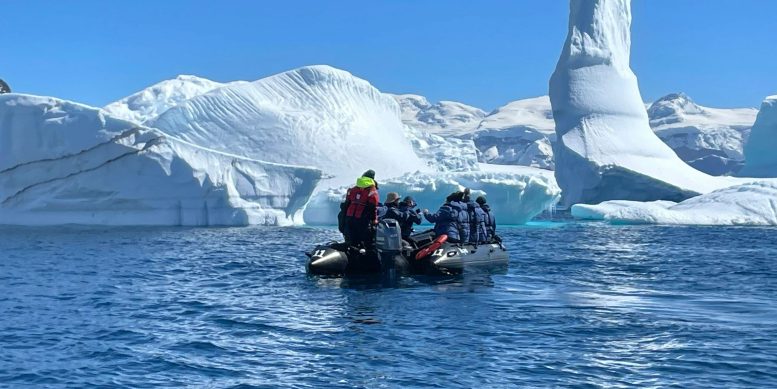
“Very often, for long periods of time, the penguins had maybe a few hours’ break during the night. Otherwise, there were hundreds of people walking through the colonies non-stop.”
While tour operators often argue that visiting Antarctica can heighten tourists’ awareness of environmental issues, former guides were struck by guests’ ignorance of human impacts.
A Growing Moral Conflict
None of the guides quit overnight. Their decisions emerged through years of reflection, uncertainty, and moral conflict.
“We are always in conflict in our minds with two parts: the excitement to go to Antarctica to work in remote places we like and being complicit in tourism industry development.”
“I can’t work in the farce of climate change cruise tourism anymore. It’s just, how can I go there, tell people about climate change, and not do anything about it?”
The Personal Cost of Leaving
The former Antarctic tour guides show meaningful change is often a painful and gradual process rather than a single dramatic moment. For many, years of acting against their values affected their wellbeing.
“I think what it comes down to for me is, you know, if I think about being on my deathbed and trying to look my kids in the eyes and saying, ‘I tried.’ I don’t know if I could have done that if I kept doing what I was doing.”
The stories of guides who left one of the world’s most extraordinary tourism jobs powerfully illustrate how abandoning unsustainable lifestyles can come with real personal costs.
“To this day, Antarctica … stays in the forefront of my head as the most incredibly raw environment that deserves all the care and protection. And I just think tourism and us being there was doing the opposite of that completely.”
Loving Antarctica From Afar
Many of the research participants still felt deeply connected to Antarctica, and they sometimes regretted leaving. Mixed feelings and ambiguity are an inherent part of decisions we take out of concern and care for others, including remote environments.
“Do I wish I was getting on a flight and heading to the floe edge to take people out on the ice? Yes, there’s a big part of me that wishes I were doing that right now. And I also know that I would feel like shit after doing it.”
Walking Away to Protect It
In the case of the people we interviewed, caring about Antarctica meant walking away from Antarctic tourism. The interviews suggest that distance doesn’t necessarily weaken responsibility. For these former tour guides, caring for Antarctica ultimately meant leaving it—and many felt better after they quit. Sometimes the best way to protect a place you love is to leave it alone.
“I was working very much against what I knew wasn’t right, and I think that was coming out in my body as well. And then when I made that decision to walk away, I just felt so much better. It was like I could breathe again.”
If you’ve ever questioned whether your work aligns with your values, these former Antarctic tour guides offer a thoughtful perspective on balancing career, well-being, and environmental responsibility. Their stories may also inspire a deeper appreciation for protecting Antarctica by leaving it untouched.
Reference: “Mind the gaps: The moral journey of tour guides who quit” by Zdenka Sokolíčková, Elizabeth Cooper and Christy Hehir, 8 July 2026, Annals of Tourism Research.
DOI: 10.1016/j.annals.2026.104237
Zdenka Sokolickova receives funding from NWO’s PT-REPAIR program under number NWA.20.1435.003 (GUIDE-BEST project).
Christy Hehir receives funding from NWO’s PT-REPAIR ADAPT program. This research is under number NWA.20.1435.003 (GUIDE-BEST project) of which Christy is a non-paid collaborator.
Elizabeth Cooper receives funding from NWO’s PT-REPAIR program under number NWA.20.1435.003 (GUIDE-BEST project).
Adapted from an article originally published in The Conversation.
Never miss a breakthrough: Join the SciTechDaily newsletter.
Follow us on Google and Google News.
15 Comments
Too bad the tourists couldn’t cheer the ice being accumulated on THE OTHER SIDE OF THE CONTINENT.
The small (and probably temporary) ice gain in east Antarctica is more than balanced by ice loss in west Antarctic and the Antarctic peninsula, so the continent as a whole has a negative mass balance. The east is essentially a desert that receives little moisture. Warming increases the total amount of moisture air can hold, so it’s not surprising unusual weather events could bring that moisture to the continental interior.
With you 100%.. Doom & Gloomers gotta Doom & Gloom. These are the same people who don’t recycle their paper & plastic like my green liberal neighbors! The funny thing is I do though.. Bring on the hateful comments lol.
During our trip to Alaska last summer we learned the same thing. Glaciers over here are receding and calving, but over here they are growing. Our Earth was created by God and God will one day destroy it when he builds a new earth. Man is too small to destroy what God created.
Fear mongers
Oh for heavens sake . Ice melting is not a foreign process to our nearly 5 billion year old earth. No need for crocodile tears over a natural process that has happened ad nauseam over the course of Earths genesis. How do we know faster warming hasn’t occurred before? Our ice core analogs represent only 1% of earths time so that’s not an answer
Too many clueless lefties can’t see the forest for the trees.
What a time to use that idiom, when so many forests are on fire that there’s a continent-wide pall of smoke.
And most (but not all) of the fires are proven to be…. ARSON!
Yep! The commies addicted to their causes as they set things alight.
I’m sorry for the environment because too many people being careless and abusing the environment but global warming???? Give me a brake! They need to have strict limits on how many people can visit Anartica.
1. Only those scientists may be permitted to go to antarctica who are self dependant to travel, prepare self food, no need of any oil fuel burn and has knowledge, technick of communication. No need of any nonscience, nonresearch person.
2. Stop all stations who burn fossil fuel.
3. Need to ask each research station what is their scientific achievement? Have they workout on goals?. They should get clear morethan 90 % objectives. Otherwise no permission.
4. Since several decades we are going there and doing research, but we couldn’t change the natural happenings, then why to disturb it again.
5. Tourism… 100 % need to stop. It may be aireal only. Please don’t land there.
6.Antarctica should not be a land for photography, to show your braveness, your thrill. Leave it alone.
6. Go for simulation experiments instead of going there, carrying hundreds of people, goods and materials there.
7.we don’t have still any perfect answer for human generated waste treatment and emission of harmful gases.
Hope the International Antarctic Care Committee ans Global think tanks think on it.
Prof S P Chavan.
Ex member Scientific Team to Antarctica.
How can you have initials after your name and not know ONE THING about the mechanics of life itself?
Prevention of Human entry at Antarctica ans 2000 km area around Antarctica may solve several issues fir this Continent.
What you don’t get Doc., is humans are equally nature. Research is needed. Yeah, cut back on the beer swilling redneck tourists, but research needs to be done to advance knowlege in wisdom (not for the sake of knowing itself). The ICE project detector and observatory for example….
Most of the commenters are ignoring the effects of tourism on the wildlife. It’s a nearly constant stress on the animals. You’re all getting triggered by the global warming aspect and you’re so blinded by emotion that you miss the other points made in the article.