
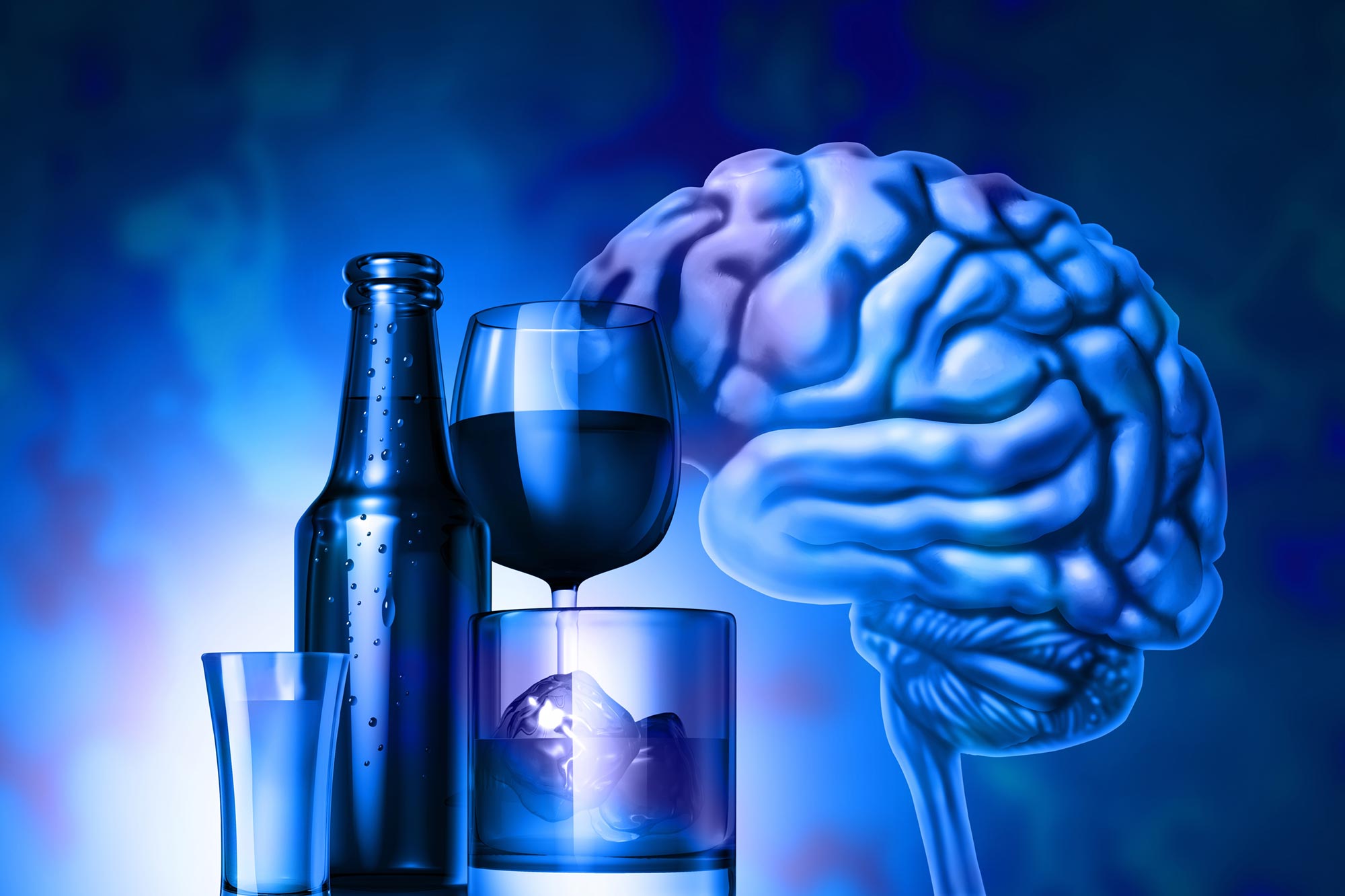
A brain region tied to memory and reward may explain how GLP-1 drugs reduce cravings.
For many people, imagining a juicy burger or a cold glass of beer is enough to spark a craving and nudge them toward action.
That connection between mental images and behavior has an important purpose. It helps push people to seek out food, drink, and other things the body needs to survive.
But the same system can go wrong. When rewarding cues become too hard to ignore, they can contribute to substance overuse disorders, including overeating that leads to obesity and alcohol abuse.
Scientists have been studying this connection for decades. Research dating back to the 1970s has found links between vivid mental imagery and drug abuse.
Understanding how craving turns into consumption is one of the central challenges in addiction neuroscience. For years, that process has been difficult to pin down. Now, a new generation of weight loss drugs may give scientists a powerful way to study it.
These medications, including Ozempic and Wegovy, imitate the hormone GLP-1. They help trigger insulin release, slow digestion, and increase feelings of fullness. Known as GLP-1 agonists, they were first developed to treat type 2 diabetes because they help regulate blood sugar.
Patients taking these drugs often experienced major weight loss as well. In some cases, the effect came close to what might be expected after bariatric surgery.
But there is another less well-publicized effect. Human studies show that GLP-1 agonists reduce alcohol consumption. Preclinical animal studies suggest these drugs also reduce the use of cocaine, amphetamines, opiates and nicotine.
These drugs are changing how we think about the brain’s reward system. They may also open new treatment options for obesity, alcohol dependence and the consumption of other addictive substances.
How the brain regulates reward stimuli
We have a reasonable understanding of the brain’s “reward circuitry” associated with regions that produce the neurotransmitter dopamine.
These brain parts – the ventral tegmental area (VTA) and nucleus accumbens (NAc) – have been the subject of research on reward for decades. They are the obvious candidate regions to look for a mechanism for GLP-1 action in the brain. But they lack significant density of receptors for GLP-1 and are unlikely to be the direct mechanism.
We must, therefore, consider other brain regions to understand the anti-consumption effect of GLP-1 drugs.
One jump “upstream” from the dopamine-producing brain parts is a region called the lateral septum. This brain structure has been historically implicated in emotional regulation.
Back in 1953, pioneering US behavioral researchers Joseph Brady and Walle Nauta coined the term “septal rage” when animals with damage in the lateral septum showed increased aggression, while direct stimulation of this brain region reduced aggression.
Much more recent work has placed the lateral septum at the center of a neural connectivity network. This has reframed how we think about its function.
While a link between the lateral septum and another region called the hypothalamus is probably responsible for septal rage, the lateral septum links with many other regions with various functions.
The brain’s reward control center
The lateral septum inherits much of its primary input from a brain region called the hippocampus.
This region is well known as the place that lets us form long-term “episodic memories.” A famous case of hippocampal damage, Henry Molaison (patient HM), was unable to form new memories after his surgery for epilepsy. He effectively lived without a past, in permanent present tense.
The hippocampus also contains the remarkable “place cells” – neurons that fire corresponding to a person’s thoughts about their position in space and, as recent research has shown, time.
This “where and when am I” information gets forwarded to the lateral septum. Key research has recently shown the lateral septum also contains place cells, but these cells strongly respond to rewards. They effectively add “what is good in this place” to the “where and when am I” information from the hippocampus.
Critically, the lateral septum shares this information with the dopamine-producing regions we would normally associate with reward.
Neuroscientists now think of the lateral septum as the brain region that lets us “think about” rewards—our conscious perception of them—and communicates with the machinery in the brain’s reward system that produces dopamine to make us feel good about them.
There is one last reason to suspect the lateral septum as the mechanism behind the anti-consumption effect of GLP-1 agonists. It is absolutely loaded with GLP-1 receptors.
Emerging research points to this as the mechanism. GLP-1 activation directly in the lateral septum has recently been shown to reduce food consumption in mice. Earlier this year, another study showed the same for alcohol consumption.
My own lab has shown this year that GLP-1 drugs reduce a type of activity in the lateral septum that may prevent it communicating so effectively with other brain regions.
These findings are reshaping our understanding of how the brain processes rewards and have put the spotlight firmly on the lateral septum as the home of cravings.
Adapted from an article originally published in The Conversation.
Never miss a breakthrough: Join the SciTechDaily newsletter.
Follow us on Google and Google News.
2 Comments
It appears to me that the Brain controls what ever the body becomes. It controls the main organs,glands etc when ever the body trys to resist it self.
It is hideously dangerous to make such statements. GLP-1 drugs might help, but complete abstinence is still proven to be the only cure for alcoholism. To give practicing alcohol addicts an excuse to continue drinking is simply unconscionable.