
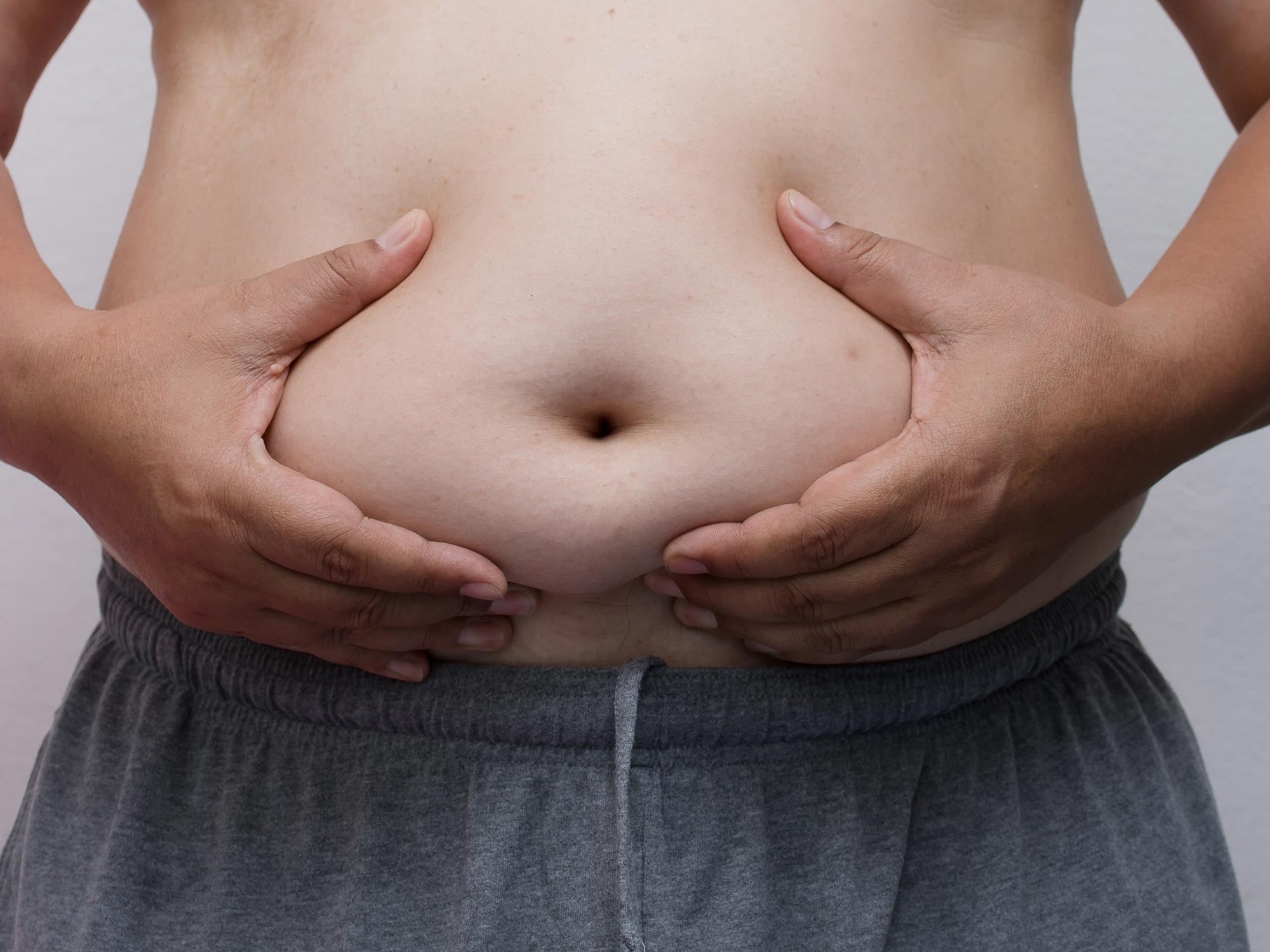
New research suggests that fat tissue may be more adaptable than previously thought, undergoing significant cellular and molecular changes as body weight declines.
Obesity does more than increase body weight. It can also disrupt the normal biology of fat tissue, turning it into a source of chronic inflammation that raises the risk of diabetes and cardiovascular disease.
Weight loss is known to reduce those risks, but one major question has remained: can fat tissue truly recover, or does it continue to carry a biological “memory” of obesity even after a person loses a large amount of weight?
A new study from researchers at the University of Southern Denmark offers a clearer answer. Led by Assistant Professor Anne Loft, Associate Professor Jesper Grud Skat Madsen, and Professor Susanne Mandrup, the work shows that fat tissue can undergo striking repair during weight loss. The study was published in Nature Metabolism.
The three scientists are part of the Center of Excellence ATLAS, a research initiative focused on understanding the molecular processes that alter liver and fat tissue in response to obesity and weight loss. These processes are important because dysfunction in these tissues plays a central role in metabolic diseases such as diabetes and cardiovascular disease.
Tracking Fat Tissue Changes During Weight Loss
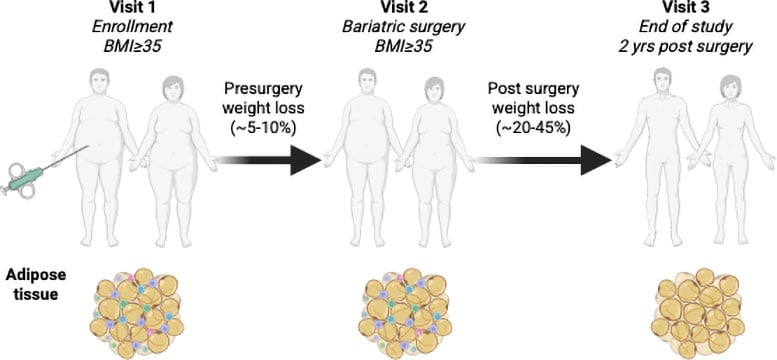
To better understand how fat tissue responds to weight reduction, the researchers used advanced single cell analysis to examine tissue samples from patients with severe obesity at three different points in time:
- When patients were first scheduled for gastric bypass surgery.
- After a moderate weight loss of 5–10% through dietary changes, just before surgery.
- Two years post-surgery, after substantial weight loss of 20–45%.
Anne Loft explains: “When we analyzed the adipose tissue samples taken two years after surgery, following considerable weight loss, the changes were striking. The number of immune cells was greatly reduced, and several types of immune cells were down to levels normally seen in lean individuals. This is one of the most important improvements after weight loss because immune cells contribute to inflammation and reduced insulin sensitivity in fat tissue.”
She added: “This local insulin resistance can affect the whole body and, over time, increase the risk of type 2 diabetes and other obesity-related diseases. So when inflammation and immune cells decrease, it’s a clear benefit for health.”
Early Changes During Moderate Weight Loss
The team also found a large increase in cells that form blood vessels. This change likely improves the supply of oxygen and nutrients to fat tissue and represents another beneficial adaptation following major weight loss.
In addition, patterns of gene activity across all analyzed cell types shifted back toward levels typically seen in lean individuals.
But what about the moderate weight loss phase? Clinically, it’s known that even a 5% drop in weight improves whole-body insulin sensitivity. So, the team examined the corresponding fat tissue.
“At this stage, we didn’t see a drop in inflammation,” says Loft. “Meaning that the improvements in insulin sensitivity is unlikely to be driven by reduced inflammation in fat tissue.”
According to Susanne Mandrup, scientists have long known that modest weight loss brings health benefits. What has remained unclear is whether the fat tissue itself becomes healthier during this early phase.
“Using single-cell technologies, we saw an increase in a specific type of pre-fat cell and a boost in gene activity promoting the creation of new fat cells,” Mandrup explains. “This suggests that modest weight loss may promote formation of new and healthier fat cells, which may contribute to the improved insulin sensitivity.”
She concludes: “Our study indicates that even modest weight loss in these patients can benefit the health of the fat tissue. After major weight loss, the fat tissue largely resemble that of lean individuals, suggesting that the ‘memory’ of obesity is not as persistent as previously thought.”
Reference: “Single-cell-resolved transcriptional dynamics of human subcutaneous adipose tissue during lifestyle- and bariatric surgery-induced weight loss” by Anne Loft, Rasmus Rydbirk, Ellen Gammelmark Klinggaard, Elvira Laila Van Hauwaert, Charlotte Wilhelmina Wernberg, Andreas Fønss Møller, Trine Vestergaard Dam, Mohamed Nabil Hassan, Babukrishna Maniyadath, Ronni Nielsen, Aleksander Krag, Joanna Kalucka, Søren Fisker Schmidt, Mette Enok Munk Lauridsen, Jesper Grud Skat Madsen and Susanne Mandrup, 12 January 2026, Nature Metabolism.
DOI: 10.1038/s42255-025-01433-4
Never miss a breakthrough: Join the SciTechDaily newsletter.
Follow us on Google and Google News.
1 Comment
All the above means to ” live healthy”. Think healthy ! Then we WILL BE HEALTHY! .