
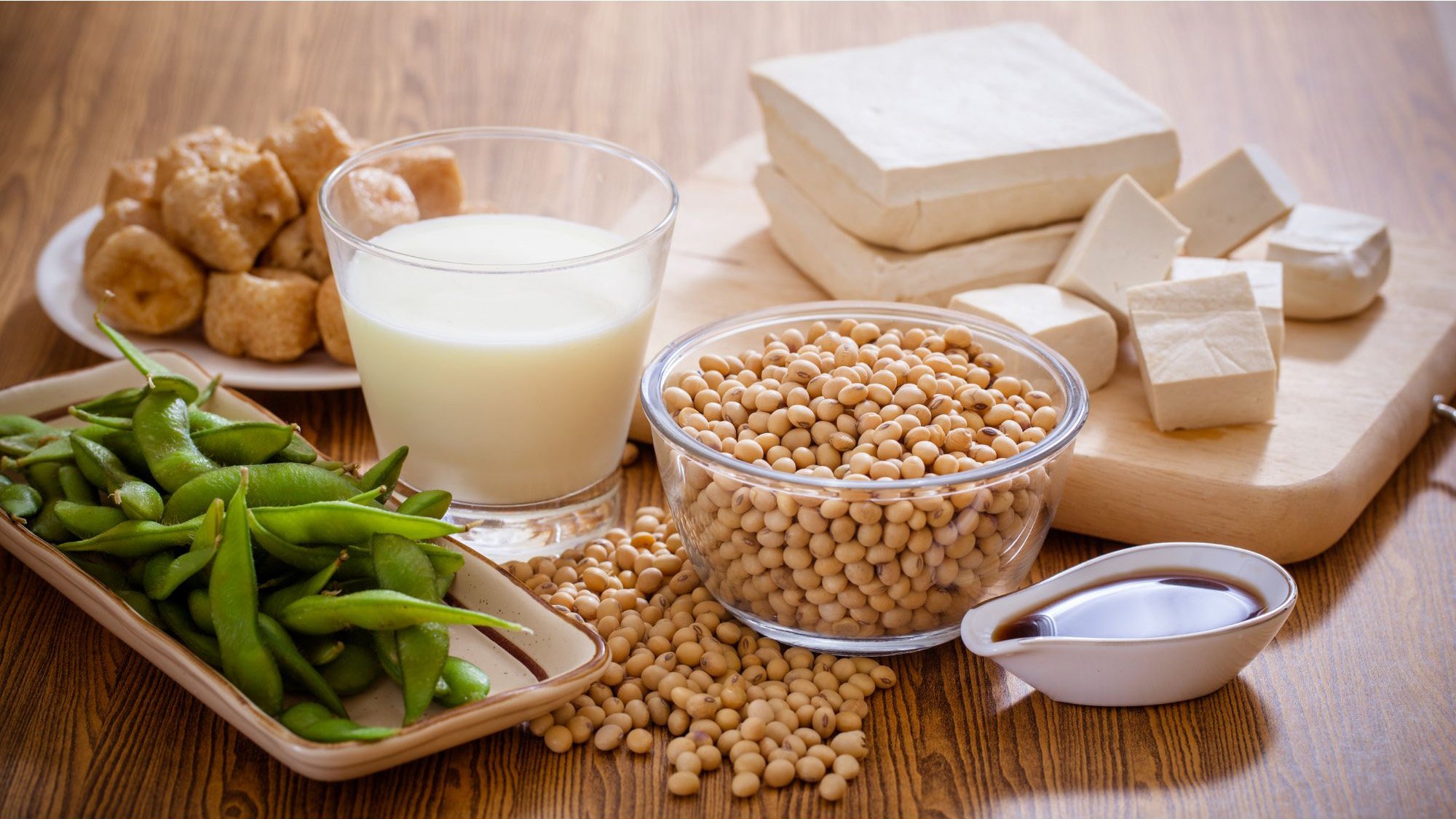
Higher soy and legume intake may reduce the risk of high blood pressure, with the greatest benefits seen at moderate daily consumption levels.
Higher consumption of soy foods and legumes may help lower the risk of high blood pressure, according to a pooled analysis of existing research published in the open-access journal BMJ Nutrition Prevention & Health.
Researchers found that the greatest benefit was linked to eating about 170 grams (6 ounces) of legumes daily, including peas, lentils, chickpeas, and beans, along with 60 to 80 grams (2.1 to 2.8 ounces) of soy foods such as tofu, soy milk, edamame, tempeh, and miso.
Previous studies have connected legumes and soy foods with a lower risk of cardiovascular disease, but evidence on their role in reducing high blood pressure has been inconsistent. To investigate further, researchers reviewed studies published through June 2025 and identified 10 publications containing data from 12 prospective observational studies.
The studies included participants from the United States, Asia, and Europe. Five studies were conducted in the United States, five in Asian countries including China, Iran, South Korea, and Japan, and two in Europe, specifically France and the UK. Nine studies included both men and women, while two focused only on women and one included only men.
Large International Analysis Reveals Significant Risk Reduction
Participant numbers ranged from 1,152 to 88,475 people, while reported cases of high blood pressure ranged from 144 to 35,375.
After combining the data, researchers found that people with the highest legume intake were 16% less likely to develop high blood pressure than those with the lowest intake. High soy consumption was linked to a 19% lower risk.
The analysis also examined how intake amounts affected risk. Legume consumption showed a steady reduction in risk of up to 30% at around 170 grams per day. For soy foods, most of the benefit, about 28% to 29%, appeared at intake levels between 60 and 80 grams per day, with little additional improvement beyond that amount.
Optimal Daily Intake Targets for Soy and Legumes
Researchers explained that 100 grams (3.5 ounces) of legumes or soy foods is roughly equal to one cup or 5 to 6 tablespoons of cooked beans, peas, chickpeas, lentils, or soybeans, or a palm-sized serving of tofu.
Using World Cancer Research Fund evidence grading criteria, the team concluded that the overall findings support a probable causal relationship between eating legumes and soy foods and a lower risk of high blood pressure.
The researchers said several biological mechanisms could explain the results. Legumes and soy are rich in potassium, magnesium, and dietary fiber, nutrients already associated with lower blood pressure. They also noted that fermentation of soluble fiber may produce short-chain fatty acids that help blood vessels relax, while soy isoflavones may contribute additional blood pressure lowering effects.
Researchers Cite Limitations but Emphasize Public Health Impact
The study authors acknowledged limitations, including differences between studies in legume types, intake levels, preparation methods, dietary patterns, and definitions of high blood pressure.
“Despite these limitations, the findings of this meta-analysis have major public health implications, given the alarming global increase in hypertension prevalence,” the researchers wrote.
“Current legume consumption across Europe and the UK remains below dietary recommendations, with average intakes of only 8–15 g/day, far below the recommendations of 65 to 100 g/day recommended for overall cardiovascular health,” they add.
“Although further large-scale cohorts are needed for confirmation, these findings provide further evidence in support of dietary recommendations to the public to prioritize and integrate legumes and soy foods as healthy protein sources in the diet,” the researchers concluded.
Experts Say Findings Strengthen Plant-Based Diet Evidence
Professor Sumantra Ray, chief scientist and executive director of NNEdPro Global Institute for Food, Nutrition and Health, which co-owns BMJ Nutrition Prevention & Health, said the findings strengthen support for plant-based diets in protecting heart health.
“This research strengthens the evidence base for the cardioprotective benefits of plant-based diets. The authors have significantly added to the case for using legumes and soy as primary dietary strategies to mitigate the global burden of hypertension,” Ray said.
“The strengths of the study lie in its rigorous dose-response analyses, which offer practical dietary targets for use in public health guidelines and clinical practice. But we can’t entirely rule out the influence of unmeasured influential factors. And the plateauing of benefits for soy at 60–80 g/day warrants further investigation, as it remains unclear if this reflects a true biological limit or is a byproduct of the smaller number of studies available for analysis.”
Reference: “Legume and soy consumption and the risk of hypertension: a systematic review and dose–response meta-analysis of prospective studies” by Michael Metoudi, Isabelle Sadler, Shireen Kassam and Dagfinn Aune, 7 May 2026, BMJ Nutrition, Prevention & Health.
DOI: 10.1136/bmjnph-2025-001449
This study was supported by Plant-Based Health Professionals UK.
Never miss a breakthrough: Join the SciTechDaily newsletter.
Follow us on Google and Google News.
2 Comments
As a now eighty-two year old lay American male who’s been researching and/or writing on chronic illnesses since becoming mysteriously, seriously ill in early 1981, I found in late 1981 I am mildly allergic to some beans, peanuts and soy, as well as several other plant foods and good animal sources of proteins and micronutrients (which legumes and soy may lack). I began partially avoiding animal fats for a decade for protein allergy reasons and was first diagnosed with mostly untreated (bad side effects) high blood pressure, cholesterol and triglycerides in 1992. By 2009 I became seriously deficient of calcium due to standard blood testing for calcium being unreliable (e.g., blood pH control). And, the so-called “experts” have also failed to mention that, in the US, by the early 1970s common allergen, incomplete protein, isoflavones rich soy was being mostly processed with toxic hexane with some residue, said to be safe by the FDA, with the US female breast cancer epidemic presenting by 1979 (ACS and NCI data). My high blood pressure has come down some through the years and has yet to cause me anything as serious as my calcium deficiency and I doubt it ever will. For more on soy: https://www.wnd.com/2006/12/39253/
Soy is a well documented dietary allergen so not much use to people with this allergy.