
Findings underscore need for urgent research to understand how ultra-processed foods affect health and measures to target and reduce exposure.
Consistent evidence shows that higher exposure to ultra-processed foods is associated with an increased risk of 32 damaging health outcomes including cancer, major heart and lung conditions, mental health disorders, and early death.
The findings, published recently by The BMJ, show that diets high in ultra-processed food may be harmful to many body systems and underscore the need for urgent measures that target and aim to reduce dietary exposure to these products and better understand the mechanisms linking them to poor health.
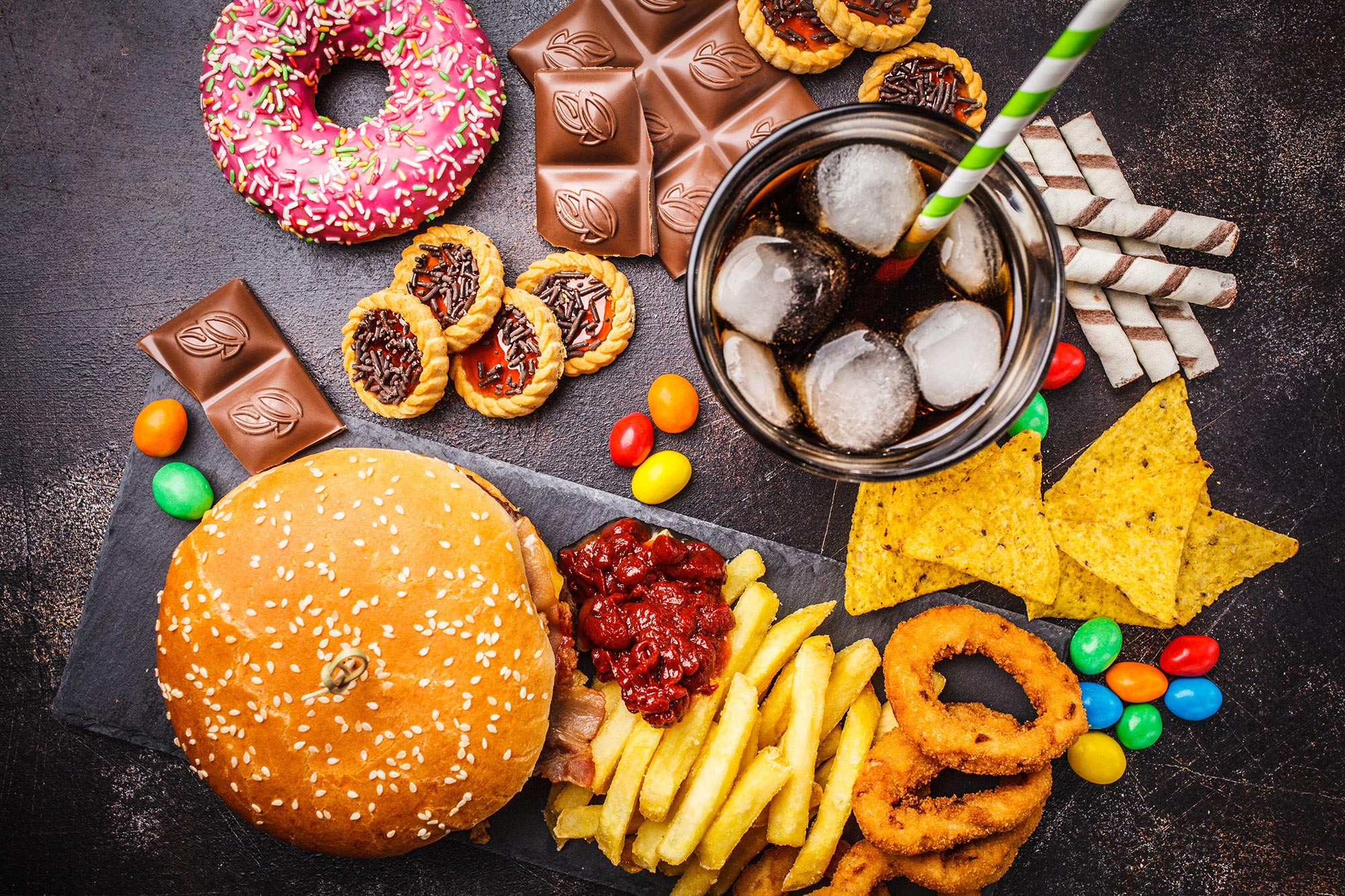
Ultra-processed foods, including packaged baked goods and snacks, fizzy drinks, sugary cereals, and ready-to-eat or heat products, undergo multiple industrial processes and often contain colors, emulsifiers, flavors, and other additives. These products also tend to be high in added sugar, fat, and/or salt, but are low in vitamins and fiber.
They can account for up to 58% of total daily energy intake in some high-income countries, and have rapidly increased in many low and middle-income nations in recent decades.
Comprehensive Review of the Evidence
Many previous studies and meta-analyses have linked highly processed food to poor health, but no comprehensive review has yet provided a broad assessment of the evidence in this area.
To bridge this gap, researchers carried out an umbrella review (a high-level evidence summary) of 45 distinct pooled meta-analyses from 14 review articles associating ultra-processed foods with adverse health outcomes.
The review articles were all published in the past three years and involved almost 10 million participants. None were funded by companies involved in the production of ultra-processed foods.
Estimates of exposure to ultra-processed foods were obtained from a combination of food frequency questionnaires, 24-hour dietary recalls, and dietary history and were measured as higher versus lower consumption, additional servings per day, or a 10% increment.
The researchers graded the evidence as convincing, highly suggestive, suggestive, weak, or no evidence. They also assessed the quality of evidence as high, moderate, low, or very low.
Overall, the results show that higher exposure to ultra-processed foods was consistently associated with an increased risk of 32 adverse health outcomes.
Convincing evidence showed that higher ultra-processed food intake was associated with around a 50% increased risk of cardiovascular disease-related death, a 48-53% higher risk of anxiety and common mental disorders, and a 12% greater risk of type 2 diabetes.
Highly suggestive evidence also indicated that higher ultra-processed food intake was associated with a 21% greater risk of death from any cause, a 40-66% increased risk of heart disease-related death, obesity, type 2 diabetes, and sleep problems, and a 22% increased risk of depression.
Evidence for the associations of ultra-processed food exposure with asthma, gastrointestinal health, some cancers, and cardiometabolic risk factors, such as high blood fats and low levels of ‘good’ cholesterol, remains limited.
Calls for Action and Further Research
The researchers acknowledge that umbrella reviews can only provide high-level overviews and they can’t rule out the possibility that other unmeasured factors and variations in assessing ultra-processed food intake may have influenced their results.
However, their use of rigorous and prespecified systematic methods to evaluate the credibility and quality of the analyses suggests that the results withstand scrutiny.
As such, they conclude: “These findings support urgent mechanistic research and public health actions that seek to target and minimize ultra-processed food consumption for improved population health.”
Ultra-processed foods damage health and shorten life, say researchers in a linked editorial. So what can be done to control and reduce their production and consumption, which is rising worldwide?
They point out that reformulation does not eliminate harm, and profitability discourages manufacturers from switching to make nutritious foods, so public policies and action on ultra-processed foods are essential.
These include front-of-pack labels, restricting advertising and prohibiting sales in or near schools and hospitals, and fiscal and other measures that make unprocessed or minimally processed foods and freshly prepared meals as accessible and available as, and cheaper than, ultra-processed foods.
It is now time for United Nations agencies, with member states, to develop and implement a framework convention on ultra-processed foods similar to the framework on tobacco, and promote examples of best practice, they write.
Finally, they say multidisciplinary investigations “are needed to identify the most effective ways to control and reduce ultra-processing and to quantify and track the cost-benefits and other effects of all such policies and actions on human health and welfare, society, culture, employment, and the environment.”
Reference: “Ultra-processed food exposure and adverse health outcomes: umbrella review of epidemiological meta-analyses” by Melissa M Lane, Elizabeth Gamage, Shutong Du, Deborah N Ashtree, Amelia J McGuinness, Sarah Gauci, Phillip Baker, Mark Lawrence, Casey M Rebholz, Bernard Srour, Mathilde Touvier, Felice N Jacka, Adrienne O’Neil, Toby Segasby and Wolfgang Marx, 28 February 2024, BMJ.
DOI: 10.1136/bmj-2023-077310
Never miss a breakthrough: Join the SciTechDaily newsletter.
Follow us on Google and Google News.
7 Comments
If you don’t need to chew it, it is bad for you. Yet they still pump our children full of this junk.
Parents buy the food.
PLEASE SUGGEST F.D.A. REFORM.
Big Foods ‘for greedy profit’ has killed more people with processed and counterfeit food items than in both world wars and with all worldwide terrorist attacks combined. Just Google ‘the Swiss milk study’ or the ‘Harvard milk study’, (Now remved by Google) You will find that drinking 18 ounced or more of PASTEURIZED milk has the mortality rate comparable to smoking three packs of cigarettes daily and a hip-replacement thrown in.Even a cow would not drink that swill. All pastured foods and juices have been sterilized to prolong shelf life. This denatures the protein and destroys all nutrition. You do not even want to know (but you should) what those nuggets are really made from. Drive-throughs are responsible for more deaths than drive-by’s. If a terrorist wishes to maim kill and hurt Americans all they need do is open a fast food franchise. The F.D.A. may have started out as a competent research establishment but is now an obsolete deep state throwback to the Cold War era and should redirect its priorities away from politics and promoting the marijuana war before they allows big foods to kill everyone off.
Pasteurized non-fermented cow’s milk but not fermented milk is a promoter of mTORC1-driven aging and increased mortality
https://www.sciencedirect.com/science/article/abs/pii/S1568163721000179
NOTE TO EDITOR # Please add an edit feature to the comments. I am unable to correct typos.
Well, America is about processed foods, to replace these damaged, declined, unabled people, they open the border to replace us!
It’s not the processing that is the problem, it’s the end product. Probably the additives such as emulsifiers, colorants, and preservatives are unhealthy. Together with high levels and wrong fats and sugars, degraded or low levels of nutrients, “good” bacteria and fiber in the food, it’s bad for our health. The FDA needs to introduce guidelines for processed food.