
Findings Add Further Evidence in Support of Policies That Limit Ultra-Processed Foods
Two large research studies published by The BMJ last week find links between high consumption of ultra-processed foods and increased risks of cardiovascular disease, bowel (colorectal) cancer, and death.
The results provide more evidence in favor of policies that limit ultra-processed foods and instead advocate eating unprocessed or minimally-processed foods to improve global public health.
They also underscore the opportunity to reformulate dietary guidelines worldwide, by paying greater attention to the degree of processing of foods along with nutrient-based recommendations.
Ultra-processed foods include packaged baked goods and snacks, fizzy drinks, sugary cereals, and ready-to-eat or heat products. They often contain high levels of added sugar, fat, and/or salt, but lack vitamins and fiber.
Although previous studies have linked ultra-processed foods to higher risks of obesity, cholesterol, high blood pressure, and some cancers, few studies have assessed the association between ultra-processed food intake and colorectal cancer risk, and results are mixed due to limitations in study design and sample sizes.
Study 1: Colorectal Cancer Risk in U.S. Adults
In the first new study, researchers investigated the association between the consumption of ultra-processed foods and the risk of colorectal cancer in US adults.
Their findings are based on 46,341 men and 159,907 women from three large studies of U.S. health professionals. Their dietary intake was assessed every four years using detailed food frequency questionnaires.
Foods were grouped by degree of processing and rates of colorectal cancer were measured over a period of 24-28 years, taking into account medical and lifestyle factors.
Results show that men in the highest fifth of ultra-processed food consumption had a 29% higher risk of developing colorectal cancer compared with those in the lowest fifth of consumption. This remained significant after further adjustment for body mass index and dietary quality.
No link was observed between overall ultra-processed food consumption and the risk of colorectal cancer among women. However, higher consumption of meat/poultry/seafood-based ready-to-eat products and sugar-sweetened beverages among men — and ready-to-eat/heat mixed dishes among women — was associated with an increased risk of colorectal cancer.
Study 2: Ultra-Processed Foods and Mortality
In the second new study, scientists analyzed two food classification systems in relation to mortality — the Food Standards Agency Nutrient Profiling System (FSAm-NPS), used to derive the color-coded Nutri-Score front-of-pack label, and the NOVA scale, which evaluates the degree of food processing.
Their findings are based on 22,895 Italian adults (average age 55 years; 48% men) from the Moli-sani Study, investigating genetic and environmental risk factors for heart diseases and cancer.
Both the quantity and quality of food and beverages consumed were assessed and deaths were measured over a 14-year period (2005 to 2019), taking into account underlying medical conditions.
Results showed that those in the highest quarter of the FSAm-NPS index (least healthy diet) had a 19% higher risk of death from any cause and a 32% higher risk of death from cardiovascular disease compared with the lowest quarter (healthiest diet).
Risks were similar when the two extreme categories of ultra-processed food intake on the NOVA scale were compared (19% and 27% higher for all-cause and cardiovascular mortality, respectively).
A significant proportion of the excess mortality risk associated with a poor diet was explained by a higher degree of food processing. In contrast, ultra-processed food intake remained associated with mortality even after the poor nutritional quality of the diet was accounted for.
Both studies are observational, and therefore can’t establish cause. Limitations include the possibility that some of the risks may be due to other unmeasured (confounding) factors.
Nevertheless, both studies used reliable markers of dietary quality and took account of well-known risk factors, and the findings back up other research linking highly processed food with poor health outcomes.
The Call for Dietary Reform
As such, both research teams say their findings support the public health importance of limiting certain types of ultra-processed foods for better health outcomes in the global population. Results from the Italian study also reinforce the opportunity to reformulate dietary guidelines worldwide, by paying more attention to the degree of processing of foods along with nutrient-based recommendations.
In a linked editorial, Brazilian researchers argue that nobody sensible wants foods that cause illness.
The overall positive solution, they say, includes making supplies of fresh and minimally processed foods available, attractive, and affordable. And sustaining national initiatives to promote and support freshly prepared meals made with fresh and minimally processed foods, using small amounts of processed culinary ingredients and processed foods.
“Enacted, this will promote public health. It will also nourish families, society, economies, and the environment,” they conclude.
References:
“Association of ultra-processed food consumption with colorectal cancer risk among men and women: results from three prospective US cohort studies” by Lu Wang, Mengxi Du, Kai Wang, Neha Khandpur, Sinara Laurini Rossato, Jean-Philippe Drouin-Chartier, Euridice Martínez Steele, Edward Giovannucci, Mingyang Song and Fang Fang Zhang, 31 August 2022, The BMJ.
DOI: 10.1136/bmj.o1972
“Joint association of food nutritional profile by Nutri-Score front-of-pack label and ultra-processed food intake with mortality: Moli-sani prospective cohort study” by Marialaura Bonaccio, Augusto Di Castelnuovo, Emilia Ruggiero, Simona Costanzo, Giuseppe Grosso, Amalia De Curtis, Chiara Cerletti, Maria Benedetta Donati, Giovanni de Gaetano and Licia Iacoviello on behalf of the Moli-sani Study Investigators, 31 August 2022, The BMJ.
DOI: 10.1136/bmj-2022-070688
Never miss a breakthrough: Join the SciTechDaily newsletter.
Follow us on Google and Google News.
8 Comments
While no reasonably prudent adult would seriously argue that ultra-processed pseudo-food products are healthier than naturally grown, harvested and prepared real foods, the failure to recognize, research and include at least five common ‘confounding factors’ in all of medical science renders the conclusions of most such studies moot; 1) undiagnosed food (minimally) allergies, 2) officially (FDA in the US) approved food poisoning (e.g. added soy and MSG, minimally), 3) unreliable laboratory testing (e.g. standard serum testing for calcium, minimally), 4) resultant nutritional deficiencies and 5) related medical errors; “dark-ages-medicine,” at best. Some ultra-processed pseudo-food products can actually be safer than undiagnosed real allergic offenders that don’t indicate-for with IgE antibody testing (e.g. chronic subclinical psychosomatic allergy reactions; tracks and extended tracks, learninggnm dot com).
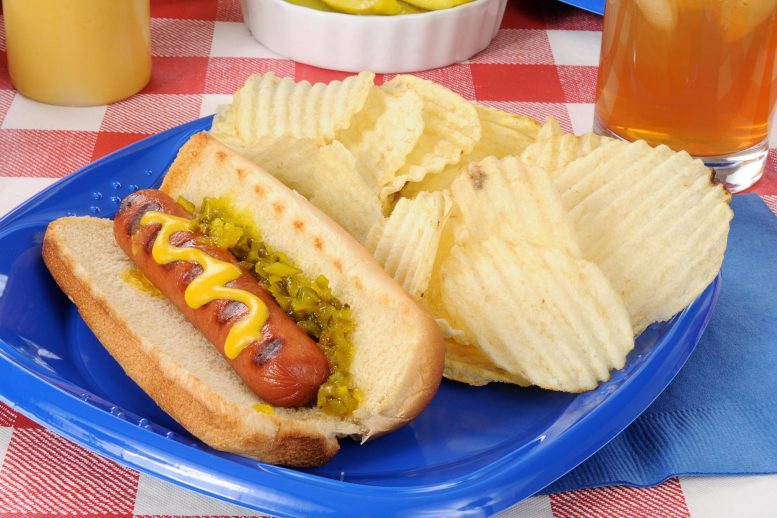
As an example of ultra-processed foods the article shows a picture of potato chips which consist of thinly sliced potatoes that are fried in vegetable oil then salted. This may represent foods high in fat but highly processed? Then how would you classify “artificial meat” which takes legumes grind them, make them unrecognizable, add flavorings, spices and colors to make them “bleed” like hamburgers then pretend that they taste like meat.
The three most important factors as to whether anyone developes heart disease are: 1. Genetics. 2. Genetics. 3. Genetics. What kind of foods you eat might be on the list, but it’s way down it in terms of whether someone develops heart disease or not. Talk to a Cardiologist. I have. Multiple Cardiologists. I am 59. My first, and only, stent was placed when I was 39. My diet back then was horrible. It would continue to be horrible for another decade. I am the reason why “super size” was invented as a term at fast food joints. My older brother, on the other hand. Strict vegetarian. Non-smoker. Lots of exercise. No crap foods. He’s got FOUR stents. Figure that out. Boy, was he bummed when his Cardiologist told him that “there is no such thing as a good fat.” Some fats may be better than others, but none of them are good for you. Bottom line, both my brother and I have a family history of heart disease that stems from plaque buildup in our arteries. Deespite this disadvantage, many family members have lived into their nineties.
And in other news, tobacco can cause cancer, alcohol can cause liver damage, and not drinking enough water can cause dehydration….
They should have studied the acrylamide levels in the food, which is a neurotoxin and carcinogen. Whole foods that are heated above 248 degrees Fahrenheit develop acrylamide. So cooking method needs to be changed to boiling, steaming only.
It makes no sense to vilify “processing”. If I make my own tomato sauce from my garden tomatoes, that is “processing”. If I cook meat or chop onions, that is “processing”. If I make zucchini slices topped with salt, pepper and a bit of Parmesan, that is “processed food”. Stop with this new spin, and peel back to the truth, which is evaluating all the chemicals, sugars, and fats in the food you eat, rather than how much processing that put them there.
Do they still pressure wash the meat off the carcass to make hot dogs & chicken nuggets, bollock, eyelids & sphincters all minced up, wrapped in glutan & frozen then cooked up for your kids…surely the FREE FROM ( meat, glutan, dairy.) version is better for kids? Even though its still very processed.
Life is linked with death. Only the living die.