
Researchers suggest limiting the consumption of ultra-processed meals and red meat to increase longevity.
According to experts at Loma Linda University Health, high intake of ultra-processed foods and, separately, excessive consumption of red meat may be important mortality indicators. Their newly published research adds to the expanding body of knowledge regarding the effects of ultra-processed meals and red meat on human health and lifespan.
In comparison to previous research on the health effects of ultra-processed and animal-based diets, this study has one of the biggest cohorts, with over 77,000 individuals. It also took into account a wide range of diets, including vegetarian and non-vegetarian options. According to Gary Fraser, MBChB, Ph.D., a study author and professor at Loma Linda University School of Medicine and School of Public Health, the findings gave fresh insights regarding ultra-processed foods as a common denominator of mortality between vegetarians and non-vegetarians.
The Impact of Ultra-Processed Foods on Mortality
“Our study addresses the question of what can make a vegetarian diet healthy or unhealthy,” Fraser says. “It seems that the proportion of ultra-processed foods in someone’s diet is actually more important with respect to mortality than the proportion of animal-derived foods they eat, the exception being red meat.”
Fraser says the study exposes how it is possible to be a “bad vegetarian or a good non-vegetarian” because it isolates the health impacts of processed foods in the diet — whether it’s vegetarian or not. Results revealed that vegetarians who ate a lot of processed foods as part of their diets faced a similar proportionate increase in mortality outcomes as non-vegetarians who ate a lot of processed foods in their diets.
The study, “Ultra-processed food intake and animal-based food intake and mortality in the Adventist health study-2,” published in the American Journal of Clinical Nutrition, assesses the mortality risks of two dietary factors independent of each other:
- the proportion of the diet composed of ultra-processed foods as opposed to less processed foods; examples of ultra-processed foods include soft drinks, certain meat analogs, and candy.
- the proportion of the diet from animal-based foods (meats, eggs, and dairy) as opposed to plant-based foods.
Seven LLU researchers gathered data from an observational prospective cohort study in North America, recruited from Seventh-day Adventist churches, comprising of 77,437 female and male participants. Participants completed a frequency food questionnaire including over 200 food items to describe their diets. They also provided other health-related and demographic information about themselves, including sex, race, geographic region, education, marital status, rate of tobacco and alcohol use, exercise, sleep, BMI, and comorbid conditions with cardiovascular disease or diabetes.
Researchers then analyzed participants’ health and demographic information in conjunction with their mortality data, provided by the National Death Index, for a mean timeframe of about seven and a half years. Next, researchers used a statistical model to help them consider each variable independently of others and produce a cause-specific mortality analysis.
They adjusted their statistical model to focus on ultra-processed food intake irrespective of other factors like animal-food consumption or age. In doing so, Fraser and co-authors found that people who obtained half of their total calories from ultra-processed foods faced a 14% increase in mortality compared to people who received only 12.5% of their total calories from ultra-processed foods.
Health Risks Linked to Ultra-Processed Foods and Red Meat
Study authors report that high consumption levels of ultra-processed foods were associated with mortality related to respiratory, neurologic, and renal conditions — particularly Alzheimer’s disease, Parkinson’s disease, and chronic obstructive pulmonary disease (even when restricted to people who never smoked). However, high ultra-processed food consumption was not associated with mortality from cardiovascular disease, cancer, or endocrine conditions.
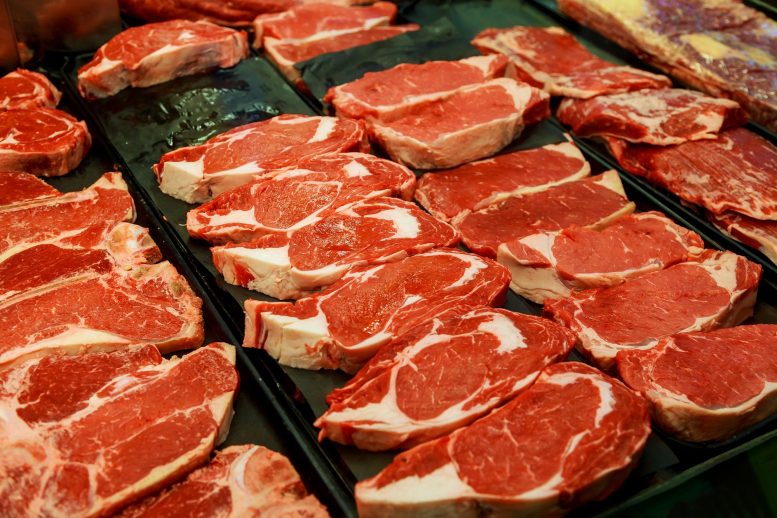
Results did not reveal an association between mortality and dietary intake of total animal-based foods. Once researchers parsed animal-based foods into sub-categories, however, they found a statistically significant 8% increase in the mortality risk associated with moderate (approximately 1 ½ oz or 43 grams per day) consumption of red meat compared to no red meat.
Overall, Fraser says the study demonstrated how greater consumption of ultra-processed foods was associated with higher all-cause mortality, even in a health-conscious Adventist population with many vegetarians. Such findings of ultra-processed food consumption and mortality provide a “helpful confirmation of what people expected,” he says.
The study calls for further research into the specific health effects of ultra-processed food consumption in humans. While research endeavors continue to deepen our understanding of how ultra-processed foods impact our health, Fraser advises avoiding consuming them at high levels.
“If you’re interested in living longer or to your maximal potential, you’d be wise to avoid a diet filled with ultra-processed foods and replace them with less processed or unprocessed foods,” Fraser says. “At the same time, avoid eating a lot of red meat. It’s as simple as that.”
Reference: “Ultra-processed food intake and animal-based food intake and mortality in the Adventist Health Study-2” by Michael J Orlich, Joan Sabaté, Andrew Mashchak, Ujué Fresán, Karen Jaceldo-Siegl, Fayth Miles and Gary E Fraser, 24 February 2022, American Journal of Clinical Nutrition.
DOI: 10.1093/ajcn/nqac043
Never miss a breakthrough: Join the SciTechDaily newsletter.
Follow us on Google and Google News.
15 Comments
More Vegan propaganda. Homo sapiens are carnivores !!
Oh look it’s that title template again
Somebody had better be sure that the Inuit living in the Arctic hear about this. They can start growing vegetables in the snow during the dark Winter.
Yep death for the cow.
Maybe they need to study all the engineering being done to the food (including beef). All the unnatural grains and things to increase the animal size and weight to bigger profits. Eating those animal, I agree! Grass fed/finished, not so much
Food frequency questionnaires are useless. Why even report this nonsense?
Oh look, more ‘red meat is bad’ propaganda from the seventh day Adventist church
Mainstream medicine still fails to recognize and research chronic subclinical non-IgE-mediated allergy reactions (e.g. Arthur F. Coca, THE PULSE TEST, 1956) as true allergies. I’ve found through at-home experimentation the inflammation response to proteinaceous foods can subside with as little as six to twelve hours of fasting (e.g. the mechanism of ‘intermittent fasting’?) with infrequent urination changing to more frequent urination being objective evidence. Avoiding/rotating dietary proteins can help to prevent chronic inflammation and food additives like added ‘cultured’ MSG and modified soy protein processed more cheaply with toxic hexane with some residue can aggravate inflammation to make it chronic and deadly dangerous long term (e.g. years to decades, highly individual). So, naturally, ultra processed ‘pseudo-foods’ can shorten one’s life.
More b.s. anti meat propaganda from liberal vegans. Humans have eaten red meat since the beginning of time. Don’t fall for their lies..
It would benefit the reader to have a more complete understanding of what the study considered to be ultra processed foods. Soda and candy isn’t a very comprehensive list.
This just in…being alive leads to increased risk of death.
Human Life crawled out of The Oceans. We are definately Better able to digest Any Sea creature which On The EVOLUTIONARY HIERARCHY of FOOD:
Sea Life is the Lowest.
Then comes Plant Life, INSECTS, Reptiles, Birds, up up up to mammals…..And Some are Smarter, more civilized, And Better Traveled than most morons who eat their genetically modified corpses.
Doesn’t living increase in the risk of death?
What a bunch of balony. Red meat is actually good for you. I agree you should limit processed foods.
anything that makes your penis soft is terrible for you… cigarettes, alcohol, and red meat