
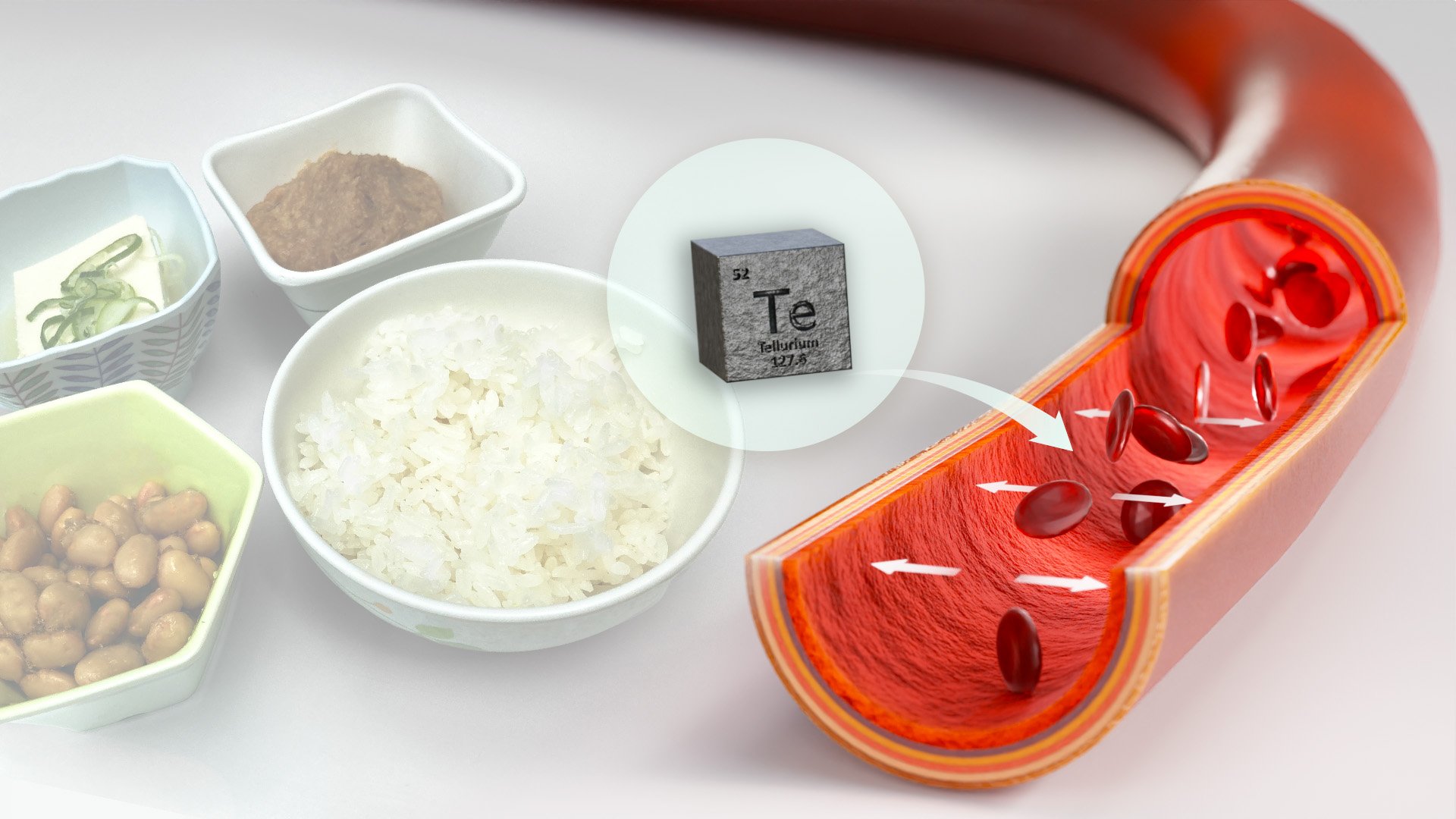
A recent study indicates that higher dietary tellurium levels, stemming from mining and manufacturing, are linked to increased blood pressure, though foods high in tellurium like cereals and legumes do not directly cause hypertension. Researchers stress the importance of monitoring tellurium in foods globally, given its potential role as a risk factor for hypertension.
The probability of developing high blood pressure (hypertension) rises with elevated levels of tellurium, a contaminant originating from mining and manufacturing activities that can find its way into foods. Enhanced monitoring of tellurium levels in certain foods could help reduce the incidence of high blood pressure in the general population. A study investigating the link between tellurium exposure and hypertension was published in the journal Environment International.
The study was led by Nagoya University in Japan. According to Takumi Kagawa, one of the researchers involved in the study, the findings are significant as they indicate that tellurium exposure may contribute to elevated blood pressure, a significant public health concern. “The results indicate diet was the most significant contributor to increased urinary tellurium levels, compared to other lifestyle factors, such as smoking and working status, and physiological factors, such as age and sex. Dietary intake, an important aspect of our lifestyle, plays a significant role in increased urinary tellurium concentrations.”
In Japan, cereals and legumes, represented by rice and natto (fermented soybeans), are popular dietary choices. These foods are packed with essential nutrients, such as high-quality carbohydrates, vitamins, and minerals, that support a person’s health.
Dietary Sources of Tellurium
However, tellurium, a rare metalloid, can also be present in these foods. Mining and manufacturing activities release dust, ash, and slag, which are responsible for the presence of tellurium in the soil. In certain cases, it can be transferred from the soil to crop plants, such as cereals, carrots, and garlic. Consequently, people are exposed to tellurium through food.
The study conducted by Professor Masashi Kato, Takumi Kagawa, and their colleagues involved 2,592 Japanese adults. It revealed that higher levels of tellurium in urine were associated with higher blood pressure and a greater occurrence of hypertension. The results were the same in both mice and humans.
“We administered tellurium to mice in amounts equivalent to what humans might encounter daily and observed an increase in blood pressure,” Tomoko Misawa, the lead author of the study, explained. “When we stopped the exposure, both the blood pressure and the tellurium levels in their urine decreased. These results provide a direct link between tellurium exposure and increased blood pressure, confirming findings in humans.”
Impact of Cereal and Legume Consumption
Professor Kato and his team also studied foods that raise the levels of tellurium in urine. They discovered that the consumption of cereals and legumes caused high levels of tellurium, but further testing did not establish a direct link to high blood pressure rates.
“We found that despite raising tellurium levels in the urine, cereal/legume intake did not directly increase the risk of hypertension,” said Takumi Kagawa. “Cereals/legumes may contain many diverse nutrients that can mitigate the risk of hypertension despite high levels of tellurium. However, considering that increased tellurium exposure is a latent risk factor for hypertension and foods contribute to this association, careful and continuous monitoring of tellurium levels in individual foods may be crucial.”
“The urinary level of tellurium in this study was comparable with the levels in general populations in other countries,” Professor Kato said, “Our results indicate an increased potential risk of hypertension by tellurium exposure may be applicable to general populations all around the world.”
Reference: “Elevated level of urinary tellurium is a potential risk for increase of blood pressure in humans and mice” by Tomoko Misawa, Takumi Kagawa, Nobutaka Ohgami, Akira Tazaki, Shoko Ohnuma, Hisao Naito, Dijie Chen, Yishuo Gu, Takashi Tamura, Kenji Wakai, Kimitoshi Nishiwaki and Masashi Kato, 12 May 2024, Environment International.
DOI: 10.1016/j.envint.2024.108735
Never miss a breakthrough: Join the SciTechDaily newsletter.
Follow us on Google and Google News.
2 Comments
Wait! If tellurium increases blood pressure, then why didn’t it do so with the cereal? “We found that despite raising tellurium levels in the urine, cereal/legume intake did not directly increase the risk of hypertension,” said Takumi Kagawa. “Cereals/legumes may contain many diverse nutrients that can mitigate the risk of hypertension despite high levels of tellurium.” Doesn’t this suggest that cereals/legumes lower blood pressure? Or does it suggest that this tellurium business is a non-issue? Cereal fighting hypertension would be a more significant conclusion, since it suggests people with high blood pressure could eat cereal instead of taking anti-hypertension medication. But it really only suggests that this study is just a promotion of a testing procedure for tellurium in foods. As the author of the study explains, “…careful and continuous monitoring of tellurium levels in individual foods may be crucial.”
And why they had to confirm human results in mice is very strange. If it didn’t work in mice, would that cause the reject of the result in humans? No. So why use mice? I guess medical research is not the same without some abuse of animals.
Dear Sydney,
As a research scientist, my schooling along with hands-on work in the lab with rats taught me that rodents are closest physiologically to humans in terms of environmental affect, chemicals, and drugs, to name a few. Without the “abuse” of primates, which are technically closer to humans than rodents, hence, they are used in pre-safety (animals) and human clinical safety trials (phase 1), then efficacy clinical trials (Phases 2 and 3) regarding humans. This is the case with pharmaceuticals. Imagine an element or compound that may be harmful to humans. First of all, scientists would never (nor would the FDA, for sure,) allow human testing to check and see how poisonous is a particular molecule / compound / drug
.
You state “it didn’t work in mice.” I just reread to confirm that the study did show high blood pressure after an equivalent, typically by body weight, of the element was administered to the mice.
You brought up some very thoughtful questions. From my understanding about heart healthy, fresh, real foods, these and other novel plants and fruits are clearly shown to lower blood pressure. Now THAT is a human trial for research that can always be used on humans when said group is testing something that is safe. One could include the animals too, as they would enjoy such a luxurious culinary experience, as they typically are given chow or kibble.
Back to your thoughtful questions, which all are, it is widely known that “good” foods will lower blood pressure. Perhaps the fact the particular foods in the study are a few of these “good” foods, then as the article mentions, the good stuff lowers BP more than the bad HB effects of tellurium. Additionally, this sounds possibly like a preliminary study. I apologize that I haven’t researched this statement, but if a hypothesis is new, at least in my work, the studies start small and change and grow as one learns the results to each study. We cannot change a condition in the middle of a study. It skews the results. The change negates any hypothesis because one will not know if the results are because of the original test plan or the change in the plan, or if it was a synergistic affect. Hopefully, they had a control group or even two – one not given the grain/legume feed but given the tellurium, and another, more of a true control group where my previous group idea is more like another test group, fed the same with no tellurium dose.
I do know that tellurium is a metal not to be consumed by humans, especially in higher quantities. It seems that very little harmful stuff cannot be avoided now-a-days. Therefore, though the grains and legumes seem to help counteract the consumption of tellurium as a chemical that may cause high BP, I don’t believe that means that this element should be deemed safe and agree that follow up and testing should be pursued.
Finally, the FDA won’t even listen to the greatest discovery since sliced bread is presented without rather extensive animal research. In fact, it has been my experience and the experience of other researchers that for the sake of safety, more, then more, then more studies must be preformed for consideration for approval. Preclinical safety trials are conducted on animals. I hate that, but there is no other way. A new drug, all that go through rigorous stages of human trials, take place only once safety has been established in animals and then, a phase one clinical trial on a very small group of humans for safety, not yet efficacy. We don’t enjoy it. I am one of the lucky ones that what we were using, at least in my area of study, did not do anything to cause them harm, pain, or suffering, but it still killed me. One of my titles was “The Patron Saint of Rats.” One other animal research comment regarding animals – we all, including all levels of education / job description, from the Principal Investigator to the techs handling the animals is that we went through rigorous training regarding use, handling and treating them humanely and safely in terms of their safety. This was required by the University and by any testing facility. Very very strict, especially at the end, what to use and do humanely with the utmost kindness to the animal – we even would go to another room on the other side of the building so as not to stress and upset the rest as we went about this arduous task. We care, and the animal facilities watch closely. Please know if there was any other way, we wouldn’t use one animal and always planned studies with the bare minimum needed. I am against cosmetic testing on animals, or anything that is not “life or death”, essentially. Perhaps there are regulations there that I know nothing about, but a lifesaving drug? It is an unfortunate necessity that is not taken lightly. If you came back dear Sydney and read this, thank you, and I hope that I was able to shed some light on this subject.