
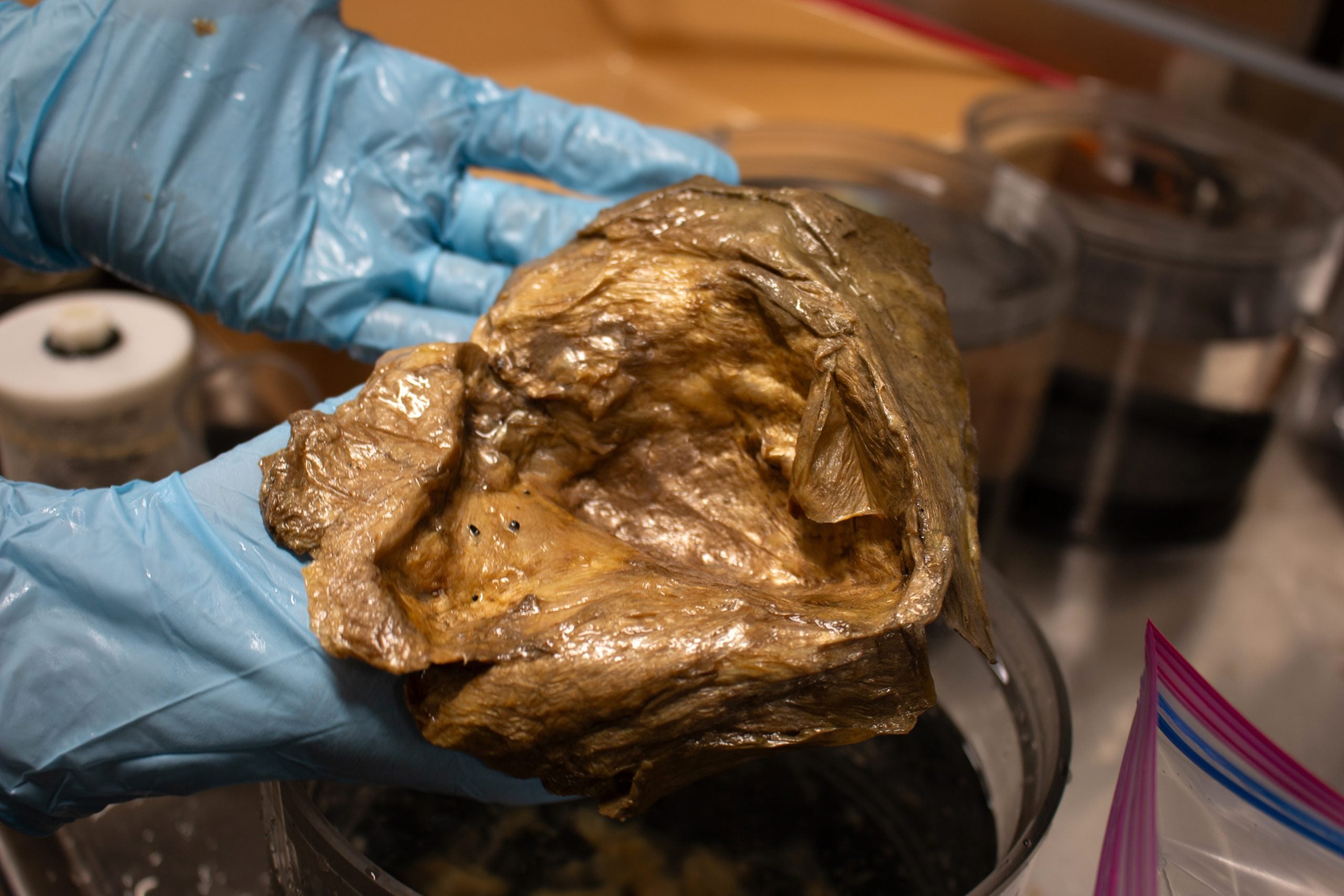
Scientists have finally identified the mysterious “golden orb” discovered deep in the Gulf of Alaska during a NOAA expedition.
Scientists have finally solved the mystery surrounding the strange “golden orb” recovered during a NOAA expedition in 2023. The unusual object attracted widespread attention after it was discovered deep in the Gulf of Alaska, leaving both researchers and the public wondering what exactly it was.
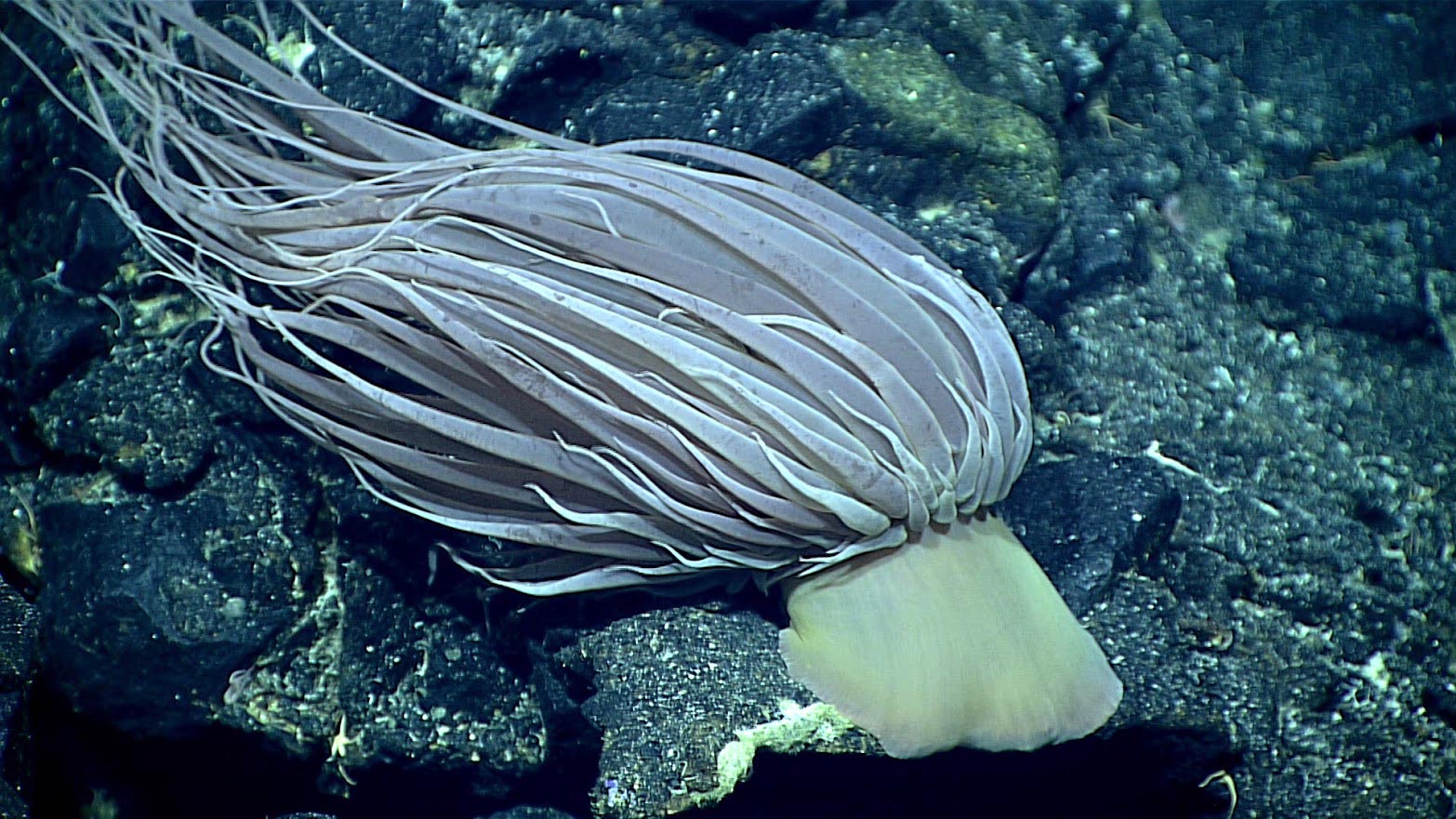
The object was found at a depth of 3,250 meters (over 2 miles) and has now been identified as remains from a giant deep-sea anemone called Relicanthus daphneae. Researchers determined that the golden structure was made from dead cells located at the base of the animal, where it had once attached itself to rock on the ocean floor.
Scientists aboard NOAA Ship Okeanos Explorer regularly encounter unfamiliar marine life during deep-sea missions. In many cases, experts can quickly identify strange organisms by consulting with colleagues and comparing observations. But the “golden orb” proved far more difficult to explain and became an unusually stubborn scientific mystery.
In 2023, during NOAA’s Seascape Alaska 5 expedition, scientists found a golden-colored lifeform adhered to a rocky outcropping at a depth of nearly two miles. After more than two years of investigation, scientists have solved the mystery of the “golden orb,” identifying it as the remnants of a giant deep-sea anemone. Credit: NOAA Ocean Exploration
Strange Discovery in the Gulf of Alaska
The object was first spotted in 2023 during an expedition in the Gulf of Alaska. NOAA’s remotely operated vehicle Deep Discoverer (launched from Okeanos Explorer) was surveying the seafloor more than 2 miles below the surface when it came across an odd golden mound attached to a rock. The object had a smooth appearance and a hole near its center, adding to the confusion.
Researchers immediately began debating what they were looking at. Was it an egg casing? A dead sponge? Had some unknown creature crawled inside it … or emerged from it?
The discovery quickly generated public fascination and online speculation. To investigate further, the expedition team carefully collected the object using a suction sampler before sending it to the Smithsonian National Museum of Natural History (NMNH) for analysis.
Scientists Use DNA and Microscopy to Solve the Puzzle
Determining the identity of the “golden orb” turned into a lengthy and highly detailed scientific effort. Researchers needed expertise from multiple fields to piece together the answer.
“We work on hundreds of different samples and I suspected that our routine processes would clarify the mystery,” explains Allen Collins, Ph.D, zoologist and director of NOAA Fisheries’ National Systematics Laboratory, which is physically located within the Smithsonian National Museum of Natural History. “But this turned into a special case that required focused efforts and expertise of several different individuals. This was a complex mystery that required morphological, genetic, deep-sea, and bioinformatics expertise to solve.”
Scientists from NOAA Fisheries and the Smithsonian combined physical examination with genetic testing in what is known as an integrative taxonomic approach. Early analysis showed the object lacked the normal anatomy expected in most animals. Instead, researchers found fibrous layered tissue filled with cnidocytes (stinging cells), indicating the specimen belonged to a cnidarian group such as corals or sea anemones.
National Systematics Lab scientist Abigail Reft identified the cells as spirocysts, which are found only in Hexacorallia, a subgroup of cnidarians. Researchers also studied a similar specimen collected in 2021 during an expedition aboard Schmidt Ocean Institute’s Research Vessel Falkor and found matching cellular structures.
Genome Sequencing Reveals the Answer
Initial DNA barcoding attempts failed to provide a clear identification, likely because the sample also contained genetic traces from microscopic organisms living on it.
Scientists then turned to whole-genome sequencing, which confirmed the presence of animal DNA and revealed a strong genetic connection to the giant deep-sea anemone Relicanthus daphneae. Additional sequencing of mitochondrial genomes from both collected specimens showed they were nearly identical to a known reference genome for the species.
Deep Ocean Mysteries Remain
The investigation ultimately confirmed that the “golden orb” was not an egg case, sponge, or unknown alien object. Instead, it was a leftover structure from a deep-sea anemone that had once anchored itself to the rocky seafloor.
Even though this mystery has finally been solved, researchers say the deep ocean still contains countless unexplored species and unexplained discoveries.
“So often in deep ocean exploration, we find these captivating mysteries, like the ‘golden orb’. With advanced techniques like DNA sequencing, we are able to solve more and more of them,” said CAPT William Mowitt, acting director of NOAA Ocean Exploration. “This is why we keep exploring—to unlock the secrets of the deep and better understand how the ocean and its resources can drive economic growth, strengthen our national security, and sustain our planet.”
Reference: “The Curious Case of the Golden Orb – Relict of Relicanthus daphneae (Cnidaria, Anthozoa, Hexacorallia), a deep sea anemone” by Steven R. Auscavitch, Abigail Reft, Adena B. Collens, Christopher Mah, Merlin Best, Charlotte Benedict, Estefanía Rodríguez, Marymegan Daly, Allen G. Collins, 21 April 2026, bioRxiv.
DOI: 10.64898/2026.04.17.719276
Never miss a breakthrough: Join the SciTechDaily newsletter.
Follow us on Google and Google News.
3 Comments
thanks
thanks for this
Okay I understand it was a sea anomaly but was it golden on the outside. Maybe I missed something.
So can you answer my question. Thanks