
Higher intake of ultra-processed foods was linked to more fat inside thigh muscles, potentially increasing knee osteoarthritis risk.
Researchers have found that diets high in ultra-processed foods are linked to greater fat buildup inside thigh muscles in people at risk for knee osteoarthritis. The association remained even after accounting for calorie and fat intake, physical activity, and sociodemographic factors.
The findings were published in Radiology, a journal of the Radiological Society of North America (RSNA). Increased fat within thigh muscles may contribute to a higher risk of developing knee osteoarthritis.
Ultra-processed foods are often designed for long shelf life, convenience, and strong taste appeal. They typically contain combinations of sugar, fat, salt, and refined carbohydrates that stimulate the brain’s reward system, making overeating more likely.
Common examples include breakfast cereals, margarine and spreads, packaged snacks, hot dogs, soft drinks, energy drinks, candy, desserts, frozen pizzas, ready-to-eat meals, and mass-produced packaged breads and buns made with synthesized ingredients.
“Over the past decades, in parallel to the rising prevalences of obesity and knee osteoarthritis, the use of natural ingredients in our diets has steadily diminished and been replaced by industrially processed, artificially flavored, colored, and chemically altered food and beverages, which are classified as ultra-processed foods,” said the study’s lead author, Zehra Akkaya, M.D., researcher and consultant for the Clinical & Translational Musculoskeletal Imaging group at the University of California, San Francisco, Department of Radiology and Biomedical Imaging.
Dr. Akkaya and her colleagues investigated whether consuming ultra-processed foods is connected to fat accumulation within thigh muscles.
MRI Study Examines Diet and Thigh Muscle Composition
The study included 615 participants from the Osteoarthritis Initiative who showed no signs of osteoarthritis on imaging scans at the start of the research. Sponsored by the National Institutes of Health, the Osteoarthritis Initiative is a nationwide project focused on improving understanding of knee osteoarthritis prevention and treatment.
“Osteoarthritis is an increasingly prevalent and costly global health issue,” Dr. Akkaya said. “It constitutes one of the largest non-cancer-related health care costs in the United States and around the world. It is highly linked to obesity and unhealthy lifestyle choice.”
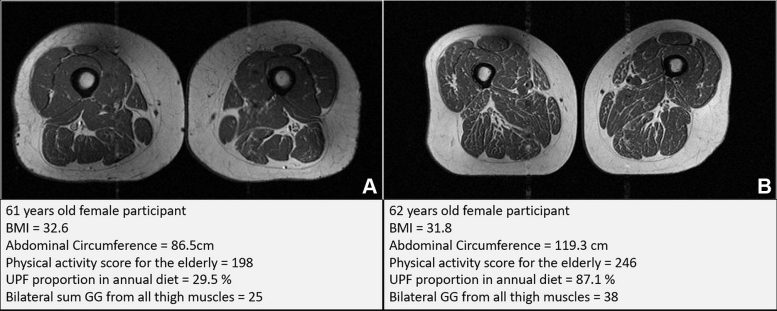
Among the participants, 275 were men and 340 were women, with an average age of 60. On average, participants were overweight with a body mass index (BMI) of 27. About 41% of the foods they consumed during the previous year were classified as ultra-processed.
Researchers discovered that higher consumption of ultra-processed foods was associated with increased intramuscular fat in the thigh, regardless of total calorie intake. MRI scans revealed fatty degeneration within the muscles, where fat streaks gradually replace muscle fibers.
MRI Findings Reveal Fatty Degeneration in Thigh Muscles
“In addition to investigating the quality of our modern diet in relationship to thigh muscle composition, in this study, we used widely available, non-enhanced MRI, making our approach accessible and practical for routine clinical use and future studies,” Dr. Akkaya said. “These MRIs do not require advanced or costly technology, which means they can be easily incorporated into standard diagnostic practices.”
The researchers said the findings offer new insight into how diet quality may influence muscle health and potentially affect knee osteoarthritis risk.
“This research underscores the vital role of nutrition in muscle quality in the context of knee osteoarthritis,” Dr. Akkaya said. “Addressing obesity is a primary objective and frontline treatment for knee osteoarthritis, yet the findings from this research emphasize that dietary quality warrants greater attention, and weight loss regimens should take into account diet quality beyond caloric restriction and exercise.”
Targeting lifestyle factors that can be changed, especially preventing obesity through a healthy, balanced diet and regular exercise, remains a key part of early knee osteoarthritis management.
Reducing Ultra-Processed Foods May Help Protect Muscle Health
The researchers noted that cutting back on ultra-processed foods may help maintain muscle quality, which could reduce some of the burden linked to knee osteoarthritis.
“In recent years, several researchers have shown detrimental impacts of ultra-processed food on various health outcomes, but data on the relationship of ultra-processed food and body composition in the context of knee osteoarthritis is limited,” Dr. Akkaya said. “This is the first study assessing ultra-processed food’s impact on thigh muscle composition using MRI. By exploring how ultra-processed food consumption impacts muscle composition, this study provides valuable insights into dietary influences on muscle health.”
Reference: “Ultra-processed Foods and Muscle Fat Infiltration at Thigh MRI: Data from the Osteoarthritis Initiative” by Zehra Akkaya, Gabby B. Joseph, Katharina Ziegeler, Wynton M. Sims, John A. Lynch, Virginie Kreutzinger, Charles E. McCulloch, Nancy E. Lane, Michael C. Nevitt and Thomas M. Link, 14 April 2026, Radiology.
DOI: 10.1148/radiol.251129
Never miss a breakthrough: Join the SciTechDaily newsletter.
Follow us on Google and Google News.
2 Comments
Quoted [edited] from Dr. Akkaya in the article: “Osteoarthritis…is highly linked to obesity and unhealthy lifestyle choice.” As a now 82 year old lay American male who’s been battling externally imposed chronic illnesses for forty-five years and counting, I can state with great certainty that “lifestyle choice” is only a small part of the big picture. I first wrote the US FDA (with replies) of my early lay findings of connections between food allergies, added MSG, chronic diseases and “obesity” in October of 2005 (obviously, now, in-vain). And, “ultra-processed” is a misleading label for what is actually illegal (FFDCA in the US) FDA approved food poisoning perpetrated by numerous pseudo-food corporations, for greater profits. These things are foisted upon unsuspecting US consumers who, apparently, mistakenly think they are being protected by the FDA. More details: https://odysee.com/@charlesgshaver:d?view=about
This must be where we got the term “Thunder Thighs” from. Fat people going into or out of a fast food joint!