

Researchers report that tirzepatide could boost the body’s energy expenditure by stimulating brown adipose tissue, revealing a less-understood side of its effects.
Tirzepatide has quickly become one of the most talked-about treatments for obesity and type 2 diabetes, but scientists are still uncovering how it works inside the body. New research in mice suggests the drug may do more than curb appetite. It appears to switch on brown adipose tissue, a specialized type of fat that burns calories to produce heat, offering a potential explanation for its wide-ranging metabolic benefits.
The study, led by Marion Peyrou of the University of Barcelona and collaborating research centers, focused on how tirzepatide affects fat tissue beyond its known role in reducing food intake.
Dual-action drug
Tirzepatide (generic name of the drug Mounjaro) is approved for weight management in adults with obesity or those who are overweight with related health conditions, as well as for treating poorly controlled type 2 diabetes. Unlike other anti-obesity medications, it targets two hormone receptors at once, GIP and GLP-1. This combined action leads to significant weight loss, largely by reducing appetite and food intake.
To explore how the drug works, researchers examined its effects on different fat deposits in a mouse model, since this level of analysis is not possible in humans. Obese mice fed a high-fat diet were treated with tirzepatide and compared with a control group that ate the same amount of food but did not receive the drug. This approach allowed scientists to distinguish the drug’s direct effects from those caused by eating less.
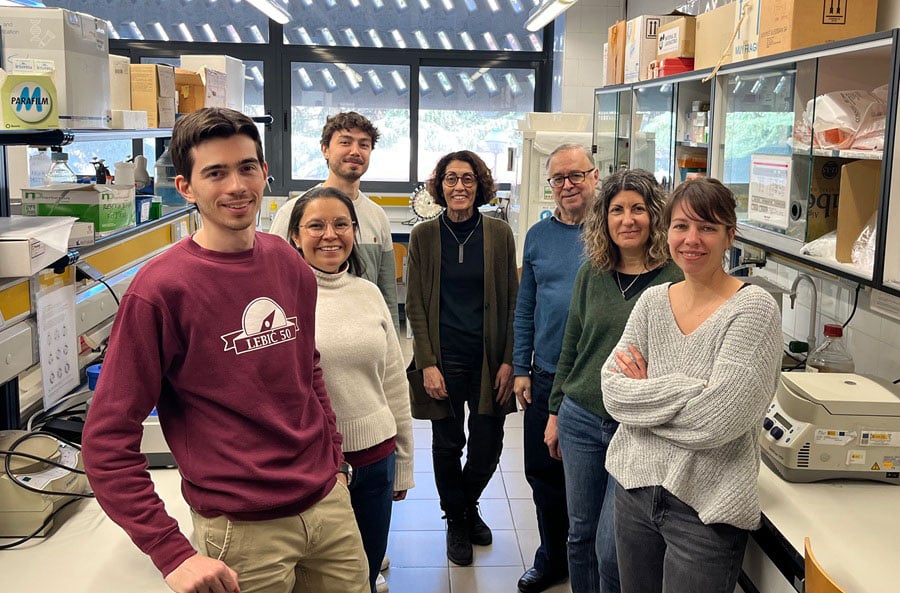
The results showed that tirzepatide activates brown adipose tissue, which burns calories, unlike white adipose tissue that stores fat and accumulates in obesity. “This activation is associated with an increased capacity to burn metabolic energy and with the production of batokines by brown adipose tissue, molecules that are beneficial for metabolism,” says Marion Peyrou.
These findings suggest the drug’s benefits extend beyond appetite suppression. “This drug not only reduces body weight, but also has beneficial effects on metabolism. Active brown adipose tissue ‘burns’ glucose and fat within the body, which would contribute to its positive effect not only in reducing body weight, but also in lowering blood glucose and fat levels, and improving metabolism,” the researcher points out.
Towards a more comprehensive treatment of obesity
Stimulating brown adipose tissue has long been considered a promising way to treat obesity and metabolic disease, but past drug efforts have often failed due to side effects, especially those affecting the heart. “Tirzepatide, although it activates brown adipose tissue, does not have these negative effects; on the contrary, it shows cardiovascular benefits. If our findings are confirmed in humans, it would reinforce the importance of developing therapeutic strategies that not only reduce food intake but also increase energy expenditure and brown fat activation,” explains the researcher.
The results support the idea that more effective obesity treatments should target multiple biological pathways at once. “This could help improve weight control and reduce associated disorders, such as type 2 diabetes and other metabolic disorders,” she adds.
A clearer understanding of how tirzepatide works could also guide more precise prescribing in the future. “Identifying which patient profiles could benefit most, for example, those with more compromised energy expenditure, would open the door to more personalized medicine, based not only on appetite or weight control, but also on overall metabolic status,” she emphasizes.
Still, the researchers caution that the findings are based on animal studies. “As this is a study conducted on mice, we must be cautious, as there may be significant differences between species in terms of metabolism regulation, adipose tissue distribution, and response to drugs. Therefore, we need more clinical evidence on the action of these drugs on fat in humans,” concludes Peyrou.
Reference: “Differential effects of the anti-obesity drug tirzepatide on adipose tissues: Brown fat as a key target” by Alberto Mestres-Arenas, Tania Quesada-López, Albert Blasco-Roset, Marta Giralt, Francesc Villarroya, Anna Planavila and Marion Peyrou, 26 January 2026, Biomedicine & Pharmacotherapy.
DOI: 10.1016/j.biopha.2026.119057
Never miss a breakthrough: Join the SciTechDaily newsletter.
Follow us on Google and Google News.
3 Comments
thanks for this
I used it. I still use it. It initially helped me lose a little bit, but then stopped working. I’ve put some back on over a couple years, but it never really helped me lose. It did help my blood sugar levels though, so I guess I give it that credit. But for weight loss, nope. Didn’t work.