
Researchers have identified a consistent chemical difference in the brains of people with anxiety.
Anxiety has become one of the most visible mental health problems in the United States, showing up not only in clinics but also in schools, workplaces, and everyday family life. Although therapy and medication can help many people, anxiety disorders often go untreated, and even those who receive care do not always recover fully.
A new UC Davis Health study points to a possible biological clue: people with anxiety disorders appear to have lower levels of choline, an essential nutrient involved in brain function.
The study, published in the journal Molecular Psychiatry, reviewed 25 datasets from 24 published studies that used proton magnetic resonance spectroscopy (1H-MRS), a specialized MRI technique that measures brain chemistry. Together, the studies included 370 people with anxiety disorders and 342 people without anxiety. The analysis focused on generalized anxiety disorder, panic disorder, and social anxiety disorder.
The clearest finding was an 8% average reduction in choline-containing compounds in the brains of people with anxiety disorders. The difference was especially consistent in the prefrontal cortex, a region involved in planning, emotional control, decision making, and regulating behavior.
“This is the first meta-analysis to show a chemical pattern in the brain in anxiety disorders,” said Jason Smucny, co-author and assistant professor in the Department of Psychiatry and Behavioral Sciences. “It suggests nutritional approaches, like appropriate choline supplementation, may help restore brain chemistry and improve outcomes for patients.”
Why Choline Matters
Choline helps build cell membranes and supports brain processes involved in memory, mood regulation, and muscle control. It is also linked to acetylcholine, a chemical messenger important for learning and attention.
The body can make small amounts of choline, but most of it must come from food. Good dietary sources include eggs, salmon, meat, poultry, soybeans, and some cruciferous vegetables. Previous research has found that most people in the United States do not get the recommended amount.
The brain depends on a steady supply of choline. If anxiety keeps the brain in a prolonged state of alert, the researchers suggest it may raise the demand for choline-related compounds faster than the brain can replace them.
Anxiety May Strain the Brain’s Chemistry
Anxiety disorders are not simply “worrying too much.” They involve brain systems that detect danger, respond to stress, and decide whether a threat can be handled.
The amygdala helps signal fear and danger. The prefrontal cortex helps evaluate those signals and keep reactions in check. In anxiety disorders, that balance can break down. Everyday concerns may begin to feel urgent, threatening, or impossible to control.
The study also points to the role of norepinephrine, a chemical involved in the body’s fight-or-flight response. In people with anxiety disorders, this arousal system is often elevated. The researchers suggest that long-term activation of these stress systems may affect membrane metabolism, methylation reactions, and other choline-related processes in the brain.
Richard Maddock, senior author of the study, is a psychiatrist and research professor in the Department of Psychiatry and Behavioral Sciences. He is also a researcher at the UC Davis Imaging Research Center, which uses magnetic resonance imaging (MRI) to study brain health.
“Anxiety disorders are the most common mental illness in the United States, affecting about 30% of adults. They can be debilitating for people, and many people do not receive adequate treatment,” Maddock said.
Common anxiety disorders include generalized anxiety disorder, panic disorder, social anxiety disorder, and phobias.
A Window Into the Living Brain
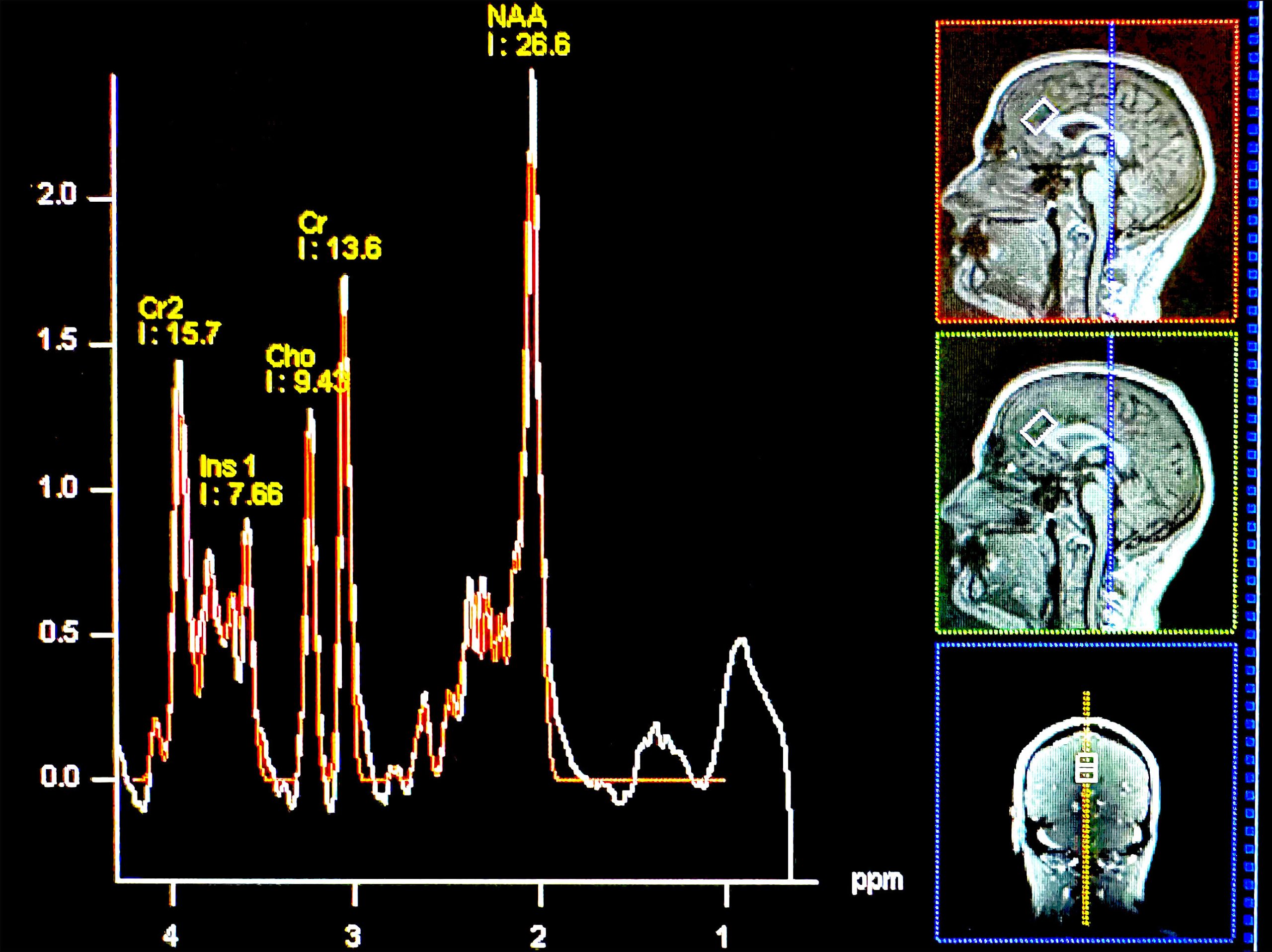
The researchers used findings from 1H-MRS, a method that works inside an MRI scanner. Unlike standard MRI, which produces images of brain structure, 1H-MRS measures chemical signatures in brain tissue.

That allowed researchers to compare several neurometabolites, including choline, N-acetylaspartate, creatine, myo-inositol, glutamate, glutamine, GABA, and lactate. Choline stood out as the most consistent difference across anxiety disorders. The study also found signs of lower cortical N-acetylaspartate after excluding outlier datasets, which may suggest altered neuronal function, but the choline result was stronger.
Maddock had previously seen low choline levels in studies of people with panic disorder. Even so, the size and consistency of the new finding surprised him.
“An 8% lower amount doesn’t sound like that much, but in the brain it’s significant,” Maddock said.
What This Does and Does Not Mean
The findings do not prove that low choline causes anxiety. They also do not show that supplements can treat anxiety disorders.
“We don’t know yet if increasing choline in the diet will help reduce anxiety. More research will be needed,” Maddock said.
He cautioned that people should not try to treat anxiety by taking large doses of choline supplements on their own. Too much supplementation can carry risks, and anxiety disorders should be evaluated and treated with medical guidance.
Still, the study raises an intriguing possibility: nutrition may influence the brain chemistry involved in anxiety, especially for people who are already falling short on key nutrients.
“Someone with an anxiety disorder might want to look at their diet and see whether they are getting the recommended daily amount of choline. Previous research has shown that most people in the U.S., including children, don’t get the recommended daily amount,” Maddock said. “Some forms of omega-3 fatty acids, like those found in salmon, may be especially good sources for supplying choline to the brain.”
Reference: “Transdiagnostic reduction in cortical choline-containing compounds in anxiety disorders: a 1H-magnetic resonance spectroscopy meta-analysis” by Richard J. Maddock and Jason Smucny, 5 September 2025, Molecular Psychiatry.
DOI: 10.1038/s41380-025-03206-7
Never miss a breakthrough: Join the SciTechDaily newsletter.
Follow us on Google and Google News.
22 Comments
Sounds like a good reason not to be a vegetarian.
Weird takeaway when we live in a modern world with readily accessible supplements.
It literally says in the article soybeans, milk and some cruciferous vegetables are also dietary sources.
Some people will always see what they want to see.
The biggest thing that plays a role in “anxiety” is the professional victim mentality that is more and more prevalent in each successive generation. By the time Gen Beta hits, they will be victimized by the fact that they have to breathe air, drink water, and eat food and voluntarily decide to just waste away and die rather than make the effort to deal with it all. People need to be told to grow the hell up and get on with their lives instead of turning everything into a disease that they can claim to be victimized by absolving them of having to make any effort in their lives yet still expecting all the benefits afforded to those who work hard for what they have and screaming inequality if they don’t get them for nothing.
Absolutely well put, Common Sense!
Wow you have it all figured out. You should write a book. “Old man shakes fist at cloud” by Dino Saur
Thanks for proving my point so well there professional victim.
Unfortunately the food, drinks and even water available to many, since the 1940’s/50’s is far removed from the more natural diet of those time. Huge sugar, chemically processed sweetening, oils, fats, fillers, preservatives, artificial flavourings and factory-made ready meals in plastics dominate many peoples lives, often because that is all they can get in their area, know what to do with or can afford. The lack of not just basic nutrients but those needed daily for health and proper brain functioning can lead to depleted systems from early childhood and anxiety disorders due to poor brain cell funtioning which only worsen with ageing. These factors haven’t arisen from nowhere, they are the affects of companies wanting higher profits while offering what looks like food but is totally artificial rubbish. Nobody chooses to be poorer than others just to save effort, it has long term affects on health and life expectancy.
I didn’t see anyone mention breast implant illness as the culprit. That’s one of the many major symptoms and or complaints. I hope if you doubt this truth you investigate how implants can cause many very serious health issues not just anxiety. I know because I am a survivor of BII… Please look at all the groups on Facebook, Instagram and any other forum. You will find out how they can be life threatening! Look up Dr Kahn-sp? And there are other honest Drs who explant (and do so correctly) as well… My breast implants almost killed me! True story….
No, breast implants are just a side effect of the choice to be a self absorbed whore. Any side effects thereof are your own fault and therefore you should have no right to complain about.
Clearly you have never experienced true anxiety or a full blown panic attack. What an ignorant statement to make about a debilitating condition.
You are absolutely right, because I am not a professional victim. I choose to be a useful member of society and not a leech on the rear end of it.
Anxiety is genetic, it runs in families. My family has a strong line of it. Some of us handled it better than others, but it is certainly still there.
Yes, being a professional victim is a learned behavior.
Studies also show that having the dark triad personality traits such as those being flaunted here, that is also correlated to family genes. But that doesn’t let jerks off the hook….
And that is exactly in line with what this study could be saying, which is that the anxiety is the result of a genetic predisposition that causes a person to perhaps absorb or metabolize choline differently than the non anxious population
Is choline connected to seritonin development? My opinion, is one of the major causes of the anxiety epidemic, in the younger population, is directly related to a disrupted gut microbiome. 70% of mental health is mediated by the gut. Gut microbiome disbiosis is largely an issue instigated by glyphosate in the modern diet, affecting the bacterial population as an antibiotic and because bacteria are subject to the shikimate pathway, a biochemical pathway in plants and bacteria; but not in animals. Thus the production of serotonin by the correct microbiotic population is disrupted and curtailed.
🤔
Every Microbiome is different. That’s a problem
@commonsense, A little harsh. You don’t know what someone has been through. Could be some tramatic experience or even many different events that led up to their anxiety.
No, that would be called PTSD, and is a real thing even though it is very much so exploited by the professional victim masses. Anxiety is just something that everyone experiences in life and normal worthwhile people just brush off and get over….they don’t take a simple thing and use it as an excuse to be completely useless to society just because they can’t be bothered.
some health stuff, get b complex supplement, I-arginine and lions mane, chanterelle mushrooms too, research cilantro for heavy metal detox, and watch long term water fasting by dr. alan on yt
& this is my hobby and audio setup if you love music too -> ath-m50s (old m50 not x) and a ifi idsd signature, Defined bass and not a lingering/masking/ambiguous boom. Midrange and treble is romantic. Cohesive/harmonious as opposed to 2 or more ppl talking at the same time, no thinness (or any kind of harshness) to be heard like ur talking on an airplane, unlike anything out there fr + Emotions come through unlike something clinical (passionate), it’s like a large coloured t.v. as opposed to a small b&w. It gives appetite to music and is fun, sweet and enjoyable. 5 star
also bass unlike other things is not like being outside a car with the windows up where u just hear muffled bass which wat they are but because we’re used to hearing mainstream stuff (earphones/headphones/speakers) it doesn’t seem like it but after this u cant listen or go back to anything else, fr. can replace pads with lambskin pads like ath-awas or fostex, double sided tape it.