

Tiny molecules in the blood can strongly predict short-term survival in older adults, according to new research.
As people get older, it can be difficult to tell who is likely to remain healthy and who may face a higher risk of serious decline. New research suggests that clues to that risk may already be present in the blood.
A study led by Duke Health, in collaboration with the University of Minnesota, found that small RNA molecules called piRNAs can help predict whether older adults are likely to live at least two more years.
Published in Aging Cell, the findings suggest that a simple blood test could eventually help doctors identify short-term survival risks earlier and guide strategies aimed at healthier aging.
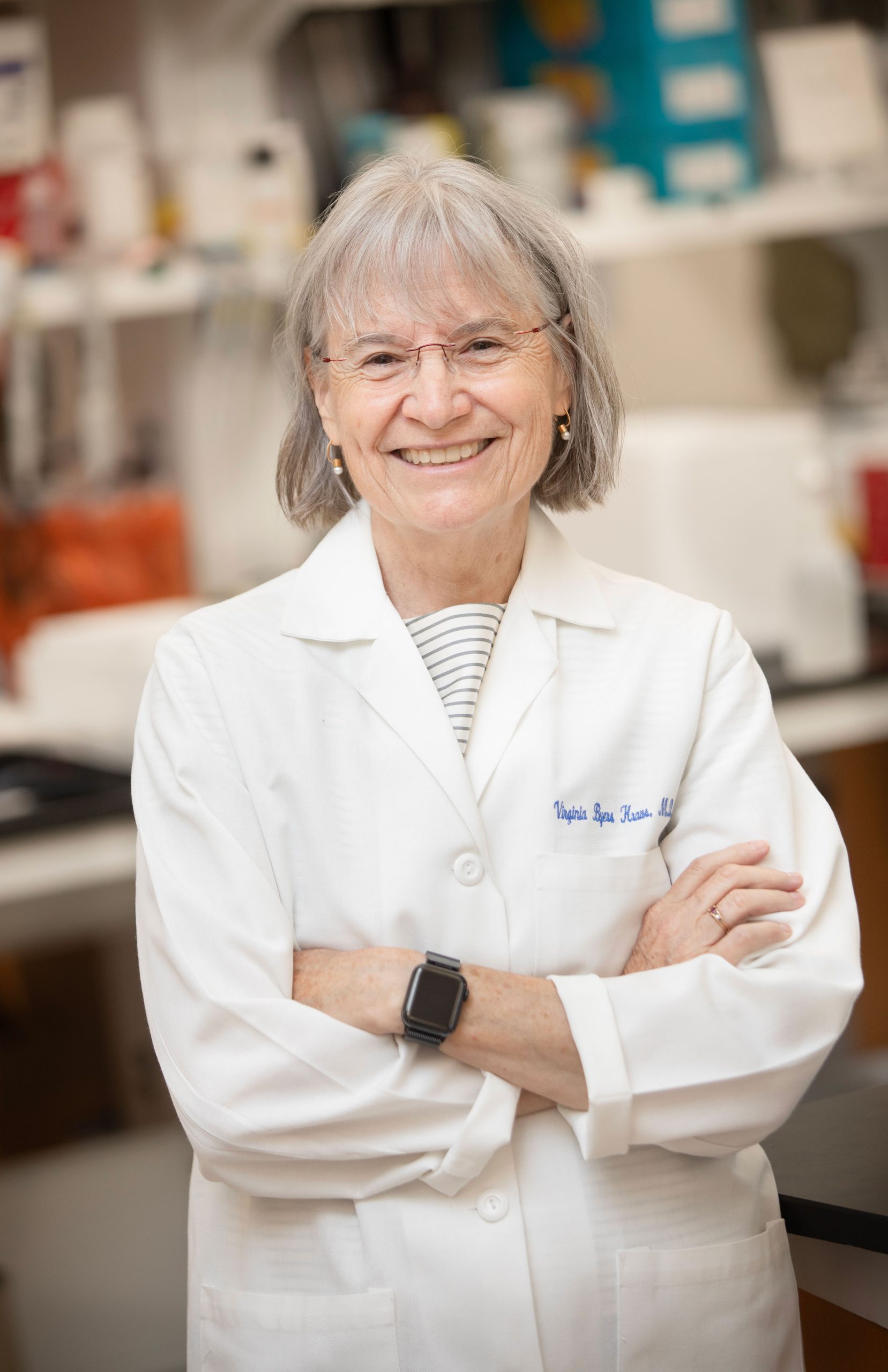
“The combination of just a few piRNAs was the strongest predictor of two-year survival in older adults—stronger than age, lifestyle habits, or any other health measures we examined,” said Virginia Byers Kraus, M.D., Ph.D., senior author of the study and professor in the departments of Medicine, Pathology, and Orthopaedic Surgery at Duke University School of Medicine. “What surprised us most was that this powerful signal came from a simple blood test,” Kraus said.
Blood signals predict survival
The team analyzed piRNAs in blood samples from adults aged 71 and older and found that lower levels of certain piRNAs were closely associated with longer survival. Earlier studies have shown that these small RNA fragments help regulate development, regeneration, and immune activity.
For the study, researchers applied causal artificial intelligence and machine learning methods to examine 187 clinical factors and 828 small RNAs across more than 1,200 blood samples. The samples came from a large North Carolina-based cohort created in a previous Duke-led study. Survival outcomes were assessed by linking participants with national mortality records.
Advanced statistical modeling showed that a set of six piRNAs alone could predict two-year survival with accuracy as high as 86%. The researchers validated the result in a second independent group of older adults.
Lower piRNAs linked to longevity
Older adults who survived longer consistently had lower levels of specific piRNAs, matching a pattern previously seen in simple organisms, where reducing these molecules can extend lifespan. Kraus said the results raise the possibility that piRNAs may play a direct role in longevity.
“We know very little about piRNAs in the blood, but what we’re seeing is that lower levels of certain specific ones is better,” Kraus said. “When these molecules are present in higher amounts, it may signal that something in the body is off-track. Understanding why could open new possibilities for therapies that promote healthy aging.”
The study also tested piRNAs against better-known health measures. For short-term survival prediction, piRNAs performed better than age, cholesterol, physical activity, and more than 180 other clinical indicators. Lifestyle factors became more important for longer-term survival, but piRNAs still offered meaningful insight into the biology beneath aging.
A practical aging test
Kraus said future work will examine whether treatments, lifestyle changes, or medications, including emerging drug classes such as GLP-1-based therapies, can change piRNA levels. The researchers also plan to compare piRNA levels in blood with those found inside tissues to better understand what these molecules do.
“These small RNAs are like micromanagers in the body, helping control many processes that affect health and aging,” Kraus said. “We are only beginning to understand how powerful they are. This research suggests we should be able to identify short-term survival risk using a practical, minimally invasive blood test—with the ultimate goal of improving health as we age.”
Reference: “Repeated Disuse Atrophy Imprints a Molecular Memory in Skeletal Muscle: Transcriptional Resilience in Young Adults and Susceptibility in Aged Muscle” by Daniel C. Turner, Truls Raastad, Max Ullrich, Stian F. Christiansen, Hazel Sutherland, James Boot, Eva Wozniak, Charles Mein, Emilie Dalbram, Jonas T. Treebak, Daniel J. Owens, David C. Hughes, Sue C. Bodine, Jonathan C. Jarvis and Adam P. Sharples, 25 February 2026, Advanced Science.
DOI: 10.1002/advs.202522726
This work was funded by the National Institutes of Health (U54AG07604), the National Institute on Aging (R01AG054840, P30-AG028716) the National Center for Advancing Translational Sciences (UL1TR002494), and the National Heart, Lung and Blood Institute (1UM1TR004405).
Never miss a breakthrough: Join the SciTechDaily newsletter.
Follow us on Google and Google News.
1 Comment
Where to get this test howmuch and does insurance cover it