
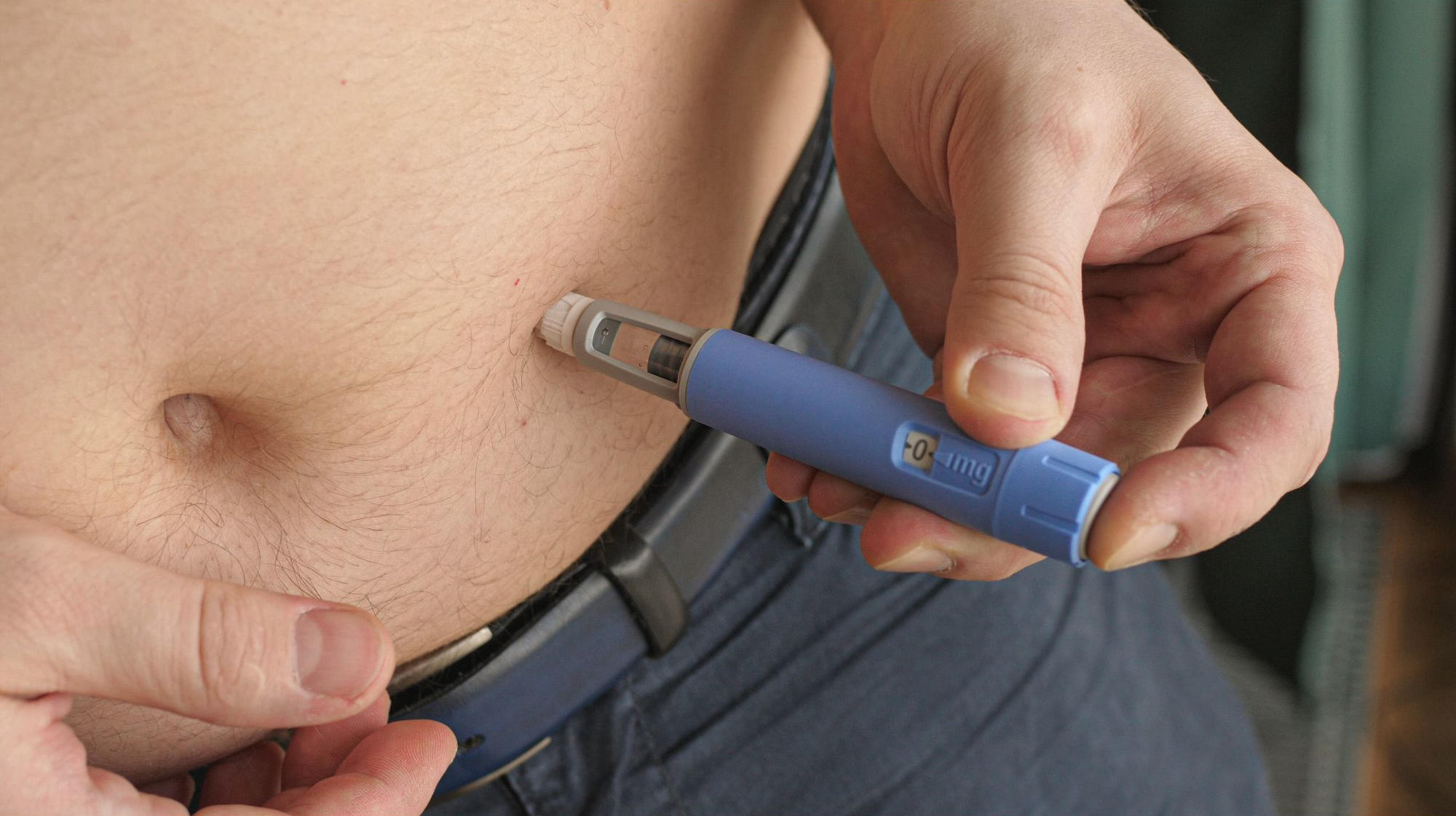
A sweeping review of dozens of clinical trials suggests that today’s most widely used GLP-1 receptor agonist drugs produce broadly consistent weight-loss results across age, race, ethnicity, and baseline health measures.
Weight loss drugs that target the GLP-1 pathway have moved from a niche diabetes treatment to a mainstream option for obesity care. As their use grows, a practical question keeps coming up in clinics: do these medications work equally well for different people, or do age, race, or starting weight meaningfully change the results?
A new review led by researchers at the Johns Hopkins Bloomberg School of Public Health suggests the answer is mostly reassuring. Across many studies, GLP-1 receptor agonists (GLP-1 RAs) produced broadly similar weight loss in a wide range of participants, with one consistent exception. Women, on average, lost more weight than men.
The researchers examined 64 clinical trials of GLP-1 RAs used for weight loss, including semaglutide (Ozempic), dulaglutide (Trulicity), and other drugs in the same class. Together, the trials included tens of thousands of patients.
When the team pooled results, the typical weight loss for women was about 11% of starting weight, compared with about 7% for men. In contrast, the overall effectiveness looked similar when participants were grouped by age (under 65 versus 65 and older), race, ethnicity, starting body mass index (a measure of obesity), and starting Hgb-A1c (average blood sugar levels over the past three months).
The findings were recently published in the journal JAMA Internal Medicine.
Consistent Results Across Most Demographic Groups
“These results should give clinicians and their patients more confidence that GLP-1-RAs work similarly well across different racial and ethnic populations, and different ages and weights, though they appear to have modestly greater effectiveness among women compared to men,” says study senior author Hemal Mehta, PhD, an associate professor in the Bloomberg School’s Department of Epidemiology.
The researchers suggest several possible reasons for the stronger average response in women. These include potential interactions between the drugs and estrogen, differences in how women metabolize the medications, and lower median body weight among women.
GLP-1 is a hormone released by cells in the gut after eating. It reduces appetite and signals the pancreas to release insulin, which helps move glucose from the bloodstream into cells. Because the natural hormone breaks down quickly in the blood, it cannot be used directly as a medication. Over the past two decades, scientists have developed longer-lasting compounds that replicate their effects. Today, GLP-1 RAs are commonly prescribed to treat obesity and type 2 diabetes and to lower the risk of heart attack and stroke.
The researchers did not include tirzepatide (Zepbound) in their analysis. Unlike the other medications studied, tirzepatide targets both GLP-1 and another hormone with related effects called GIP.
Although these drugs have wide-ranging health benefits, they do not work equally well for everyone. Scientists have questioned whether differences in age, race, or starting weight might explain why some patients lose more weight than others.
How the Study Was Conducted
To explore these questions, the team collected data from published reports of registered clinical trials that compared GLP-1 RAs with either a placebo or other medications for weight loss. In total, they evaluated 64 trials described in 41 articles published through mid 2024.
For each subgroup analysis, the researchers relied on trials that included the relevant populations. For example, when assessing differences by age, they analyzed data from seven trials involving 4,314 participants.
The comparison by sex drew on six trials that included 19,906 participants. In this group, women lost an average of 10.88 percent of their starting body weight, compared with 6.78 percent for men. This difference was statistically significant.
In contrast, weight loss outcomes were similar when the researchers compared participants by age, race, ethnicity, initial body mass index, and initial HbA1c level. These findings suggest that meaningful and consistent differences across these groups are unlikely.
“The popularity and the cost of GLP-1 RAs are such that we need more studies like this to better understand the benefits of these products in clinical practice, especially for individuals that might be under-represented in clinical trials,” says study corresponding author G. Caleb Alexander, MD, a professor in the Bloomberg School’s Department of Epidemiology.
Reference: “Heterogeneity of Treatment Effects of Glucagon-Like Peptide-1 Receptor Agonists for Weight Loss in Adults: A Systematic Review and Meta-Analysis” by G. Caleb Alexander, Xuya Xiao, Sophie Dilek, Sydney Lewis, Qilin Deng, Minji Kim, Dami Bolanle, Ian J. Saldanha and Hemalkumar B. Mehta, 2 March 2026, JAMA Internal Medicine.
DOI: 10.1001/jamainternmed.2025.8222
Never miss a breakthrough: Join the SciTechDaily newsletter.
Follow us on Google and Google News.
7 Comments
Ozempic is not a weight loss drug.
It may do other things as well, but it sure helped me lose 30 pounds which improved my health considerably. I do not use it very often, a pen every 3 months now, but it has helped me take the weight off and that allowed me to intensify my workouts so I regain weight very slowly.
Going from 246 to 213 made a HUGE difference for me. It has been a little over 3 months since my last pen and I am back up to 218 so I will buy another one soon. But 4 pens a year is worth it.
I use a pen every week and I have gained weight my sister uses a pen a week and she looks worse now than before she started taking a pen . Thats Tirzepatide mounjaro 10mg going to start 15mg next Saturday I changed doctors so I’ve been taking 10mg for a long time. I hope 15mg works better. Ozempic i lost 70lbs in a month but my insurance quit paying for it so switched to mounjaro. Don’t know what difference between the 2 are but 1 works the other don’t.
May Ozempic be used for those who are not obese but wish to lose weight?
I was 195lbs and lost 50lbs so yes.
Weight loss drugs should be made cheaper for the obese.
Lost 30lbs and then it came back. All of it, plus interest.