
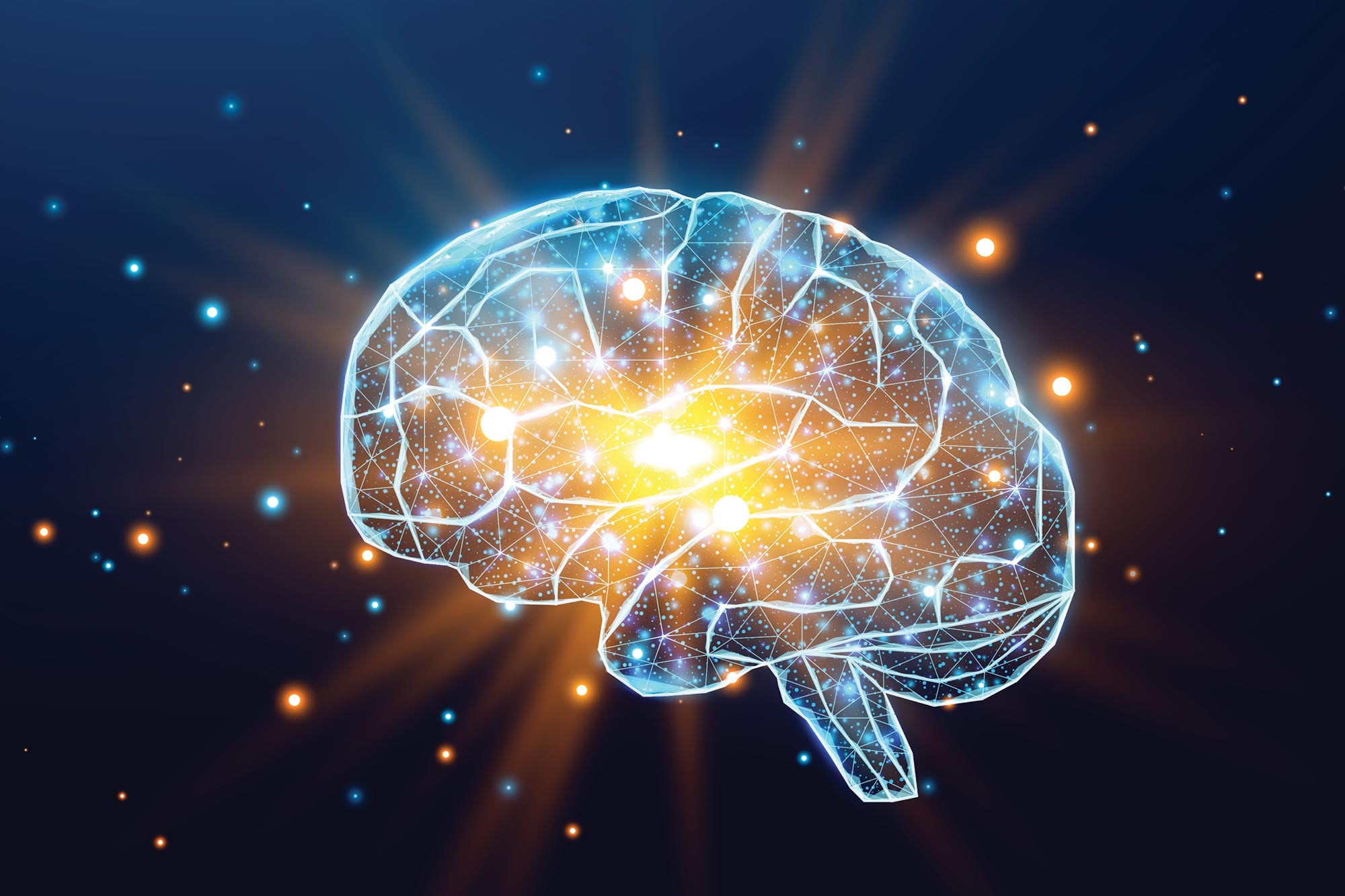
Scientists have uncovered how a molecule called spermine, naturally produced by the body, helps cells neutralize toxic protein buildups linked to Alzheimer’s and Parkinson’s. By encouraging these harmful strands to cluster together, much like cheese gathering spaghetti, cells can more easily recycle and remove them through autophagy.
Experiments in tiny nematodes show the molecule boosts lifespan, mobility, and mitochondrial health, hinting at a broader role in protecting the aging brain. The findings offer a promising foundation for future treatments that harness or enhance this natural defense system.
Spermine’s Role in Protecting the Brain
Researchers at the Paul Scherrer Institute (PSI) have uncovered how spermine, a small molecule involved in many cellular functions, helps defend the body against conditions such as Alzheimer’s and Parkinson’s. The molecule neutralizes certain harmful proteins by encouraging them to cluster together much like cheese binding strands of noodles. This clumping effect makes the proteins less dangerous. The work, now reported in the journal Nature Communications, highlights a potential new path for fighting these diseases.
Rising Lifespans and Increasing Neurodegenerative Risk
As people live longer, disorders associated with aging, including Alzheimer’s and Parkinson’s, are becoming more widespread. These illnesses develop when misfolded amyloid proteins accumulate in the brain and form long, fibre-like structures often compared to spaghetti. At present, no effective treatment exists that can reliably prevent or remove these damaging deposits.
How Spermine Supports Cellular Health
A naturally occurring molecule called spermine may offer new possibilities. In laboratory studies led by Jinghui Luo at the Center for Life Sciences at PSI, spermine extended the lifespan of nematode worms, improved their mobility in later life, and strengthened their mitochondria, which are the energy centers of cells. The team also observed that spermine assists the immune system in clearing harmful amyloid protein clusters that can injure nerve cells.
These discoveries may provide a foundation for future therapeutic strategies targeting neurodegenerative diseases.
Spermine as a Key Regulator in Cells
Spermine is essential for normal biological function and belongs to a family of small organic molecules known as polyamines. It was first identified more than 150 years ago and named after the seminal fluid, where it is particularly abundant. However, spermine is also widespread in many types of body cells, especially those that are active and capable of dividing.
Spermine influences cell movement and activity and plays a role in many critical processes. One of its main functions is interacting with the cell’s nucleic acids, helping regulate which genes are expressed and how they are translated into proteins. This regulation supports proper cell growth, division, and eventual cell death. Spermine is also an important participant in biomolecular condensation, a process in which proteins and nucleic acids gather into droplet-like structures inside the cell that function as miniature reaction hubs.
Earlier research hinted that spermine might help protect nerve cells and reduce age-related memory decline. What had been missing was a clear explanation of how spermine affects harmful protein-related mechanisms in the brain in a way that could be applied to medical treatment.
How Spermine Helps Cells Dispose of Toxic Proteins
Luo’s team has now explored these mechanisms in greater depth. Alongside optical microscopy, the researchers used SAXS scattering at PSI’s Swiss Light Source SLS to observe the molecular interactions involved. Their experiments combined studies in a glass capillary (in vitro) with tests in living organisms (in vivo), using the nematode C. elegans as a model.
Their findings show that spermine encourages harmful proteins to gather together through biomolecular condensation. This behavior supports autophagy, a natural recycling system within cells in which damaged or unneeded proteins are enclosed in membrane vesicles and broken down by enzymes.
“Autophagy is more effective at handling larger protein clumps,” says study leader Luo. “And spermine is, so to speak, the binding agent that brings the strands together. There are only weakly attractive electrical forces between the molecules, and these organise them but do not firmly bind them together.”
The whole thing, says Luo, can also be imagined like a plate of spaghetti. “The spermine is like cheese that connects the long, thin noodles without gluing them together, making them easier to digest.”
Expanding Research and Future Therapeutic Potential
Spermine also appears to play a role in other diseases, including cancer. More research is required to clarify how these mechanisms operate, after which spermine-based treatment approaches may become feasible. Many other polyamines also contribute important functions in the body and hold medical promise. According to Luo, “If we better understand the underlying processes, we can cook tastier and more digestible dishes, so to speak, because then we’ll know exactly which spices, in which amounts, make the sauce especially tasty.”
Artificial intelligence is now helping guide this research by rapidly identifying promising combinations of these molecular “ingredients.” Luo notes that time-resolved scattering methods and high-resolution imaging, which allow scientists to observe these processes in real time at the subcellular scale, are equally crucial. Only a few synchrotron facilities worldwide, including PSI, currently offer this level of capability.
Reference: “Spermine modulation of Alzheimer’s Tau and Parkinson’s α-synuclein: implications for biomolecular condensation and neurodegeneration” by Xun Sun, Debasis Saha, Xue Wang, Cecilia Mörman, Rebecca Sternke-Hoffmann, Juan Atilio Gerez, Fátima Herranz-Trillo, Roland Riek, Wenwei Zheng and Jinghui Luo, 21 November 2025, Nature Communications.
DOI: 10.1038/s41467-025-65426-3
Never miss a breakthrough: Join the SciTechDaily newsletter.
Follow us on Google and Google News.
2 Comments
“Experiments in tiny nematodes…” Most humans are not worms, but there are exceptions, I suppose. And I’m not sure what cheese this researcher eats with his spaghetti. Of course, spaghetti looks like worms, so this researcher is clearly into worms. And he got a grant for this.
By the way, here is some description of what they did, from the paper. Note, also, the bad grammar, despite being published in a peer reviewed paper, Nature Communications. “To investigate how the treatment with spermine improves the behavioral ability, adult nematodes after day 6, day 10 and day 14. Behavior frequency was determined by picking 7 worms from the bacterial lawn on an NGM agar plate and transferring them onto a bacteria-free plate, because of the difficulty to observe behavior on food-containing agar plates as worms tend to hide under the bacteria. Heading swing frequency and bend frequency were observed for each of the 7 worms for 1 min at room temperature using a dissection microscope (Leica).” These are tiny worms if they can hide under bacteria! Using worms as models for human dementia and Alzheimer’s ignores the complexity of human physiology and culture in developing a human disease that takes decades to develop. Studies like this keep the medical field busy studying worms, genetically engineered mice, and other non-humans, and yielding no valuable knowledge to help with this human disease. We need human research, not animal research. See my article, Stop Vivisection: Human Research for Human Disease. https://www.academia.edu/37390709/Stop_Vivisection_Human_Research_for_Human_Disease
I am a vegan I eat no fried food, no American toxic cusine. Take vitamin B-1 and low doses of lithium mineral… God for the brain… Eat no fat.