
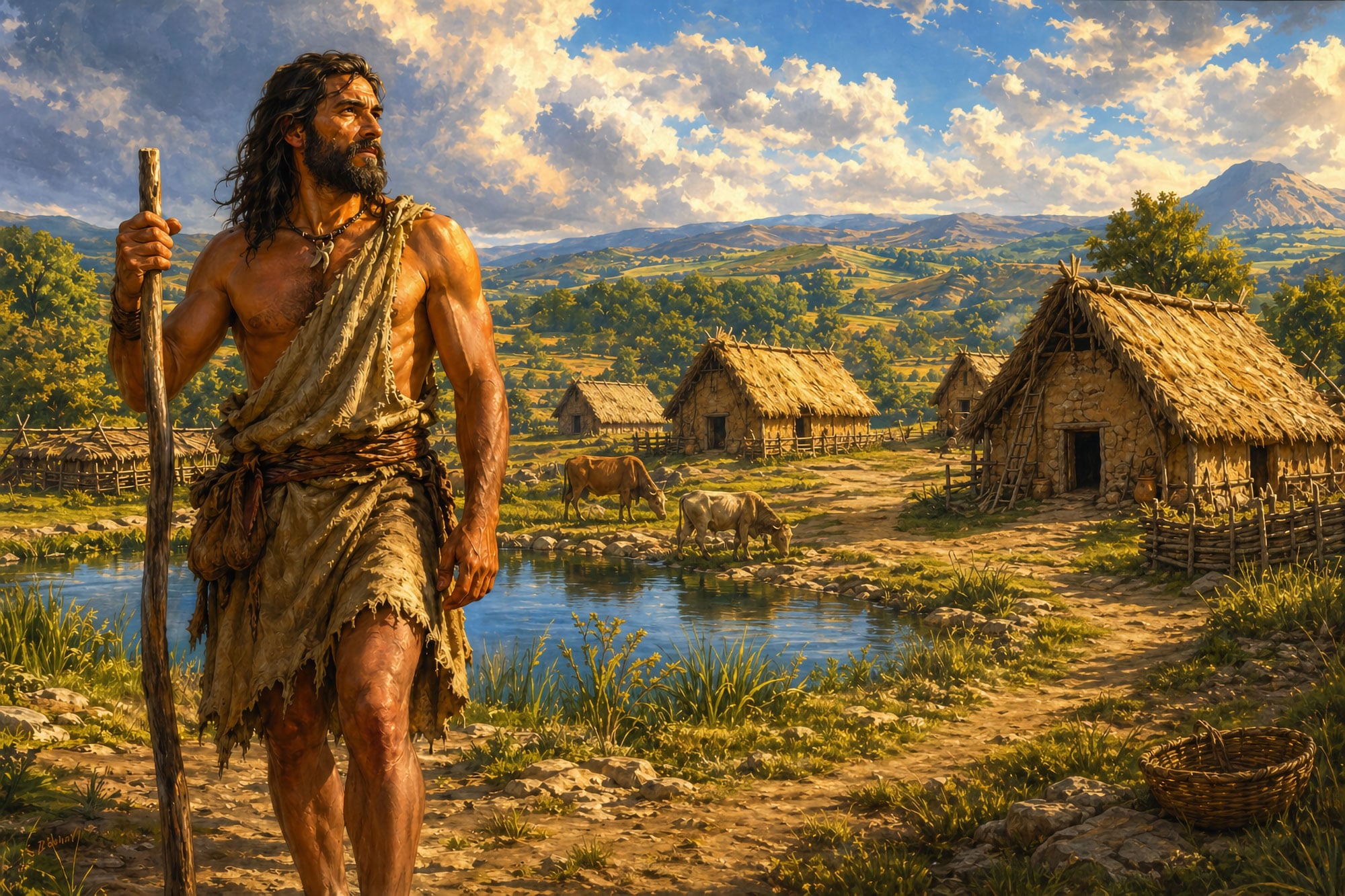
New genetic and archaeological evidence is reshaping the long-standing narrative of the Neolithic Revolution in North Africa.
For decades, archaeologists have debated how communities that once relied entirely on hunting and gathering began raising animals, cultivating crops, and producing food. This shift, known as the “Neolithic Revolution,” did not happen the same way everywhere. In North Africa, one of the main questions has been whether farming developed locally or arrived from outside.
A study published in Nature suggests that the rise of farming in the Maghreb was not the result of a single migration or a simple borrowing of ideas. Instead, it grew out of repeated contact among African hunter-gatherers, early European farmers, and East Saharan herders, whose interactions reshaped culture, daily life, and ancestry in North Africa between 5500 and 4500 BC.
Genetic Clues From Ancient Moroccan Sites
The 2023 study argues that neither explanation on its own is enough. Led by an international team that included researchers from the Universities of Cordoba, Huelva, and Burgos, along with the Moroccan Institute of Archaeology and Heritage Sciences (INSAP), the project points to a more complex process shaped by migration, cultural exchange, and local adaptation.
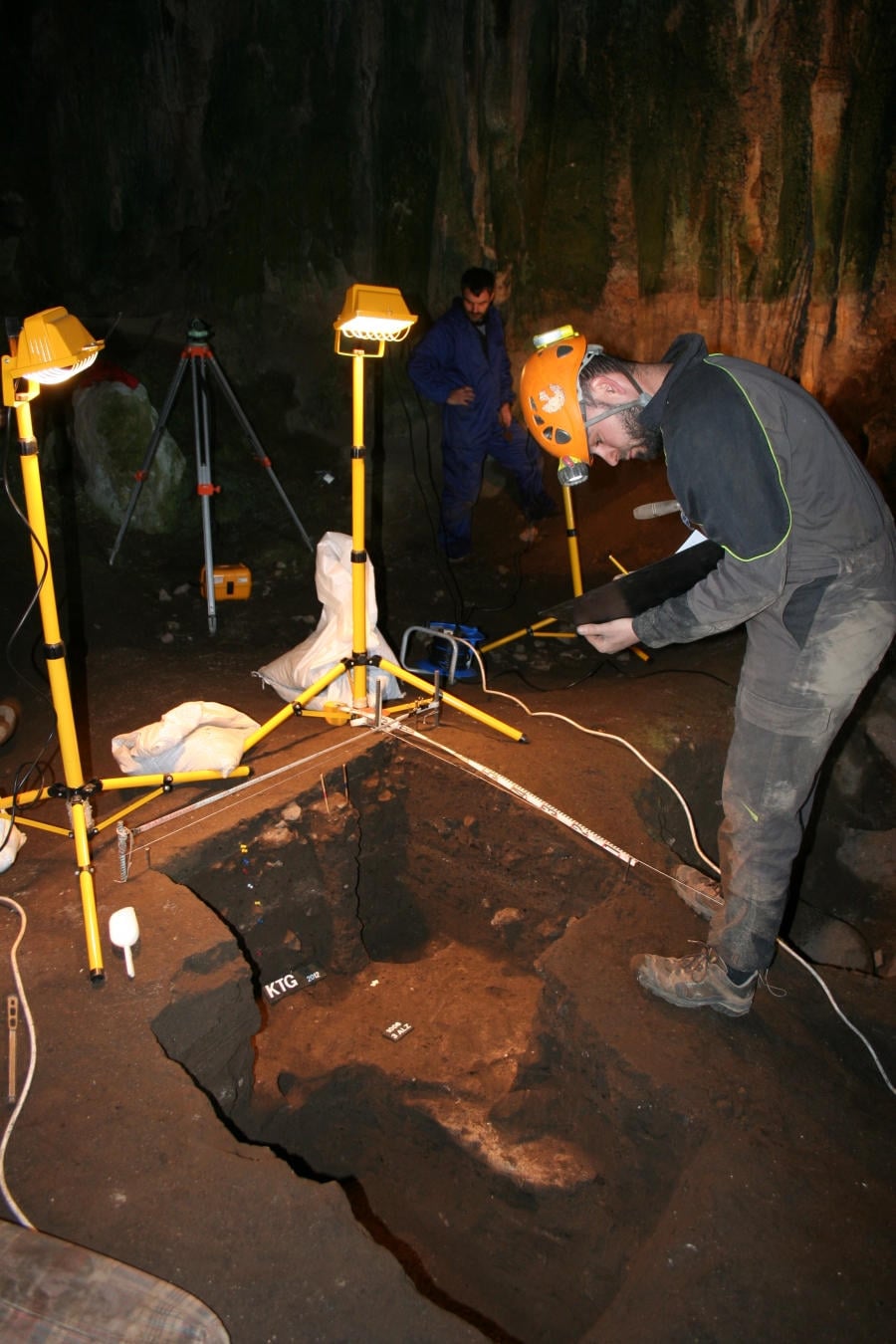
A major strength of the study is its analysis of ancient DNA from human remains at three Moroccan sites: Kaf Taht el-Ghar cave in Tetouan, Ifri n’Amr Ou Moussa in Khémisset province, and Skhirat-Rouazi south of Rabat.
At Kaf Taht el-Ghar, researchers identified people descended from European farmers who reached the region around 7,400 years ago. At Ifri n’Amr Ou Moussa, they found that a few centuries later, individuals with fully local ancestry were buried in a cave necropolis even though they were already using pottery and farming-related practices. This suggests that local hunter-gatherer groups did not simply disappear when new customs arrived. Some adopted them.
Migration, Mixing, and Cultural Exchange
At Skhirat-Rouazi, dating about 1,000 years later, the genomes point to ancestry linked to pastoralist groups whose roots lay in the Fertile Crescent. Archaeology had already suggested that such groups moved across North Africa, and the genetic evidence now supports that view.
The findings also show that the Maghreb was connected to surrounding regions much earlier than later historical periods might suggest. Long before Roman rule and long before the spread of Islam, people on both sides of the Strait of Gibraltar were already sharing knowledge, technologies, cultural traditions, and genes.
Rafael M. Martínez of the University of Córdoba said the study marks “a turning point in our understanding” of how the Neolithic spread in the region, adding that “the unidirectionality of the process now seems quite clear, probably from Iberia.” He also said the earliest stamped Moroccan ceramics belong to a wider Western Mediterranean tradition, while the pottery from Skhirat is different, with rope-pattern decoration linked to Saharan pastoralist groups.
Juan Carlos Vera of the University of Huelva said the genomic evidence confirms what archaeology had already suggested. Earlier work had uncovered ancient cereal and legume seeds in Moroccan Neolithic contexts, pointing to a diffusion process, but this new study now shows the immigrants’ “physical” arrival and “the projection of their genes.”
Lasting Impacts on North African Populations
Cristina Valdiosera of the University of Burgos, who co-directed the project with Mattias Jakobsson, said the findings have major implications for North African history. According to the study, the ancestry of later Maghreb populations, including the ancestors of the historical Berbers (Imazighen), was shaped by three main sources: African hunter-gatherers, European Neolithic farmers, and pastoralist groups that moved westward from the Fertile Crescent through Sinai.
A separate Nature study published in 2025 suggests the Neolithic transition did not unfold the same way across North Africa. While the 2023 study found stronger evidence of migration and mixing in the western Maghreb, the later paper showed that communities in the eastern Maghreb remained far more genetically continuous even as they adopted some Neolithic practices.
Together, the studies suggest there was no single North African path to farming. In the west, migration and admixture played a larger role. In the east, local groups kept most of their ancestry while selectively adopting outside ideas, animals, and technologies. Rather than a simple story of replacement or independent invention, the spread of farming appears to have followed different regional trajectories.
References:
“Northwest African Neolithic initiated by migrants from Iberia and Levant” by Luciana G. Simões, Torsten Günther, Rafael M. Martínez-Sánchez, Juan Carlos Vera-Rodríguez, Eneko Iriarte, Ricardo Rodríguez-Varela, Youssef Bokbot, Cristina Valdiosera and Mattias Jakobsson, 7 June 2023, Nature.
DOI: 10.1038/s41586-023-06166-6
“High continuity of forager ancestry in the Neolithic period of the eastern Maghreb” by Mark Lipson, Harald Ringbauer, Giulio Lucarini, Nabiha Aouadi, Louiza Aoudia, Lotfi Belhouchet, Olivia Cheronet, Ariane-Rym Dahmani, Francesco Genchi, Francesco La Pastina, Michaela Lucci, Henry de Lumley, Nabila Mansouri, Alessia Nava, Fatma Touj, Swapan Mallick, Nadin Rohland, Alfredo Coppa, Ron Pinhasi and David Reich, 12 March 2025, Nature.
DOI: 10.1038/s41586-025-08699-4
Never miss a breakthrough: Join the SciTechDaily newsletter.
Follow us on Google and Google News.
1 Comment
Fascinating new information about early human development—thank so much for the article! It’s wonderful to know that there was great complexity and diversity and interaction among groups that apparently benefited all.