
Close Menu
    Facebook X (Twitter) Instagram
    SciTechDaily
    • Biology
    • Chemistry
    • Earth
    • Health
    • Physics
    • Science
    • Space
    • Technology
    Facebook X (Twitter) Pinterest YouTube RSS
    SciTechDaily
    Home»Science»Neolithic Pottery Reveals Cheese-Making from 7,500 Years Ago
    Science

    Neolithic Pottery Reveals Cheese-Making from 7,500 Years Ago

    By SciTechDailyDecember 13, 20122 Comments2 Mins Read
    Facebook Twitter Pinterest Telegram LinkedIn WhatsApp Email Reddit
    Share
    Facebook Twitter LinkedIn Pinterest Telegram Email Reddit
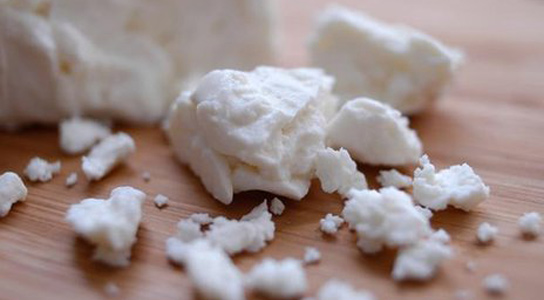
    feta-cheese
    Scientists have uncovered evidence that humans have been making cheese in Europe for up to 7,500 years.

    A team of scientists from Princeton University and the University of Bristol, UK, have discovered traces of dairy fat in ancient ceramic fragments, indicating that humans have been making cheese in Europe for up to 7,500 years. Early dairy farmers probably devised cheese-making as a way to preserve milk.

    The scientists published their findings in the journal Nature. In the 1980s, it was thought that Neolithic farmers had found a way to preserve milk as early as 5,500 BC. In the new study, scientists have biochemical proof that the strainers used to separate dairy fat are at least 7,000 years old. They used gas chromatography and carbon-isotope ratios to analyze the molecules preserved in the pores of the ancient clay.

    This is the first evidence of Neolithic cheese-making in the archaeological record. This shows that humans had learned to use sophisticated technology, but it’s also evidence of the complex relationship with animals that went beyond simple hunting.

    Cheese-making would have allowed the Neolithic farmers to get the most out of their herds. Early humans were unable to digest lactose after childhood. Traditionally made cheese contains less lactose than fresh milk, so the making of cheese would have allowed the farmers to get around the indigestibility of milk without getting ill.

    Heather Paxson, a cultural anthropologist at MIT in Cambridge, who studies US artisan cheese-makers, suggests that Neolithic people might have curdled their milk with bacteria found in nature, resulting in a clumpier version of modern-day mozzarella.

    Reference: “Earliest evidence for cheese making in the sixth millennium bc in northern Europe” by Mélanie Salque, Peter I. Bogucki, Joanna Pyzel, Iwona Sobkowiak-Tabaka, Ryszard Grygiel, Marzena Szmyt and Richard P. Evershed, 12 December 2012, Nature.
    DOI: 10.1038/nature11698

    Never miss a breakthrough: Join the SciTechDaily newsletter.
    Follow us on Google and Google News.

    Archaeology Farming Palaeoanthropology Paleontology
    Share. Facebook Twitter Pinterest LinkedIn Email Reddit

    Related Articles

    Jurassic Fossil Links Ancient Crocodiles With Dolphin-Like Animals

    Paleontologists Identify a New Species of Ancient Whale

    Paleontologists Provide New Perspective on Triassic Period, Emergence of Dinosaurs

    Paleontologists Identify a New Species of Prehistoric Reptile, Colobops Noviportensis

    Paleontologists Discover Never-Before-Seen Ancient Fish Species

    Archaeologists Discover Oldest Known Funereal Fish Hooks

    Stone Blades Suggest That Early Humans Passed on Technological Skills

    Jaw Structures of Fossils Seems to Suggest That Three Homo Species Roamed Africa Concurrently

    27-Foot Long Crocodylus Thorbjarnarsoni Roamed Kenya

    2 Comments

    1. Madanagopal.V.C. on December 16, 2012 6:03 am

      The world is divided by two category of people, viz., lactose tolerant to lactose resistant types. This finding shows the transition stage.Thank Yoy.

      Reply
    2. Carolyn Zaremba on January 11, 2020 10:52 am

      “Blessed are the cheesemakers.” — Monty Python

      Reply
    Leave A Reply Cancel Reply

    • Facebook
    • Twitter
    • Pinterest
    • YouTube

    Don't Miss a Discovery

    Subscribe for the Latest in Science & Tech!

    Trending News

    Scientists Discover Bizarre 100-Million-Year-Old Insect With Giant Claws

    Scientists Discover “Good” Gut Microbes That Could Protect Against Autism and ADHD

    Scientists Reveal That Eating Almonds Every Day Could Transform Your Gut, Metabolism, and Appetite

    Scientists May Have Solved Two of Fusion Energy’s Biggest Problems at Once

    Scientists Discover Hidden “Switch” That Burns Fat and Could Treat Bone Disease

    After 50 Years of Mystery, Researchers Identify New Human Blood Group

    Beyond Pain Relief: Scientists Discover a Protein That Could Stop Osteoarthritis in Its Tracks

    Scientists Discover Why Alcohol Prevents the Liver From Healing, Even After You Quit

    Follow SciTechDaily
    • Facebook
    • Twitter
    • YouTube
    • Pinterest
    • Newsletter
    • RSS
    SciTech News
    • Biology News
    • Chemistry News
    • Earth News
    • Health News
    • Physics News
    • Science News
    • Space News
    • Technology News
    Recent Posts
    • Archaeologists Discover Prehistoric Mountain Cave Packed With Mysterious Green Mineral
    • This Common Houseplant Is Secretly Using Advanced Geometry
    • Earth’s Upper Atmosphere Is Cooling Fast and Scientists Finally Know Why
    • 32,000 Olympic Pools of Magma Nearly Erupted Beneath Atlantic Island
    • Scientists May Have Found Dark Matter’s Fingerprint in a Black Hole Collision
    Copyright © 1998 - 2026 SciTechDaily. All Rights Reserved.
    • Science News
    • About
    • Contact
    • Editorial Board
    • Privacy Policy
    • Terms of Use

    Type above and press Enter to search. Press Esc to cancel.