
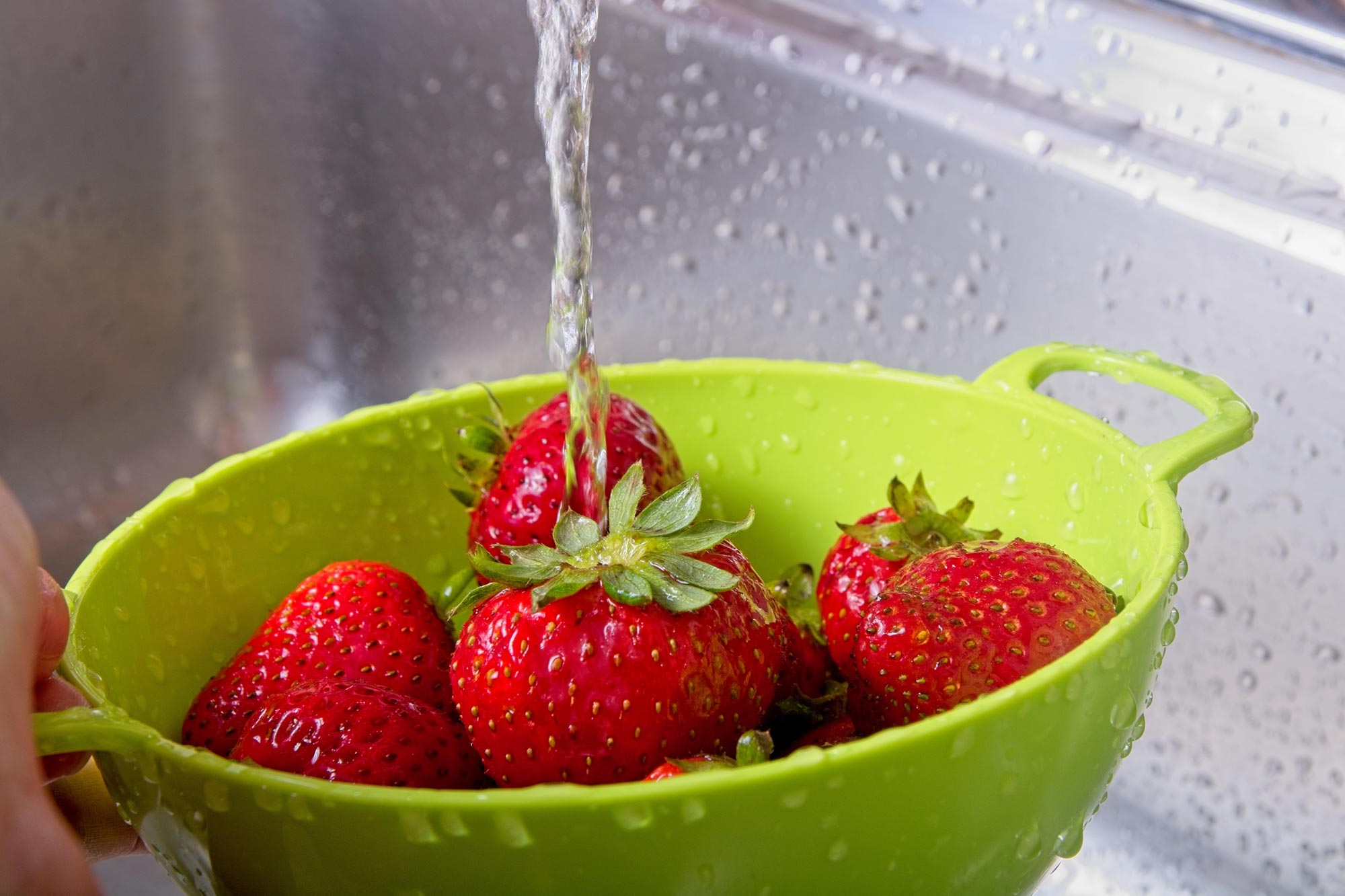
A starch-based fruit wash eliminates pesticides and extends freshness with a protective edible coating, showing promise for reducing waste and improving food safety.
Researchers at the University of British Columbia have created a natural, biodegradable fruit wash that removes up to 96 percent of pesticide residue while also slowing browning and moisture loss.
The innovation could lead to safer apples, grapes, and other fruits that stay fresh and crisp for several extra days. With food prices rising and nearly half of fresh produce wasted globally each year, a solution that reduces both pesticide exposure and spoilage could have significant benefits. The findings were published in ACS Nano.
“Our goal was to create a simple, safe, and affordable wash that improves both food safety and food quality,” said senior author Dr. Tianxi Yang, an assistant professor in UBC’s faculty of land and food systems. “People shouldn’t have to choose between eating fresh produce and worrying about what’s on it.”
Motivation and Pesticide Concerns
Although pesticide use on fruits and vegetables is strictly regulated, small amounts often remain. For people who frequently eat large quantities of the same produce, such as children consuming bowls of berries, exposure can sometimes exceed recommended levels. This concern, inspired by Dr. Yang’s son’s fondness for blueberries, motivated the search for a more effective way to clean fruit.
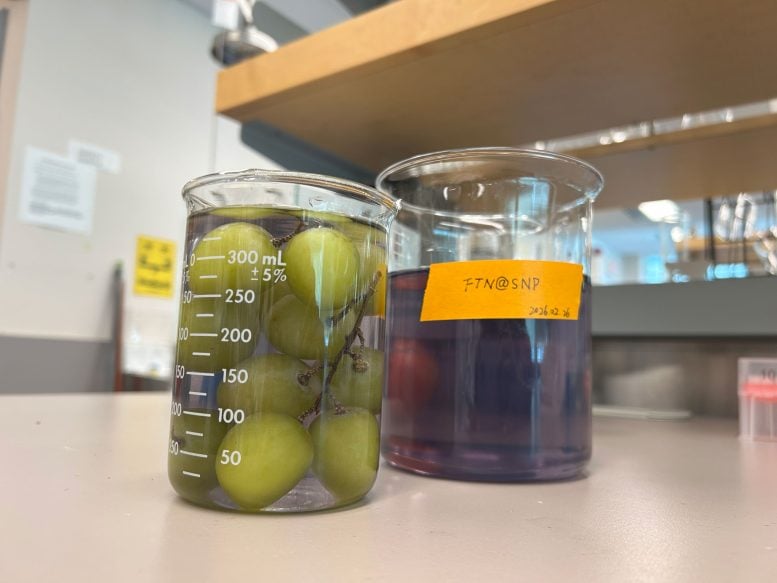
The wash is made from tiny starch-based particles, the same type of carbohydrate found in corn and potatoes, combined with iron and tannic acid. Tannic acid is a natural plant compound responsible for the dry taste in tea and wine. When paired with iron, it forms sticky, sponge-like structures that bind to pesticides and pull them from the fruit’s surface.
To evaluate its effectiveness, researchers applied three commonly used pesticides to apples at real-world concentrations of about 10 milligrams per liter (about 0.01 grams per quart).
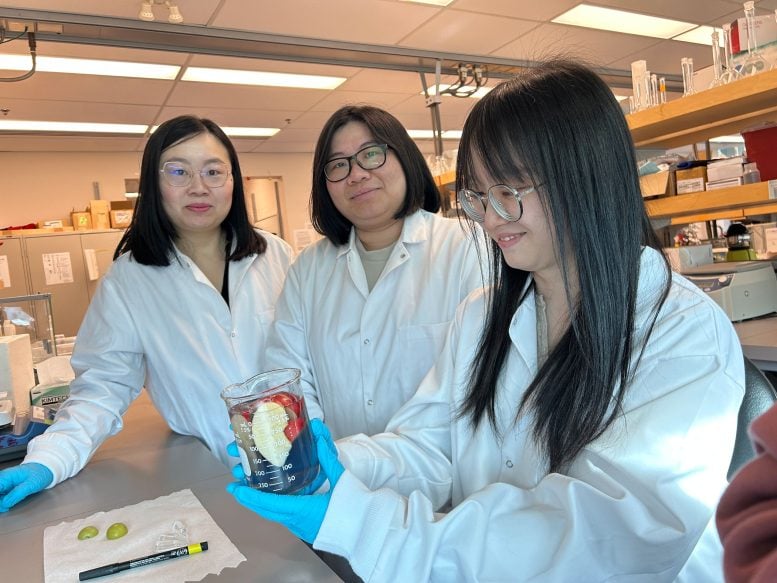
University of British Columbia researchers have developed a natural, biodegradable wash that removed up to 96 per cent of pesticide residue from fruit and slowed browning and moisture loss. Credit: Sachi Wickramasinghe/UBC Media Relations
High Pesticide Removal Performance
In apple tests, the wash removed between 86 and 96 percent of pesticide residues. By comparison, rinsing with tap water, baking soda, or plain starch typically eliminates less than half.
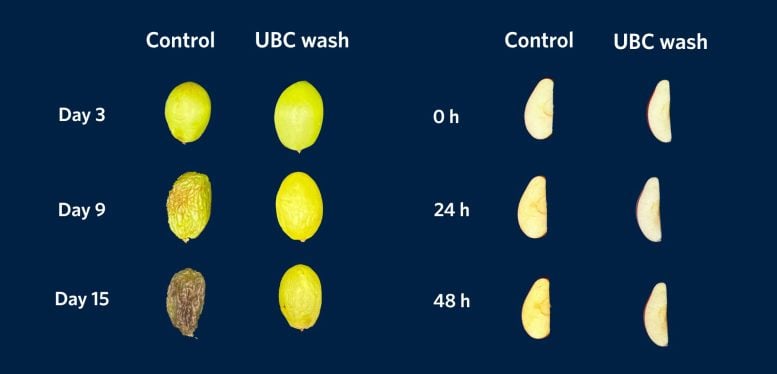
After cleaning, the fruit is dipped again to create a thin, edible, biodegradable coating. Fresh-cut apples treated this way browned more slowly and retained more moisture over two days in the refrigerator. Whole grapes remained firm for up to 15 days at room temperature, while untreated grapes showed clear signs of shriveling.
“The coating acts like a breathable second skin. Measures of food quality like acidity and soluble sugars also remained higher in coated fruit,” said Dr. Yang.
Freshness, Antimicrobial, and Nutrition Benefits
The coating also demonstrated antimicrobial properties, helping limit the growth of harmful bacteria.
Researchers estimated that washing a medium apple with the solution adds only a small amount of iron, well below the daily upper intake limit for adults established by North American food authorities.
“Beyond safety and shelf life, our formulation uses micronutrients like iron and phenolic compounds that offer additional health benefits,” said Dr. Yang. “It doesn’t just reduce risk—it can also add nutritional value.”
Scalability, Cost, and Future Applications
Because the ingredients are low cost and mixed with water, the team believes the wash can be scaled for commercial use. Work is underway to refine and test the formula in processing facilities where fruit is cleaned before distribution.
“Our early cost estimates suggest it would add roughly three cents per apple—comparable to current commercial coatings, but with the added benefit of pesticide removal and extending shelf life,” said Dr. Yang.
The researchers also envision a consumer-friendly version. “Imagine a spray or tablet you could add to water right before washing your fruit,” said Dr. Yang. However, further testing is required before home use, including regulatory approval and real-world studies across different fruits and washing practices.
“Our hope,” said Dr. Yang, “is to help people feel confident about the produce they bring home—knowing it’s safer, lasts longer and creates less waste.”
Reference: “Dual-Function Metal–Phenolic Network-Capped Starch Nanoparticles for Postharvest Pesticide Removal and Produce Preservation” by Tianyi Jin, Zhangmin Wan, Ivy Chiu, Song Yan, Gary Othniel Wijaya, Orlando Rojas, Keng C. Chou, Rickey Y. Yada and Tianxi Yang, 12 April 2026, ACS Nano.
DOI: 10.1021/acsnano.5c20410
This research was supported by the Faculty of Land and Food Systems Start Up Fund, Natural Sciences and Engineering Research Council of Canada (NSERC), Canada Foundation for Innovation (CFI) and the British Columbia Knowledge Development Fund (BCKDF).
Never miss a breakthrough: Join the SciTechDaily newsletter.
Follow us on Google and Google News.
2 Comments
The Japanese have been using this for centuries.
Where can I purchase this fruit and vegetable wash???