
Close Menu
    Facebook X (Twitter) Instagram
    SciTechDaily
    • Biology
    • Chemistry
    • Earth
    • Health
    • Physics
    • Science
    • Space
    • Technology
    Facebook X (Twitter) Pinterest YouTube RSS
    SciTechDaily
    Home»Earth»CryoSat Discovers Antarctica’s Biggest Glacier’s Ice Loss Pattern Is Evolving
    Earth

    CryoSat Discovers Antarctica’s Biggest Glacier’s Ice Loss Pattern Is Evolving

    By ESA - European Space AgencyFebruary 2, 2020No Comments3 Mins Read
    Facebook Twitter Pinterest Telegram LinkedIn WhatsApp Email Reddit
    Share
    Facebook Twitter LinkedIn Pinterest Telegram Email Reddit
    CryoSat
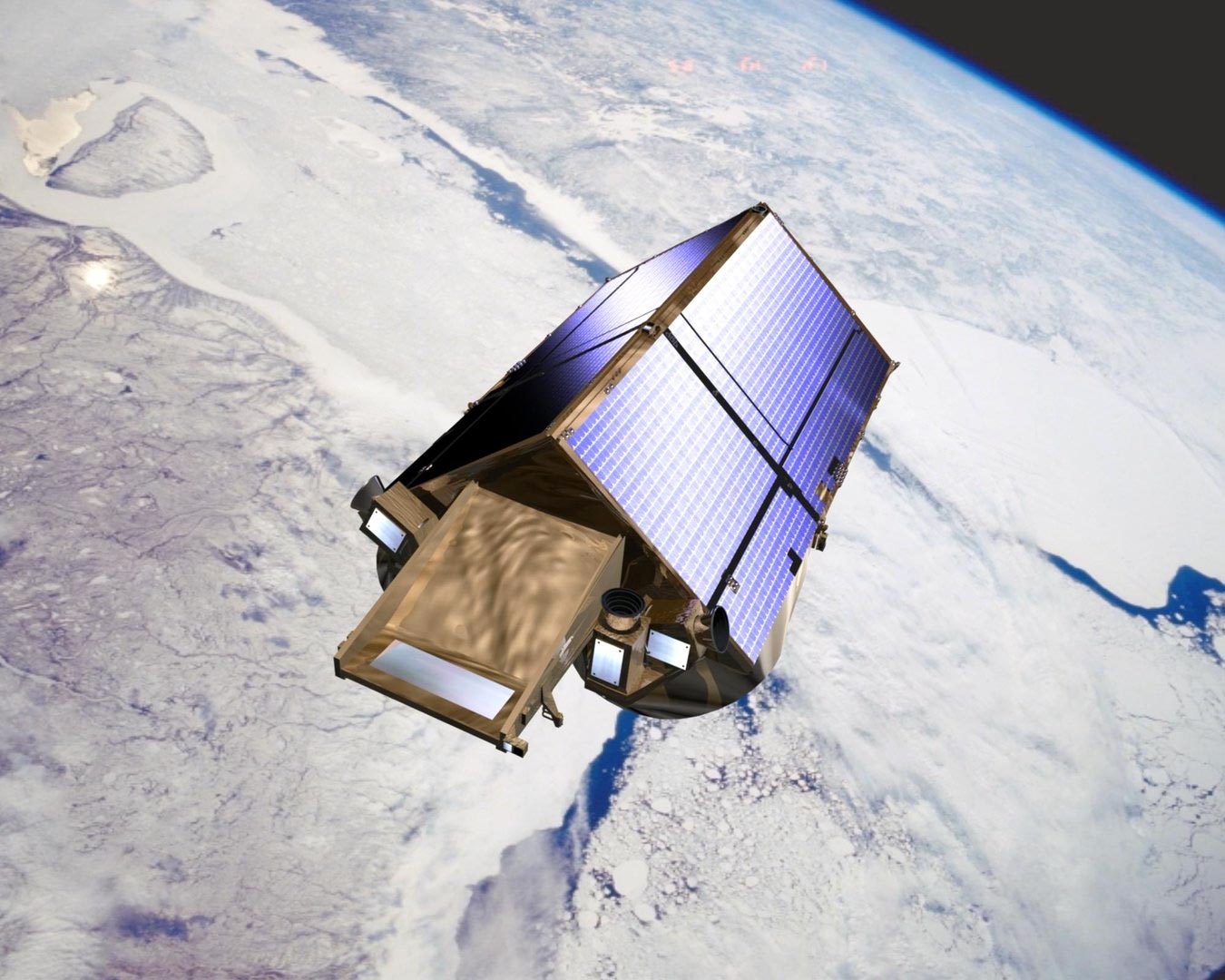
    Artist’s impression of the CryoSat satellite in orbit. Credit: ESA/AOES Medialab

    Ice loss from Pine Island Glacier has contributed more to sea-level rise over the past four decades than any other glacier in Antarctica. However, the way this huge glacier is thinning is complex, leading to uncertainty about how it is likely to raise the sea level in the future. Thanks to ESA’s CryoSat mission, scientists have now been able to shed new light on these complex patterns of ice loss.

    Although Pine Island Glacier is one of the most intensively and extensively investigated glacier systems in Antarctica, different model projections of future mass loss give conflicting results; some suggest mass loss could dramatically increase over the next few decades, resulting in a rapidly growing contribution to sea level, while others indicate a more moderate response.

    Identifying which is the more likely behavior is important for understanding the future sea-level rise and how this vulnerable part of Antarctica is going to evolve over the coming decades.
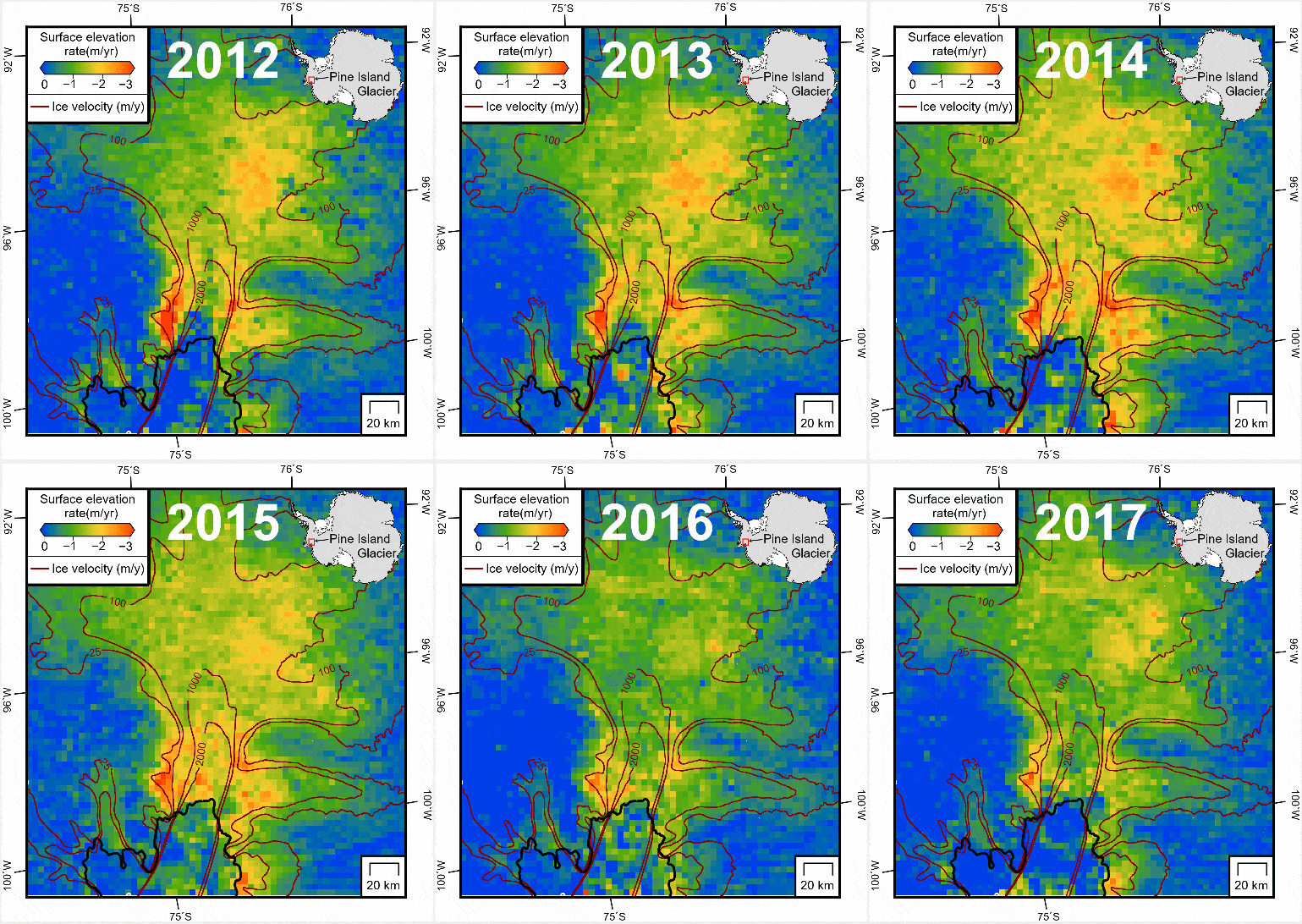
    Thinning of Pine Island Glacier
    Animation of the thinning of Pine Island Glacier. Credit: University of Bristol

    In a paper published in Nature Geoscience, scientists from the University of Bristol, UK, describe how they used information from CryoSat to help clarify the situation. They discovered that the pattern of ice loss is evolving in complex ways, both in space and time.

    Rates in the fast-flowing central trunk of the glacier have decreased by about a factor of five since 2007 – and this is the opposite of what was observed prior to 2010.

    These new results suggest that rapid migration of the grounding line, the place where the grounded ice first meets the ocean, is unlikely over the next decades, without a major change in the role of the ocean in ice loss. Instead, the results support model simulations that imply that the glacier will continue to lose mass, but not at much greater rates than present.

    Lead author Prof. Jonathan Bamber from the University of Bristol’s School of Geographical Sciences, said, “This could seem like a ‘good news story’, but it’s important to remember that we still expect this glacier to continue to lose mass in the future and for that trend to increase over time, just not quite as fast as some model simulations suggested.

    “It’s really important to understand why the models are producing different behavior in the future and to get a better handle on how the glacier will evolve with the benefit of these new observations.

    “In our study, we didn’t make projections, but with the aid of these new data we can improve model projections for this part of Antarctica.”

    Tommaso Parrinello, ESA’s CryoSat mission manager, added, “In April, CryoSat will have been in orbit for 10 years, far exceeding its expected life. We continue to be proud of the contribution to science this extraordinary satellite mission is making.

    “And here, with the issue of sea-level rise a major global concern, the better equipped we are with facts the better it is. CryoSat has helped clarify the situation at Pine Island Glacier, which is not only important for our scientific understanding, but ultimately for society at large.”

    For more on this story, read Antarctica’s Biggest Glacier Is Thinning in Opposite Patterns.

    Reference: “Complex evolving patterns of mass loss from Antarctica’s largest glacier” by Jonathan L. Bamber and Geoffrey J. Dawson, 27 January 2020, Nature Geoscience.
    DOI: 10.1038/s41561-019-0527-z

    Never miss a breakthrough: Join the SciTechDaily newsletter.
    Follow us on Google and Google News.

    Antarctica Climate Change European Space Agency Glacier
    Share. Facebook Twitter Pinterest LinkedIn Email Reddit

    Related Articles

    Disintegration Fears Grow As Worsening Rifts and Fractures Spotted at Two of Antarctica’s Most Important Glaciers

    Melting Glaciers Cool the Southern Ocean – Might Explain the Recent Antarctic Cooling and Sea Ice Expansion

    Vulnerable to Climate Change: Huge Antarctic Glacier Melting From the Bottom Up

    Worst-Case Climate Change Scenario: Greenland and Antarctica Losing Ice 6x Faster Than Expected

    Massive Iceberg 5 Times Larger Than Manhattan Shatters Into Pieces – Satellite Video

    Alarming Discovery in Antarctica Serves as Warning Signal for Sea-Level Rise

    Antarctica’s Biggest Glacier Is Thinning in Patterns Opposite to Previously Observed

    Antarctic Glaciers Slipping Faster Towards the Ocean Due to Surface Melting

    Study Blames Warm Ocean Currents for Majority of Ice Loss in Antarctica

    Leave A Reply Cancel Reply

    • Facebook
    • Twitter
    • Pinterest
    • YouTube

    Don't Miss a Discovery

    Subscribe for the Latest in Science & Tech!

    Trending News

    Largest-Ever Study Finds Medicinal Cannabis Ineffective for Anxiety, Depression, PTSD

    250-Million-Year-Old Egg Solves One of Evolution’s Biggest Mysteries

    Living With Roommates Might Be Changing Your Gut Microbiome Without You Knowing

    Century-Old Cleaning Chemical Linked to 500% Increased Risk of Parkinson’s Disease

    What if Your Memories Never Happened? Physicists Take a New Look at the Boltzmann Brain Paradox

    One of the Universe’s Largest Stars May Be Getting Ready To Explode

    Scientists Discover Enzyme That Could Supercharge Ozempic-Like Weight Loss Drugs

    Popular Sweetener Linked to DNA Damage – “It’s Something You Should Not Be Eating”

    Follow SciTechDaily
    • Facebook
    • Twitter
    • YouTube
    • Pinterest
    • Newsletter
    • RSS
    SciTech News
    • Biology News
    • Chemistry News
    • Earth News
    • Health News
    • Physics News
    • Science News
    • Space News
    • Technology News
    Recent Posts
    • Scientists Discover Coral Reefs Are Teeming With Previously Unknown Life
    • Scientists Find Way to Reverse Fatty Liver Disease Without Changing Diet
    • Could Humans Regrow Limbs? New Study Reveals Promising Genetic Pathway
    • Black Hole Jets Pack Power of 10,000 Suns, Stunning New Study Reveals
    • A Cosmic Crash Turned This Nearby Galaxy Into Chaos
    Copyright © 1998 - 2026 SciTechDaily. All Rights Reserved.
    • Science News
    • About
    • Contact
    • Editorial Board
    • Privacy Policy
    • Terms of Use

    Type above and press Enter to search. Press Esc to cancel.