

The tiniest creatures on the planet are vital to their environment … so always look on the small side of life.
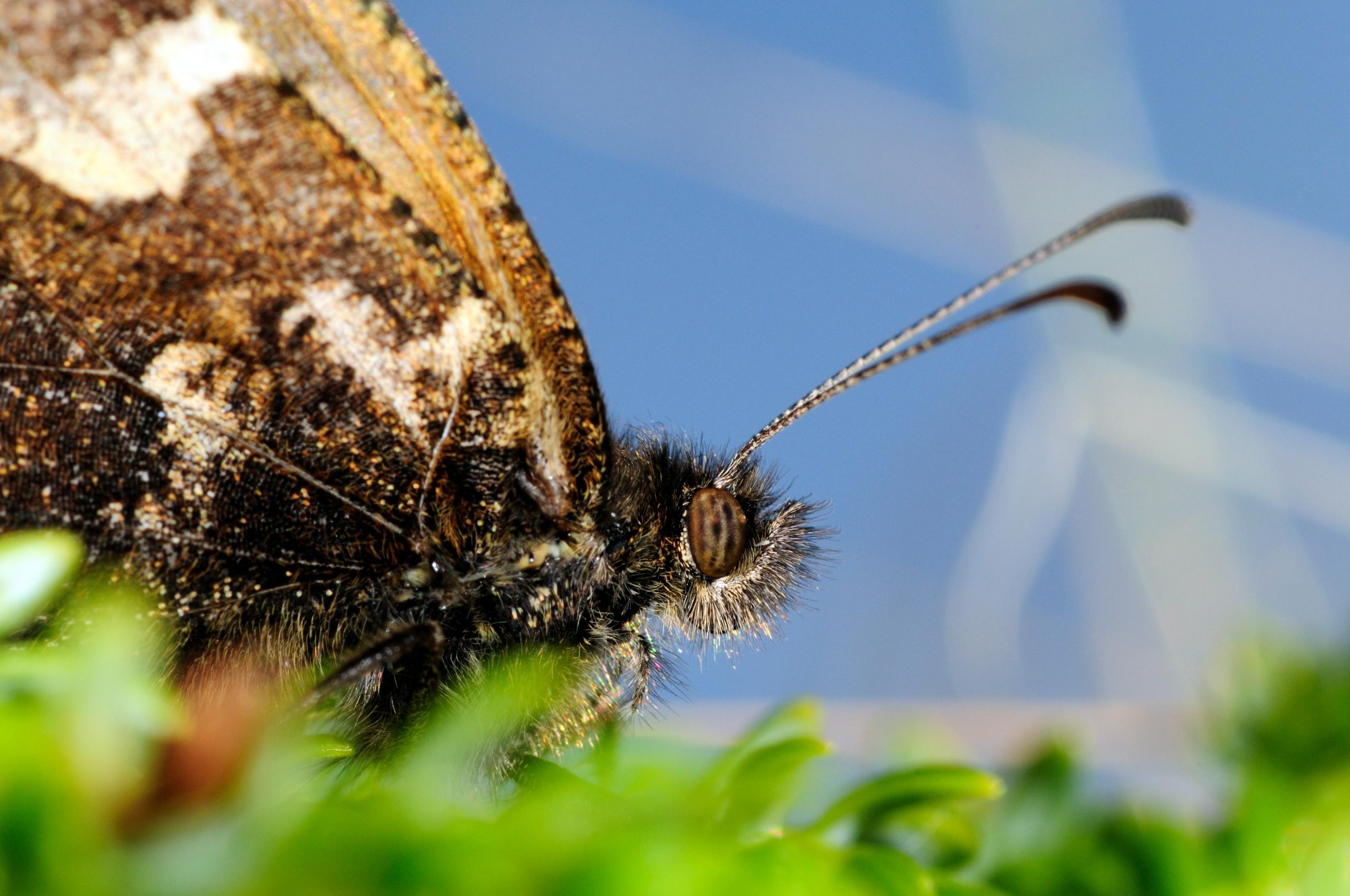
Some of the tiniest creatures on the planet are vital to their environment. But there is a worldwide fall in insect numbers and an accelerating rate of extinction. Now, a global group of 30 scientists – including University of Huddersfield lecturer Dr. Matt Hill – is highlighting the issue and suggesting practical steps that everyone can take to help halt the decline. These include mowing lawns less often, avoiding pesticides and leaving old trees, stumps and dead leaves alone.
A specialist in aquatic environments, Dr. Hill teaches on the University’s recently-established geography degree course and supervises students as they take part in conservation projects.
He is a co-author of two new articles – available online to all – in the journal Biological Conservation. They are titled Scientists’ warning to humanity on insect extinctions and Solutions for humanity on how to conserve insects.
Long-term decline
Pollution and human impact on habitats mean that insects such as beetles, dragonflies, and mayflies plus other macroinvertebrates such as snails are in long-term decline across the world, in the UK as much as anywhere, said Dr. Hill. Yet they make a vital contribution to the environment.
“They provide food for other animals and they can also have a significant role in the functioning of freshwater ecosystems, forming a critical component in the diversity of life,” he added.
Dr. Hill was sought out to work with scientists in countries that include Germany, the UK, Columbia, Finland, and South Africa. They pooled their research into insect decline and collaborated on the two new articles.
These tell how factors such as climate change, the loss of habitats and pollution – including harmful agricultural practices – have all contributed to declines in insect population and to species extinctions.
Insects have many functions in the ecosystem that cannot be replicated by technology or any other innovation. For example, the need for pollination means that crops depend on insects to survive, and their decomposition means they contribute to nutrient cycling.
We can all do our bit to help
The team behind the research and the new articles have drawn up a nine-point plan that enables individuals to contribute to insect survival:
- Avoid mowing your lawn frequently; let nature grow and feed insects
- Plant native plants; many insects need only these to survive
- Avoid pesticides; go organic, at least for your own backyard
- Leave old trees, stumps and dead leaves alone; they are home to countless species
- Build an insect hotel with small horizontal holes that can become their nests
- Reduce your carbon footprint; this affects insects as much as other organisms
- Support and volunteer in conservation organizations
- Do not import or release living animals or plants into the wild that could harm native species
- Be more aware of tiny creatures; always look on the small side of life.
Dr. Hill specializes in aquatic habitats and his areas of research include pondscapes – including garden ponds – and freshwater in urban areas. He teaches modules that include ecological theory and practical conservation. Students take part in field trips that include sampling of macroinvertebrates in rivers and in their second year they conduct an in-depth study of the impact of urbanization.
“The students are very responsive to the issues and very interested in the conservation of insects and animals in general,” he said.
References:
“Scientists’ warning to humanity on insect extinctions” by Pedro Cardoso, Philip S. Barton, Klaus Birkhofer, Filipe Chichorro, Charl Deacon, Thomas Fartmann, Caroline S. Fukushima, René Gaigherd, Jan C. Habel, Caspar A. Hallmann, Matthew J. Hill, Axel Hochkirch, Mackenzie L. Kwak, Stefano Mammola, Jorge Ari Noriega, Alexander B. Orfinger, Fernando Pedraza, James S. Pryke, Fabio O. Roque, Josef Settele, John P. Simaika, Nigel E. Stork, Frank Suhling, Carlien Vorster and Michael J. Samways, 9 February 2020, Biological Conservation.
DOI: 10.1016/j.biocon.2020.108426
“Solutions for humanity on how to conserve insects” by Michael J.Samways, Philip S. Barton, Klaus Birkhofer, Filipe Chichorro, Charl Deacon, Thomas Fartmann, Caroline S. Fukushima, René Gaigher, Jan C. Habel, Caspar A. Hallmann, Matthew J. Hill, Axel Hochkirch, Lauri Kaila, Mackenzie L. Kwak, Dirk Maes, Stefano Mammola, Jorge A. Noriega, Alexander B. Orfinger, Fernando Pedraza, James S. Pryke, Fabio O. Roque, Josef Settele, John P.Simaika, Nigel E. Stork, Frank Suhling Carlien Vorster and Pedro Cardoso, 9 February 2020, Biological Conservation.
DOI: 10.1016/j.biocon.2020.108427
Never miss a breakthrough: Join the SciTechDaily newsletter.
Follow us on Google and Google News.