
Close Menu
    Facebook X (Twitter) Instagram
    SciTechDaily
    • Biology
    • Chemistry
    • Earth
    • Health
    • Physics
    • Science
    • Space
    • Technology
    Facebook X (Twitter) Pinterest YouTube RSS
    SciTechDaily
    Home»Physics»Glug, Glug: Physics of Bubble Dynamics Reveals How to Empty Bottles Faster
    Physics

    Glug, Glug: Physics of Bubble Dynamics Reveals How to Empty Bottles Faster

    By American Institute of Physics,April 7, 20203 Comments3 Mins Read
    Facebook Twitter Pinterest Telegram LinkedIn WhatsApp Email Reddit
    Share
    Facebook Twitter LinkedIn Pinterest Telegram Email Reddit
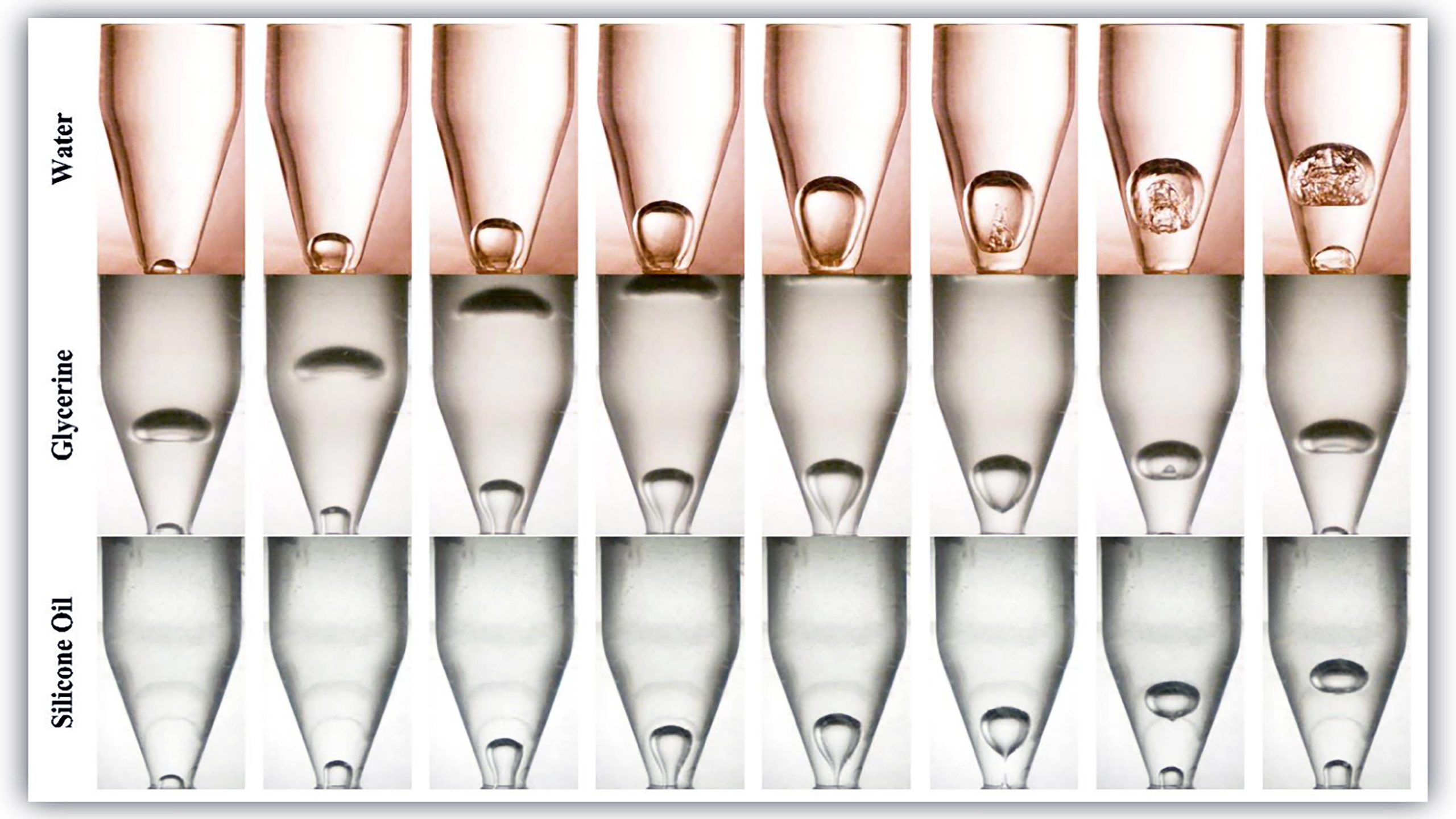
    Temporal Evolution of Bubble Different Fluids
    Temporal evolution of the bubble within different fluids. Note the shape of the ejector jet after each bubble pinch off. Credit: Lokesh Rohilla

    Researchers zero in on the rhythmic sound bubble dynamics produce during bottle emptying to better understand the physics at play.

    Bottle emptying is a phenomenon most of us have observed while pouring a beverage. Researchers from the Indian Institute of Technology Roorkee discovered how to make bottles empty faster, which has wide-ranging implications for many areas beyond the beverage industry.

    Bubbles have been studied extensively for centuries, including early efforts by Leonardo da Vinci who famously noted the sinusoidal rise of bubbles within a pool. The growth dynamics of bubbles at the mouth of a bottle depend on the thermophysical properties of the fluid, the bottle geometry, and its angle of inclination. These inextricably intertwined parameters have made bottle-emptying dynamics the next frontier for bubble physicists.

    In this week’s Physics of Fluids, from AIP Publishing, Lokesh Rohilla and Arup Kumar Das explore this bottle-emptying phenomenon from the perspective of bubble dynamics on a commercial bottle by using high-speed photography. Image analysis allowed them to conceptualize various parameters, such as liquid film thickness, bubble aspect ratio, rise velocity, and bottle emptying modes.
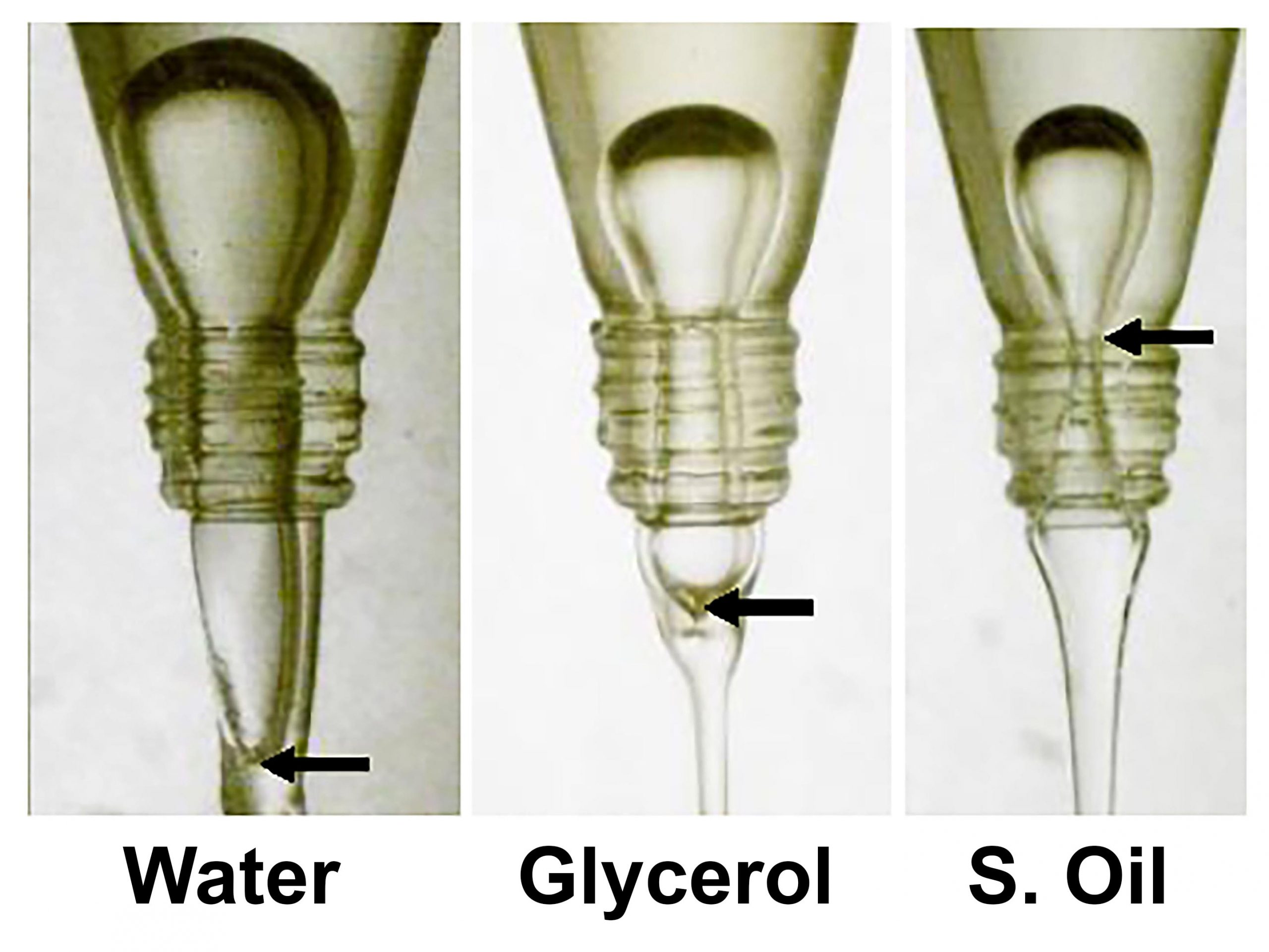
    Formation of Encapsulated Bubbles
    Formation of encapsulated bubbles. Credit: Lokesh Rohilla

    “Bubble dynamics inside the bottle are too complex to study, so we divided the bubble interfacial growth into different stages to comprehend them,” said Rohilla.

    It’s well known that a bottle’s emptying time is faster if you increase its angle of inclination. This increases what’s known as bubble pinch-off frequency, and the relative increment depends upon the thermophysical properties of the fluid.

    “Our experiments suggest there is a critical angle of inclination, after which any further increase in the inclination of the bottle won’t lead to further reduction in the bottle emptying time,” said Rohilla. “This occurs due to the saturation of the voidage, space occupied by air within liquid surrounding, at the bottle’s mouth with the angle of inclination.”

    Two distinct bottle-emptying modes were identified. In one mode, the discharge rate is increased due to a high frequency pinch off of air bubbles inside the bottle. In the other mode, it is caused by an increase in the volume of the pinched-off bubble at a comparatively lower frequency.

    “We’ve also observed an encapsulated bubble while discharging fluid in a vertically upended bottle,” Rohilla said. “Encapsulated bubbles have pinch off sites outside the bottle mouth, contrary to intuition. The presence of a violent ejector jet within inviscid fluids, in which liquid becomes thin due to almost no internal friction, and its complete absence within viscous fluids control the periodicity of the bubbles.”

    This work proves that bottle geometry and thermophysical properties play a role in reducing the time it takes for a bottle to empty.

    “We can manipulate the bottle discharge pattern by manipulating bottle geometry,” said Das. “An intuitive product-specific bottle design will enable better control of its discharge rate.”

    The beverage industry and chemical plants are among the applications that will benefit from this better understanding of bottle geometry.

    Reference: “Fluidics in an emptying bottle during breaking and making of interacting interfaces” by Lokesh Rohilla and Arup Kumar Das, 7 April 2020, Physics of Fluids.
    DOI: 10.1063/5.0002249

    Never miss a breakthrough: Join the SciTechDaily newsletter.
    Follow us on Google and Google News.

    American Institute of Physics Fluid Mechanics Popular
    Share. Facebook Twitter Pinterest LinkedIn Email Reddit

    Related Articles

    A Shot of Science: Perfecting Espresso Extraction for Maximum Flavor

    Owl Wing Design With Serrated Edges Reduces Aircraft, Wind Turbine Noise Pollution

    New Testing Shows Masks Not Enough to Stop COVID-19’s Spread Without Social Distancing

    Safe Social Distancing Alert: Long Streams of Virus-Laden Droplets Can Trail Behind Infected Individuals

    COVID-19 Warning: Flushing Public Restroom Toilets Can Spew Clouds of Particles Carrying Viruses

    Yikes! Flushing Toilets Create Long-Lasting Clouds of Virus-Containing Particles

    Defrosting Surfaces in Seconds at 100x Efficiency

    After 127 Years, Physics Riddle Finally Solved

    Physicists Make First Ever Measurement of Antiproton Interactions

    3 Comments

    1. Ayehavgunne on April 7, 2020 7:36 pm

      In order to empty a bottle faster I usually just spin the liquid up some.

      Reply
    2. Darin Selby on April 7, 2020 10:00 pm

      Just put a little English on the bottle as it’s emptying and vuala, it SPIRALS out, while tremendously speeding up.

      Reply
    3. David Ready on April 11, 2020 3:54 pm

      What they said.

      Reply
    Leave A Reply Cancel Reply

    • Facebook
    • Twitter
    • Pinterest
    • YouTube

    Don't Miss a Discovery

    Subscribe for the Latest in Science & Tech!

    Trending News

    Just a Few Breathless Minutes a Day Could Slash Your Risk of 8 Major Diseases

    This Simple Habit Could Cut Your Risk of Dementia by 30%

    Scientists Debunk Rattlesnake Myth That Fooled Hikers and Doctors for Decades

    Scientists Discover Plants Can “Count” – and May Be Smarter Than We Thought

    New Research Reveals Ancient Mars May Have Been Warm, Wet – and Possibly Alive

    This Surprising Daily Habit Could Cut Dementia Risk by 35%

    Just 10 Minutes a Day: Scientists Say This Ancient Chinese Practice Shows Powerful Blood Pressure Benefits

    Scientists Say This Popular Food Could Help Your Body Get Rid of Microplastics

    Follow SciTechDaily
    • Facebook
    • Twitter
    • YouTube
    • Pinterest
    • Newsletter
    • RSS
    SciTech News
    • Biology News
    • Chemistry News
    • Earth News
    • Health News
    • Physics News
    • Science News
    • Space News
    • Technology News
    Recent Posts
    • 160,000 Years Ago, Hominins in China Were Far More Advanced Than We Thought
    • Teenager’s Fossil Find Leads to Discovery of Shark Teeth in 5 Million-Year-Old Whale Skull
    • Weight-Loss Drugs Like Ozempic Are Creating a Hidden Environmental Disaster
    • Even Occasional Binge Drinking May Triple Liver Damage Risk
    • Quantum Circuits Have a Hidden Weakness and It Changes Everything
    Copyright © 1998 - 2026 SciTechDaily. All Rights Reserved.
    • Science News
    • About
    • Contact
    • Editorial Board
    • Privacy Policy
    • Terms of Use

    Type above and press Enter to search. Press Esc to cancel.