
There’s no place like home: Many insects moving north in response to climate change find they have nowhere to go in Britain’s intensively managed landscapes, according to new research.
Since the 1970s, insects in the warmer half of Britain have been flying, hopping, and crawling northwards at an average rate of around five meters per day. Landscapes that were once too cold for them have been warming up, allowing many species to expand their ranges.
However, the new study, led by researchers at the University of York, suggests that expansion rates have been limited by insufficient habitat in the areas that are becoming climatically suitable.
The study analyzed 25 million recorded sightings of 300 different insect species and found there is a huge variation in the rates at which they are moving and that not all species are able to keep pace with the warming conditions.
Scientists and conservationists have always assumed that species’ responses to climate change would be limited by habitat, but this is the first study to measure and quantify the effect across a large and diverse set of species.
Lead author of the study, Dr. Phil Platts from the Department of Environment and Geography at the University of York, said: “To become established somewhere new, animals need the right kinds of vegetation, to provide shelter, food, and places to breed.
For many of Britain’s insects, the specific resources they need are not abundant enough in the right places to take full advantage of the new climatic conditions.”
The authors of the study found a diversity of responses within each of the different animal groups they looked at. For example:
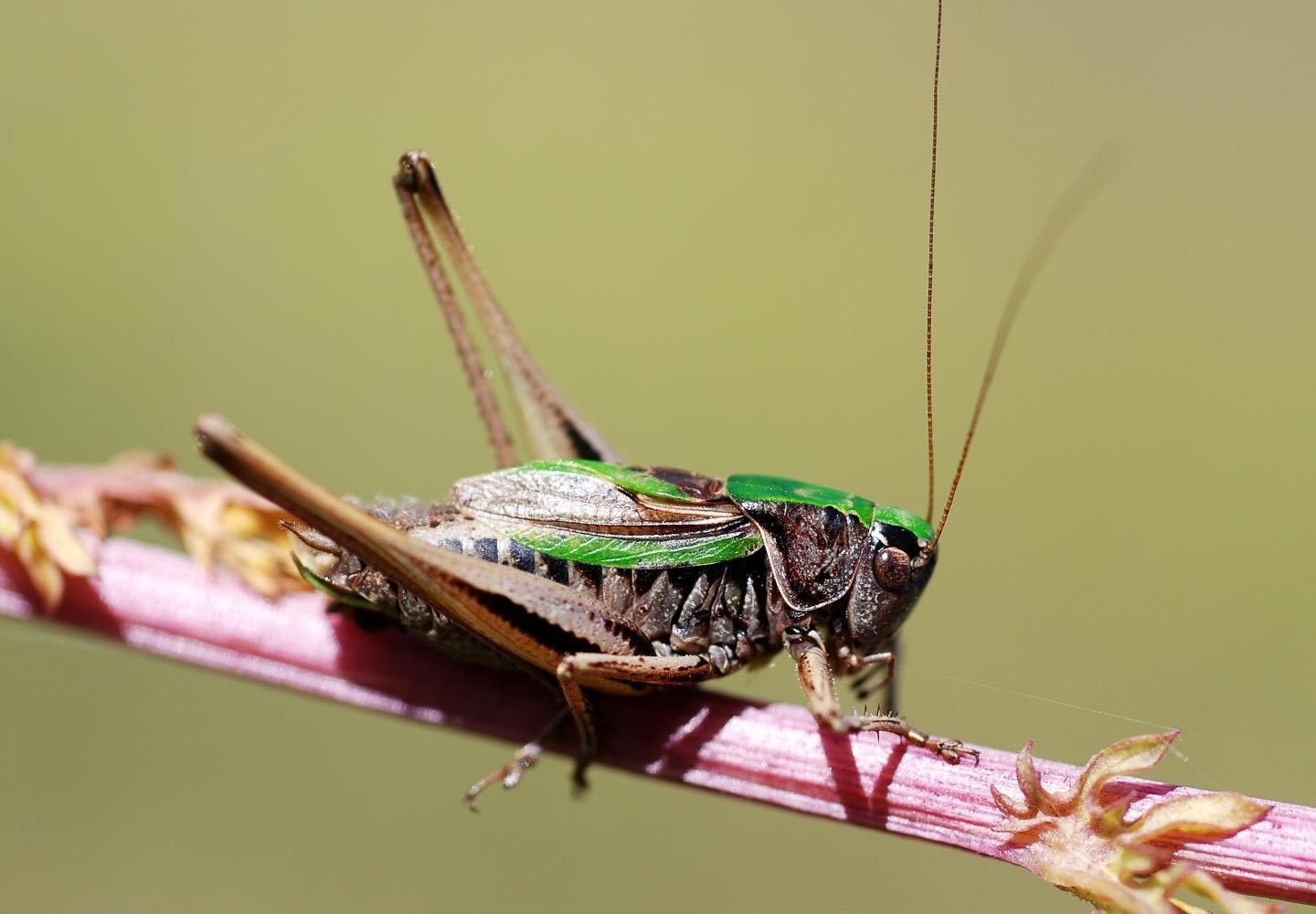
- Roesel’s bush-cricket has tracked the climate north and west using a variety of habitats, including road verges, which when left uncut provide corridors for expansion. Meanwhile, its more specialized cousin, the Bog Bush Cricket, has struggled to expand its range.
- Among dragonflies, the Emperor and Migrant Hawker have sped northwards at between 17 and 28 meters (56 and 92 feet) per day, while the Scarce Chaser is penned in by unsuitable vegetation and busy or polluted waterways.
- Within butterflies, the Comma has spread rapidly across gardens, woodlands, hedgerows, and other habitats, from Yorkshire to Aberdeen in the course of just a few decades. Whereas the Silver-studded Blue remains confined to rare heathland and grassland habitats and is failing to make headway.
The British climate has improved for all of these species, but expansion rates have varied in large part because of differences in habitat availability.
Dr. Platts added: “Britain has warmed by about 1 °C (1.8 °F) since the 1970s. That might not sound like much, but it’s the difference in average annual temperature between London and Edinburgh. Warmer ecosystems are typically more biodiverse, and so relatively cool regions could gain more species than they lose under this amount of warming, assuming there is habitat for the new arrivals.
“But the pace of change is fast, and with another degree of warming comes a far higher risk of extreme weather, including more heatwaves, droughts, and deluges. Even at one degree, species are already on the move, and so we need to allow for this dynamism in our approach to nature conservation.”
Richard Fox, an author of the study and Associate Director of Recording and Research at Butterfly Conservation said: “Over 25 million sightings of insects were used for this study, the vast majority contributed by ‘citizen scientist’ members of the public. Now it is time for policymakers to create robust mechanisms, like the Nature Recovery Network in England, that will enable practitioners such as farmers, foresters, conservationists, and others to solve our biodiversity crisis.”
Professor Chris Thomas, senior author and Director of the Leverhulme Center for Anthropocene Biodiversity, said: “As a society, we need to do two things: first and foremost, mitigate the pace of change by slashing our carbon emissions. And second, since at least two degrees of warming is more or less inevitable already, we should ensure that habitats are diverse and well-connected, so that our wildlife can track the conditions that suit them best.”
“Habitat availability explains variation in climate-driven range shifts across multiple taxonomic groups” is published in Scientific Reports.
Reference: “Habitat availability explains variation in climate-driven range shifts across multiple taxonomic groups” by Philip J. Platts, Suzanna C. Mason, Georgina Palmer, Jane K. Hill, Tom H. Oliver, Gary D. Powney, Richard Fox and Chris D. Thomas, 21 October 2019, Scientific Reports.
DOI: 10.1038/s41598-019-51582-2
The project was a collaboration between the Universities of York and Reading, Butterfly Conservation, and the Center for Ecology & Hydrology. The research was funded by the Natural Environment Research Council.
Never miss a breakthrough: Join the SciTechDaily newsletter.
Follow us on Google and Google News.