
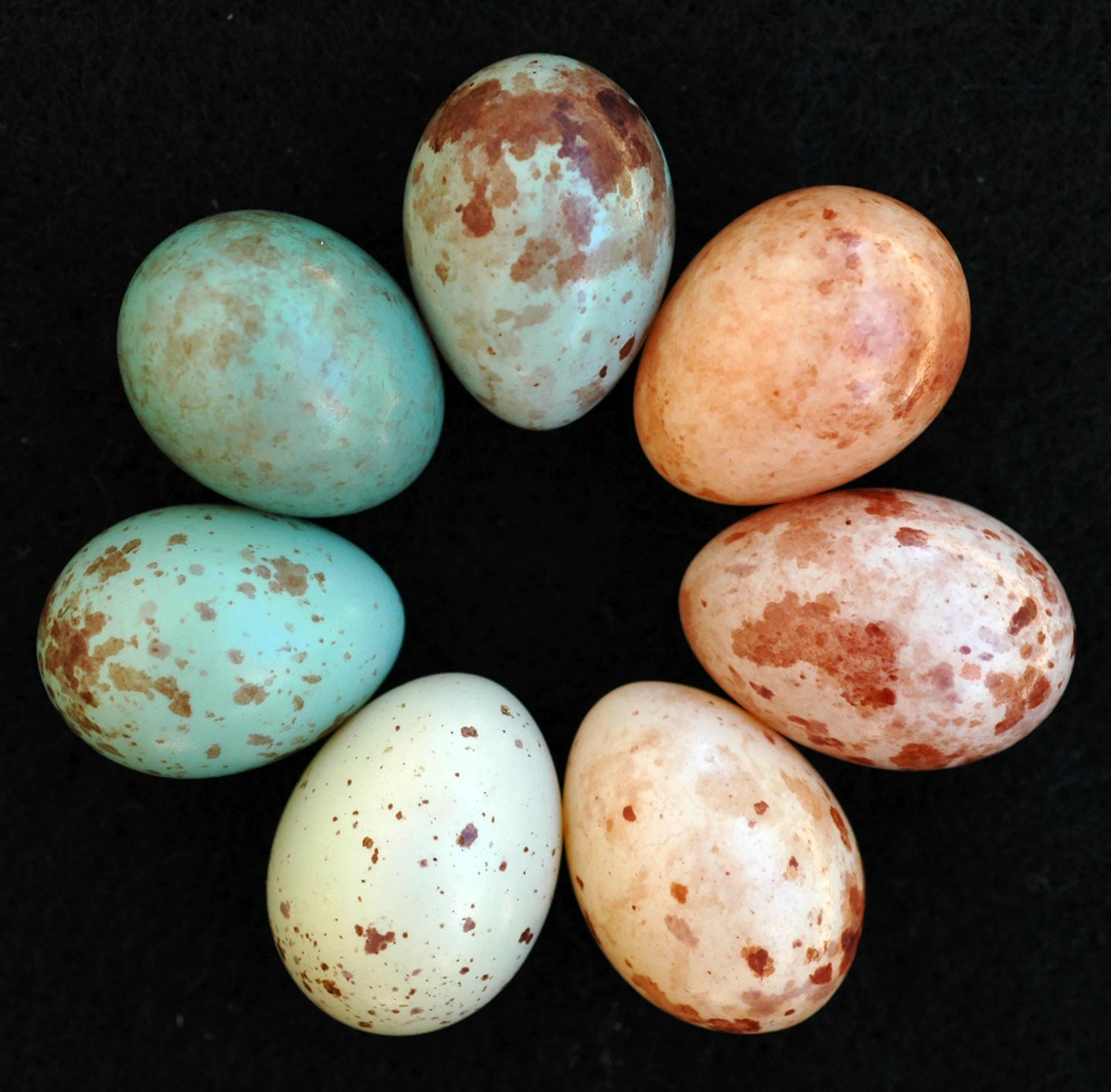
While many people around the world just finished unwrapping their Easter eggs, scientists have solved one of nature’s biggest criminal cases, an egg forgery scandal two million years in the making. Their findings suggest that the victims of this fraud may now be gaining the upper hand.
Many birds around the world side-step the costs of parenthood by laying their eggs in the nest of other species. Known as “brood parasitism,” this way of life has many advantages but also presents challenges such as how to convince the other species to accept a foreign egg.
Many brood parasites achieve this by mimicking the colors and patterns of their host’s eggs, but some exploit the care of several different host species whose eggs all look different.
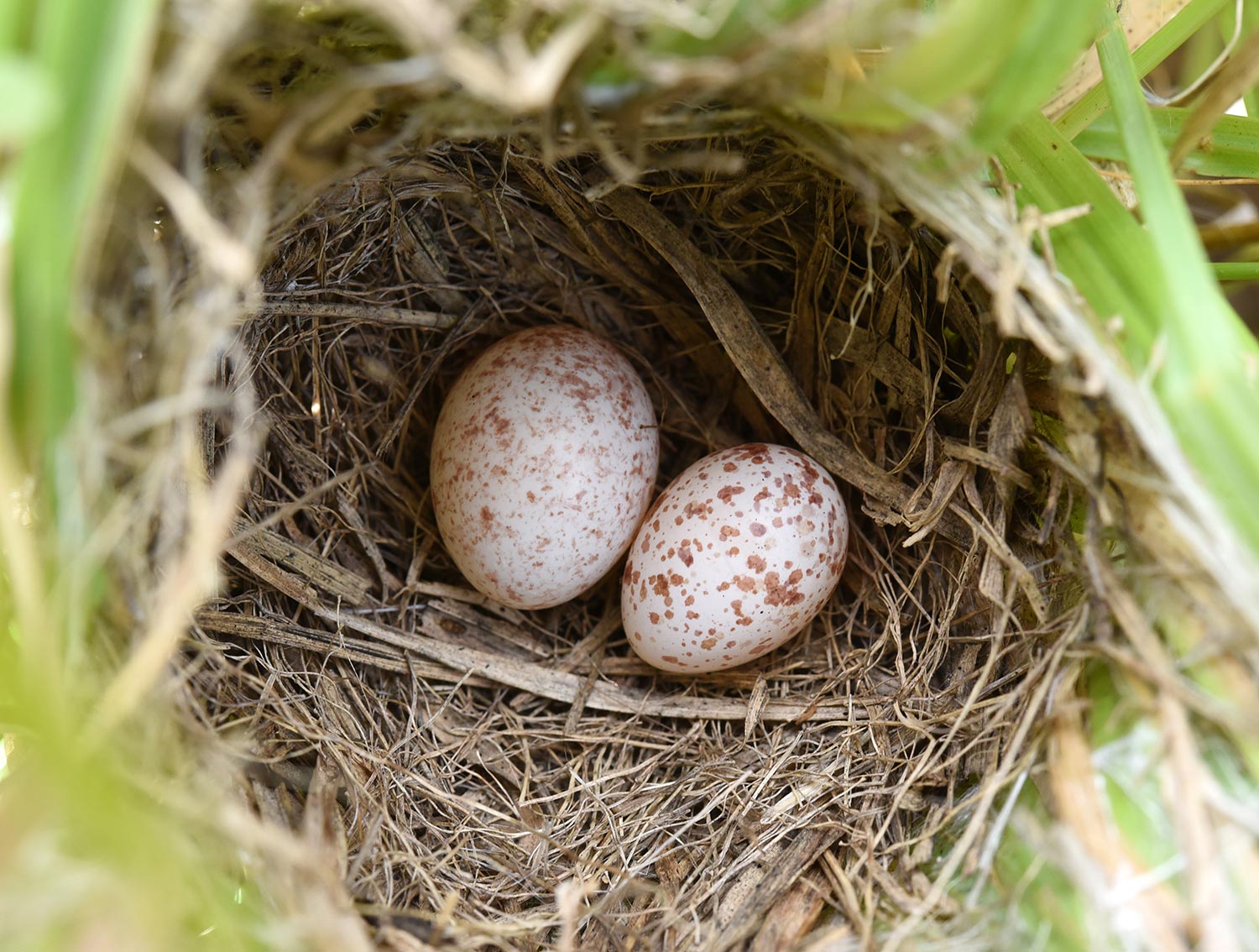
How can a single brood-parasitic bird species imitate the eggs of multiple different bird species at the same time in order to trick them into raising their young?
And how do these parasitic forgers pass this capability on to their young despite interbreeding between birds raised by different hosts?
These questions have been puzzling scientists for more than a century. Now genetic research by an international team led by Professor Claire Spottiswoode from the Cambridge’s Department of Zoology and the FitzPatrick Institute of African Ornithology, University of Cape Town; and Professor Michael Sorenson at Boston University, has made a major breakthrough, and their findings may be bad news for the egg forgers.
The study, published on April 11, 2022, in Proceedings of the National Academy of Sciences (PNAS), focuses on the genetics of egg mimicry in the cuckoo finch, a species that adopts a brood-parasitic lifestyle and exploits many species of warbler across Africa.
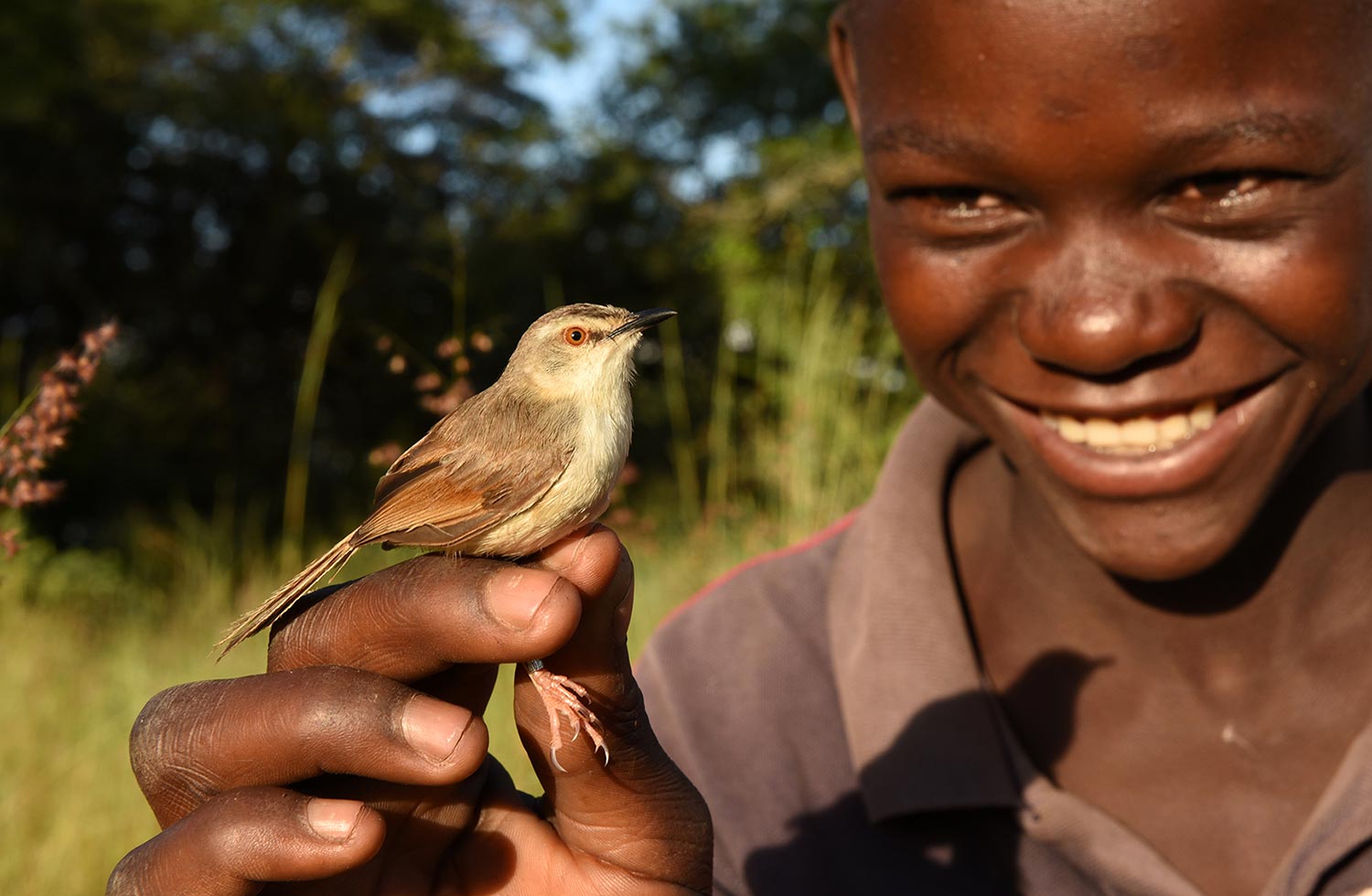
Female cuckoo finches inherit their capacity to imitate the look of their hosts’ eggs from their mothers, according to the research study, via the female-specific W chromosome (analogous to the male-specific Y chromosome in humans).
Such ‘maternal inheritance’ allows cuckoo finches to side-step the risk of inheriting the wrong mimicry genes from a father raised by a different host, and so has allowed distinct lineages of cuckoo finch females to evolve specialized egg mimicry of several different host species. Such mimicry dupes host parents into accepting a parasitic egg as their own rather than throwing it out of the nest, and so has been crucial to the success of these African birds.
But the researchers believe that this long-established ‘genetic architecture’ of maternal inheritance may come back to haunt the cuckoo finches. Dr. Spottiswoode said:
“In this particular coevolutionary arms race between species, natural selection has created a double-edged sword.”
“While maternal inheritance has allowed cuckoo finches to exploit multiple host species, it’s likely to slow their ability to evolve counter-adaptations as their hosts evolve new defenses.
“In particular, parasites face a daunting challenge because some host species have in return evolved an astonishing diversity of egg color and pattern ‘signatures’, that help hosts to distinguish their own eggs from parasitic mimics.”
Cuckoo finch mimicry of tawny-flanked prinia eggs
This photograph shows eggs of the cuckoo finch (middle circle) and one of its common host species, the tawny-flanked prinia (outer circle), revealing the diversity of host egg color and pattern “signatures” (an anti-parasite adaptation that aids host parents in recognizing their own eggs) that are mimicked by cuckoo finch egg “forgeries.”
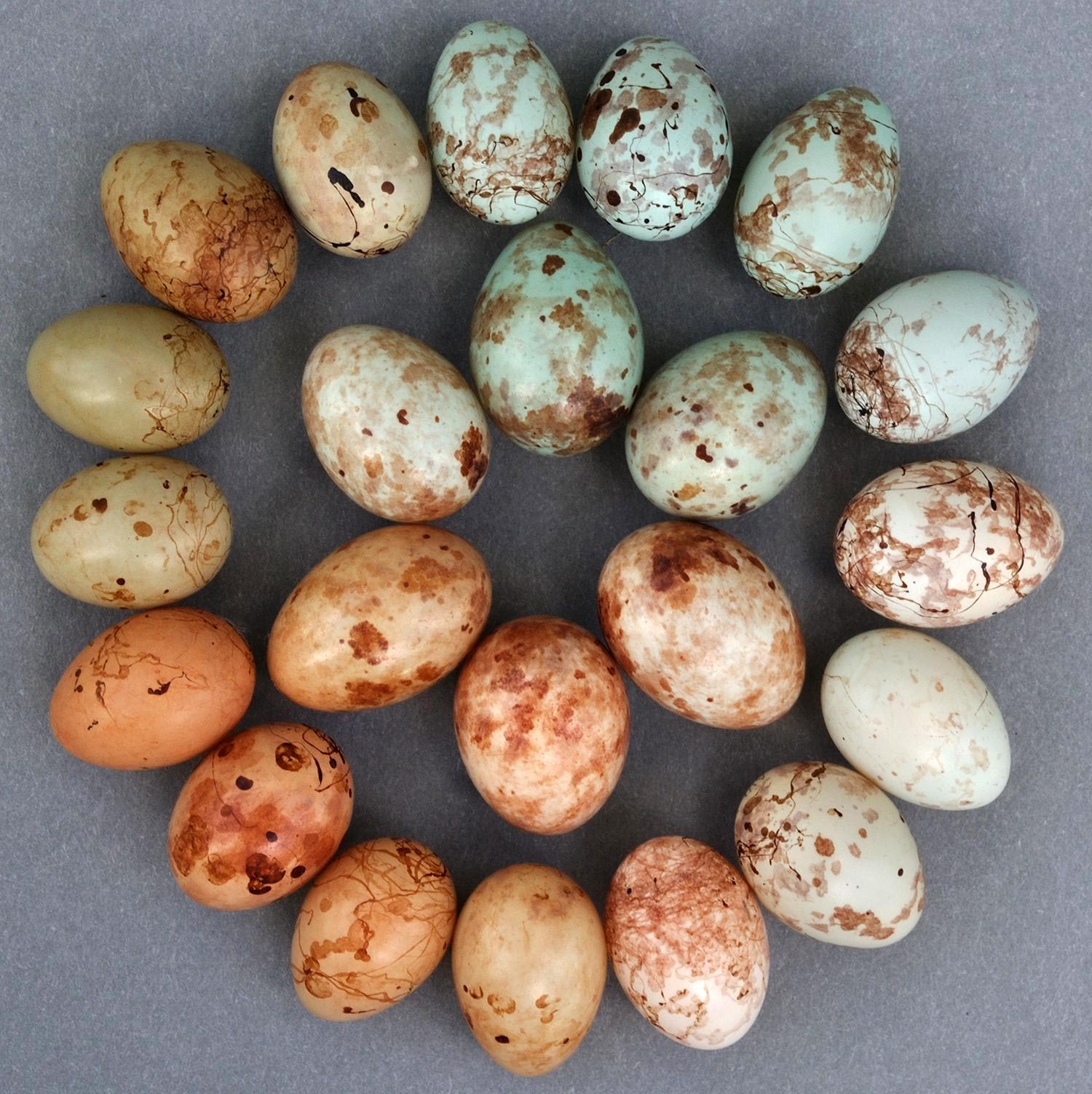
However, cuckoo finches do not mimic the rich olive-green eggs (top left) laid by some tawny-flanked prinia females. The new study suggests that a genetic constraint in cuckoo finches may account for their apparent inability to mimic this host egg type.
The field data were collected at a study site in southern Zambia together with Dr. Wenfei Tong and Dr. Gabriel Jamie from the University of Cambridge and Ailsa Green, Silky Hamama, Ian Taylor, and Collins Moya from the surrounding community in Zambia.
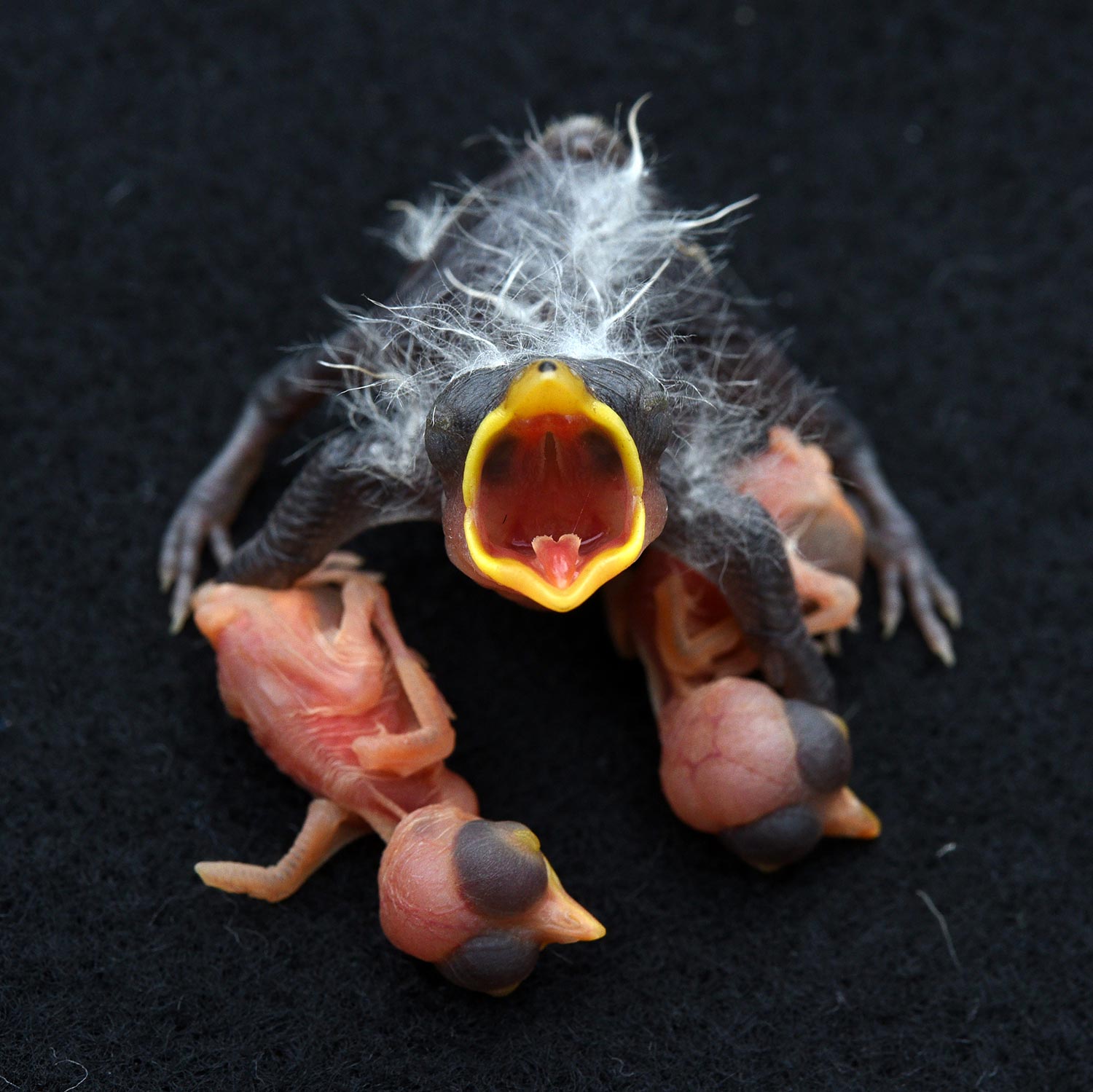
Cuckoo finches in this area trick four different species of grass-warbler to devastating effect: if host parents fail to detect and remove a parasitic egg in their nest, the young cuckoo finch typically outcompetes the hosts’ own hatchlings, which soon starve to death.
The team collected DNA samples from 196 cuckoo finches from 141 nests belonging to the four grass-warbler species and studied the majority by sequencing thousands of short segments across their genomes.
In their fightback against the forgers, grass-warblers have become skilled quality controllers, rejecting eggs that differ from their own in color and pattern, and all four species have evolved the ability to deposit unique ‘signatures’ onto their own eggs to enhance their detection of intruders. Tawny-flanked prinias, for example, lay eggs with blue, white, red, or olive-green backgrounds overlaid with a variety of patterns.
Cuckoo finches have responded not only by evolving mimicry of the eggs of their several host species, but have also further diversified to mimic at least some of the signature-like variation seen in the eggs of different females within each host species.
The team established that both abilities are handed down through maternal inheritance, finally validating a hypothesis first proposed in 1933 by ornithologists pondering how the common cuckoo in Europe was similarly able to mimic the eggs of several different host species.
Forgers facing an uncertain future?
The researchers believe that the cuckoo finches now face an uphill struggle because they cannot recombine the different forgery traits evolved by their separate family lines.
For example, two different lineages of cuckoo finch mothers have evolved eggs with either blue or red backgrounds, as an evolutionary response to similar diversity in their tawny-flanked prinia hosts, but there is no evidence that they can create the precise mixture of pigments needed to produce the olive-green eggs that some host females can produce.

In a previous study, Professor Spottiswoode found that a growing proportion of eggs laid by tawny-flanked prinia hosts are olive-green, suggesting this is part of an accelerating evolutionary fightback. As expected, the team found that these host birds are passing down their anti-fraud ‘egg signature’ abilities through a different genetic process (bi-parental inheritance) to that used by the cuckoo finches. Spottiswoode said:
“Cuckoo finches are missing out on a powerful source of evolutionary novelty and that could prove costly in this ongoing arms race.”
She added: “The way they inherit their ability to mimic host eggs has a downside by likely making the grass-warblers’ defenses more effective, and constraining the parasite’s ability to respond.
“We may see the emergence of unforgeable egg signatures which could force cuckoo finches to switch to other naïve host species. Or the parasitic birds might become increasingly dependent on young host individuals that haven’t yet learned their own signatures and are bad at spotting mismatched eggs.”
The study argues that ‘selection from host defenses drove cuckoo finches to transfer control of egg appearance to the maternally inherited part of the genome’ at least 2 million years ago.
Reference: “Genetic architecture facilitates then constrains adaptation in a host–parasite coevolutionary arms race” by Claire N. Spottiswoode, Wenfei Tong, Gabriel A. Jamie, Katherine F. Stryjewski, Jeffrey M. DaCosta, Evan R. Kuras, Ailsa Green, Silky Hamama, Ian G. Taylor, Collins Moya, and Michael D. Sorenson, 11 April 2022, Proceedings of the National Academy of Sciences.
DOI: 10.1073/pnas.2121752119
The research was funded primarily by fellowships from the Biotechnology and Biological Sciences Research Council and the Royal Society, and by the National Science Foundation.
Never miss a breakthrough: Join the SciTechDaily newsletter.
Follow us on Google and Google News.
2 Comments
Reads like Darwin, backwards. It doesn’t really seem like classic ‘evolution’ but does seem to be using the same biological tools. And seems to be using those tools… intentionally, for an immediate practical purpose. Evolution being used as a tool.
Very interesting. You never know what you are going to find when you do basic research. I hope there is more in this particular rabbit hole.
Natural selection may look slick when it comes to brood parasitism; but, in regard to a matter more important to most people–human reproduction–it appears incredibly stupid, having seemingly given us male gonads that *won’t function properly* unless hanging outside the body at some ideal (cooler) temperature range. We don’t even have the common mammalian excuse of only needing them to come out for breeding season, since ours lasts all year! If this “downright hazardous arrangement” (as someone else [Arthur Clarke?] once called it) doesn’t actually fulfill a useful purpose, I’d label it a colossal blunder.