
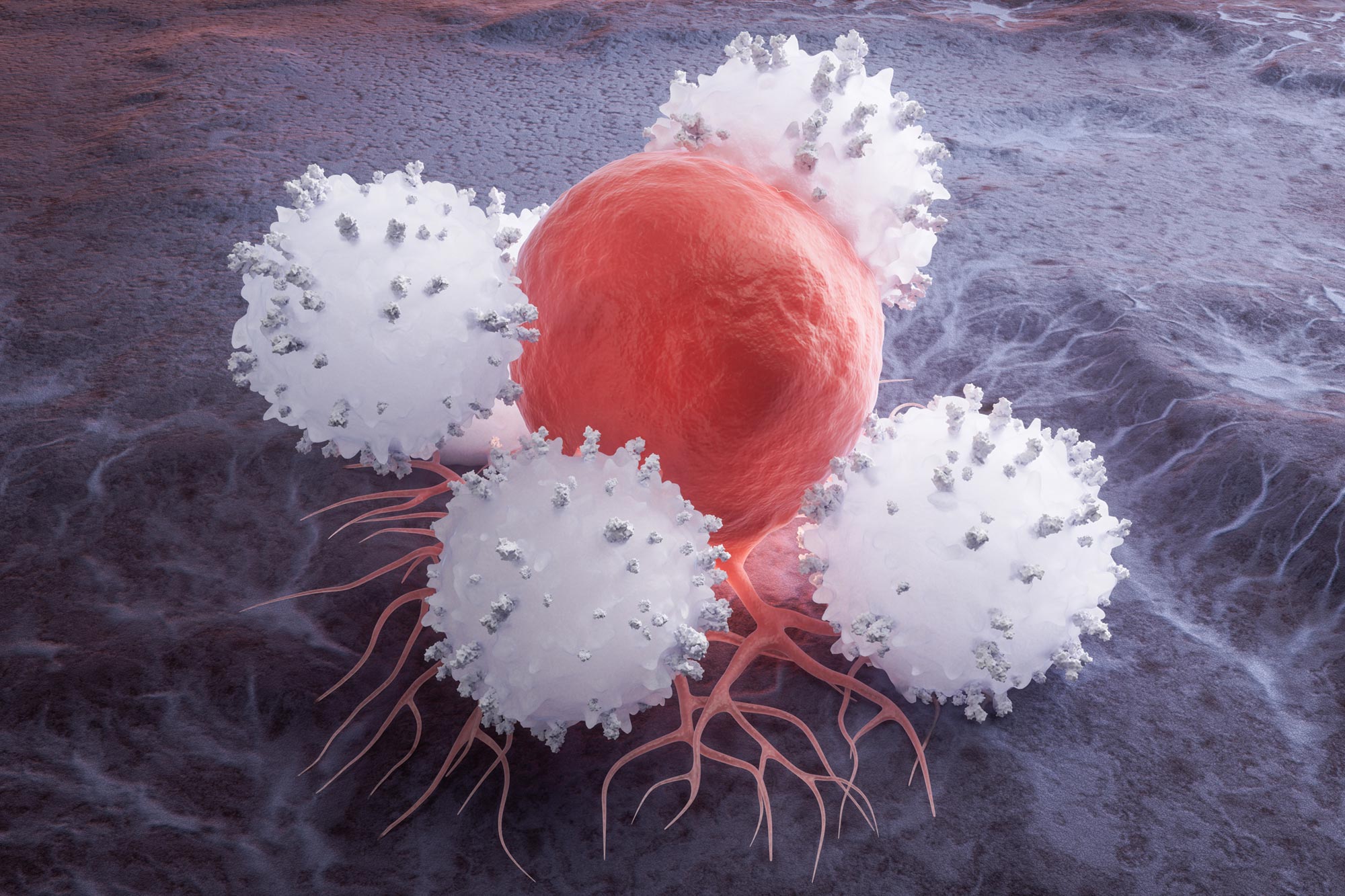
UCLA researchers gave T cells a protected supply of sugar, allowing them to attack solid tumors more effectively.
UCLA researchers have developed a way to give immune cells a fuel supply that tumors cannot take away, sharply improving how well those cells survived and attacked solid tumors in preclinical experiments.
The method, reported in the journal Cell, may address one of the major reasons CAR-T and other immunotherapies have struggled against solid tumors, including lung, breast and colorectal cancers. In these tumors, aggressive cancer cells often consume the available energy supply and leave immune cells unable to function well.
Tumors starve immune attacks
“A problem with solid tumors is that the immune system tries to fight the cancer, but the tumor cells deplete the key nutrient glucose from their environment,” said senior author Dr. Manish Butte, UCLA’s E. Richard Stiehm Professor of Pediatric Allergy, Immunology, and Rheumatology and a member of the UCLA Health Jonsson Comprehensive Cancer Center. “This leaves the T cells that show up to attack with not enough glucose to make cytokines and kill. The balance between tumor cells eating the glucose and the T cells not having enough glucose is a key reason why tumors spread and elude immune attack.”
A sugar tumors cannot use
To get around this energy problem, the team created a way to supply T cells with glucose without making that same fuel available to tumors. They used cellobiose, a natural sugar found in plant fiber (cellulose) that is non-toxic and generally recognized as safe by the U.S. Food and Drug Administration. It is commonly added to foods such as infant formula, beverages, candy, and icing. Human cells and tumor cells cannot break down cellobiose, but certain microbes and fungi can.
The researchers added two fungal proteins to T cells, allowing those immune cells to take in cellobiose and turn it into usable glucose inside the cell. In lab tests designed to resemble the nutrient-poor environment inside tumors, where glucose can drop far below levels found in healthy tissue, the engineered T cells survived, kept dividing, produced cancer-fighting cytokines such as IFN-γ and TNF, and killed tumor cells effectively. Unmodified T cells quickly lost function under the same conditions.
Engineered T cells survived longer
The team next tested the approach in mouse models of solid cancer. Mice that received tumor-targeted T cells able to use cellobiose had slower tumor growth and lived significantly longer than mice treated with standard immune cells. Some mice had complete tumor regression.
When the researchers studied immune cells inside the tumors, they found that the engineered T cells were more active, multiplied more, and showed fewer signs of exhaustion, a state that weakens immune responses in many cancers.
“We demonstrate not only that glucose can be a limiting component of an effective anti-tumor response, but that we can design strategies to bypass the metabolic tug-of-war and deliver a high-value nutrient to T cells engineered with the proprietary metabolic processing system,” said first author of the study Dr. Matthew Miller, a former doctoral student in Dr. Butte’s lab and now a postdoctoral fellow at the Salk Institute.
The same strategy also showed potential in human CAR-T cells, which are already used to treat some leukemias and lymphomas. In low glucose lab conditions similar to those found in solid tumors, standard CAR-T cells lost viability and stopped producing cytokines. Cellobiose restored CAR-T cell survival, growth, cytokine production and tumor killing ability. In mouse models, CAR-T cells supplied with cellobiose were more active inside tumors and showed a strong trend toward better tumor control.
“The survival of T cells in minimal levels of glucose was a huge hint that this was going to work,” Butte said. “We saw that when glucose was scarce, the modified T cells used cellobiose to power all the same core energy pathways they normally use glucose for. Their metabolism looked healthy and normal, not starved. Overall, the results demonstrate that providing immune cells with an exclusive, tumor-resistant fuel source enhances their metabolic fitness and anti-tumor activity in solid tumors.”
Solid tumor therapies may benefit
The researchers said the approach could have wide relevance. More than 500 clinical trials around the world are currently testing CAR-T cells in solid tumors, but many face problems with immune cell exhaustion and treatment failure. The team believes that adding these two genes, together with carefully controlled cellobiose delivery, could improve many of those therapies.
“Our method has the potential to benefit virtually any T cell-based therapy being developed for solid tumors,” Butte said. “That’s what’s most exciting, the broad applicability. We can help a lot of efforts that are already underway.”
Reference: “Fungal-derived cellobiose metabolic pathway fuels T cells to bypass intratumoral glucose competition” by Matthew L. Miller, Timothy J. Thauland, Smriti Sameer Nagarajan, Wenqi Ellen Zuo, Miguel A. Moreno Lastre and Manish J. Butte, 24 February 2026, Cell.
DOI: 10.1016/j.cell.2026.01.015
Never miss a breakthrough: Join the SciTechDaily newsletter.
Follow us on Google and Google News.
2 Comments
Is this methodology applicable to removal of disruptive brain deposits (Alzheimer, Parkinson’s, prions)?
Thanks to the researchers. With these advancements, immunotherapy can help more people in their fight with cancer.