
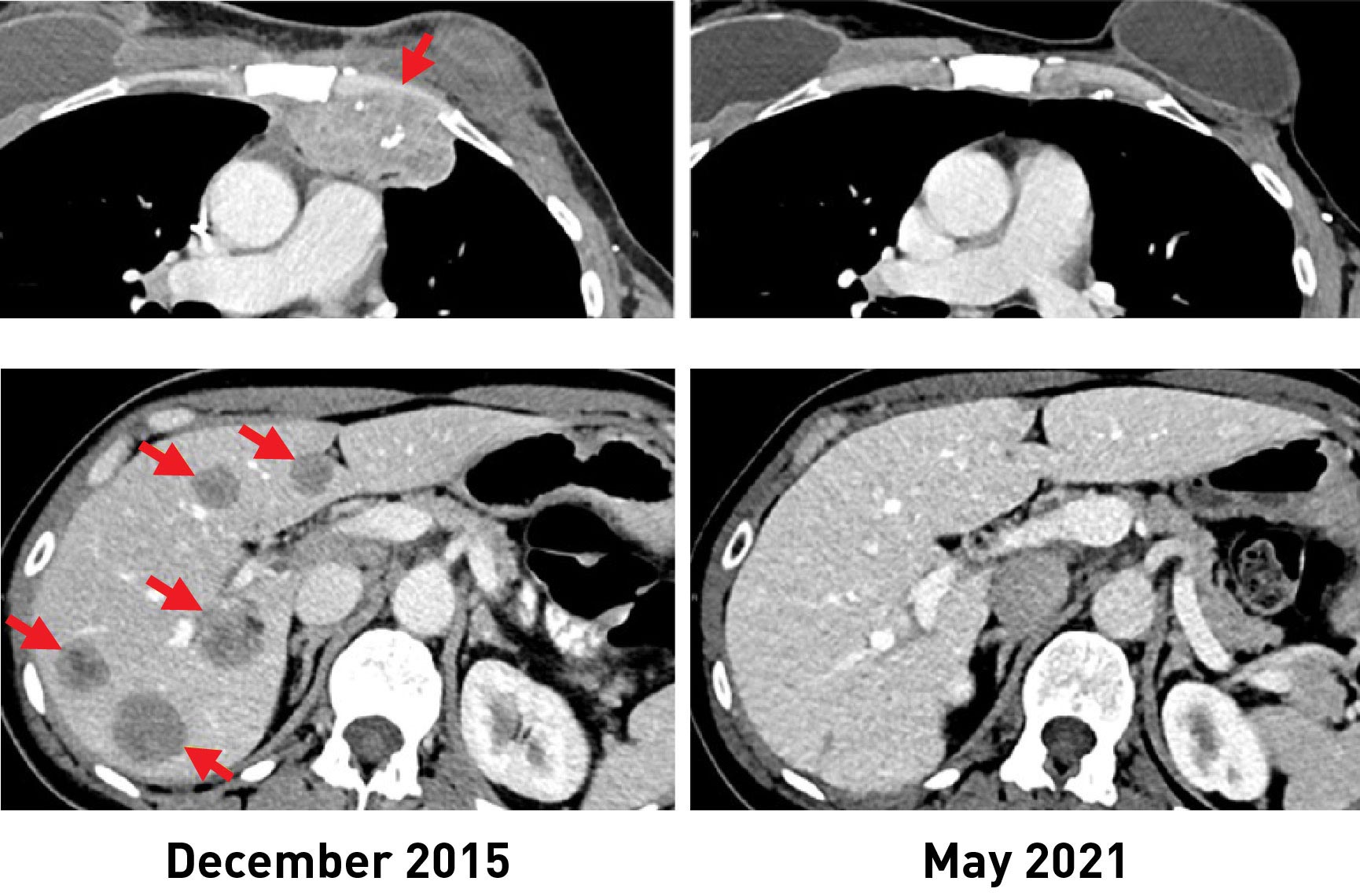
An experimental immunotherapy using tumor-infiltrating lymphocytes (TILs) shows promise for treating metastatic breast cancer.
In a clinical trial, 67% of patients mounted an immune response against their tumors, with half of the treated patients experiencing tumor shrinkage. This personalized therapy targets unique mutations in the cancer, offering hope for those who have exhausted other treatment options.
Potential of Immunotherapy for Metastatic Breast Cancer
An experimental form of immunotherapy that uses an individual’s own tumor-fighting immune cells could potentially be used to treat people with metastatic breast cancer, according to results from an ongoing clinical trial led by researchers at the National Cancer Institute’s (NCI) Center for Cancer Research, part of the National Institutes of Health. Many people with metastatic breast cancer can mount an immune reaction against their tumors, the study found, a prerequisite for this type of immunotherapy, which relies on what is called tumor-infiltrating lymphocytes (TILs).
In a clinical trial of 42 women with metastatic breast cancer, 28 (or 67%) generated an immune reaction against their cancer. The approach was used to treat six women, half of whom experienced measurable tumor shrinkage. Results from the trial appeared February 1, 2022, in the Journal of Clinical Oncology.
“It’s popular dogma that hormone receptor-positive breast cancers are not capable of provoking an immune response and are not susceptible to immunotherapy,” said study leader Steven A. Rosenberg, M.D., Ph.D., chief of the Surgery Branch in NCI’s Center for Cancer Research. “The findings suggest that this form of immunotherapy can be used to treat some people with metastatic breast cancer who have exhausted all other treatment options.”
Immunotherapy is a treatment that helps a person’s own immune system fight cancer. However, most available immunotherapies, such as immune checkpoint inhibitors, have shown limited effectiveness against hormone receptor-positive breast cancers, which are the majority of breast cancers.
The immunotherapy approach used in the trial was pioneered in the late 1980s by Dr. Rosenberg and his colleagues at NCI. It relies on TILs, T cells that are found in and around the tumor.
TILs can target tumor cells that have specific proteins on their surface, called neoantigens, that the immune cells recognize. Neoantigens are produced when mutations occur in tumor DNA. Other forms of immunotherapy have been found to be effective in treating cancers, such as melanoma, that have many mutations, and therefore many neoantigens. Its effectiveness in cancers that have fewer neoantigens, such as breast cancer, however, has been less clear.
The results of the new study come from an ongoing phase 2 clinical trial being carried out by Dr. Rosenberg and his colleagues. This trial was designed to see if the immunotherapy approach could lead to tumor regressions in people with metastatic epithelial cancers, including breast cancer. In 2018, the researchers showed that one woman with metastatic breast cancer who was treated in this trial had complete tumor shrinkage, known as a complete response.
The Mechanism and Effectiveness of TIL Therapy
In the trial, the researchers used whole-genome sequencing to identify mutations in tumor samples from 42 women with metastatic breast cancer whose cancers had progressed despite all other treatments. The researchers then isolated TILs from the tumor samples and, in lab tests, tested their reactivity against neoantigens produced by the different mutations in the tumor.
Twenty-eight women had TILs that recognized at least one neoantigen. Nearly all the neoantigens identified were unique to each patient.
“It’s fascinating that the Achilles’ heel of these cancers can potentially be the very gene mutations that caused the cancer,” said Dr. Rosenberg. “Since that 2018 study, we now have information on 42 patients, showing that the majority give rise to immune reactions.”
For the six women treated, the researchers took the reactive TILs and grew them to large numbers in the lab. They then returned the immune cells to each patient via intravenous infusion. All the patients were also given four doses of the immune checkpoint inhibitor pembrolizumab (Keytruda) before the infusion to prevent the newly introduced T cells from becoming inactivated.
After the treatment, tumors shrank in three of the six women. One is the original woman reported in the 2018 study, who remains cancer-free to this day. The other two women had tumor shrinkage of 52% and 69% after six months and 10 months, respectively. However, some diseases returned and were surgically removed. Those women now have no evidence of cancer approximately five years and 3.5 years, respectively, after their TIL treatment.
The researchers acknowledged that the use of pembrolizumab, which has been approved for some early-stage breast cancers, may raise uncertainties about its influence on the outcome of TIL therapy. However, they said, treatment with such checkpoint inhibitors alone has not led to sustained tumor shrinkage in people with hormone receptor-positive metastatic breast cancer.
Future Directions and Potential for Broader Application
Dr. Rosenberg said that with the anticipated opening early this year of NCI’s new building devoted to cell-based therapies, he and his colleagues can begin treating more individuals with metastatic breast cancer as part of the ongoing clinical trial. He noted that this new immunotherapy approach could potentially be used for people with other types of cancer as well.
“We’re using a patient’s own lymphocytes as a drug to treat the cancer by targeting the unique mutations in that cancer,” he said. “This is a highly personalized treatment.”
Reference: “Breast Cancers are immunogenic: Immunologic analyses and a phase II pilot clinical trial using mutation-reactive lymphocytes” by Nikolaos Zacharakis, PhD; Lutfi M. Huq, BA; Samantha J. Seitter, DO; Sanghyun P. Kim, PhD; Jared J. Gartner, MSc; Sivasish Sindiri, MSc; Victoria K. Hill, PhD; Yong F. Li, BS; Biman C. Paria, PhD; Satyajit Ray, PhD; Billel Gasmi, MD; Chyi-chia Lee, MD, PhD; Todd D. Prickett, PhD; Maria R. Parkhurst, PhD; Paul F. Robbins, PhD; Michelle M. Langhan, BS; Thomas E. Shelton, BS; Anup Y. Parikh, MD; Shoshana T. Levi, MD; Jonathan M. Hernandez, MD; Chuong D. Hoang, MD; Richard M. Sherry, MD; James C. Yang, MD; Steven A. Feldman, PhD; Stephanie L. Goff, MD and Steven A. Rosenberg, MD, PhD, 1 February 2022, Journal of Clinical Oncology.
DOI: 10.1200/JCO.21.02170
Never miss a breakthrough: Join the SciTechDaily newsletter.
Follow us on Google and Google News.