
Nanoplastics travel vast distances, depositing tonnes in Switzerland, with urban and oceanic origins, raising health concerns.
In a new study, Empa researcher Dominik Brunner, together with colleagues from Utrecht University and the Austrian Central Institute for Meteorology and Geophysics, is investigating how much plastic is trickling down on us from the atmosphere. According to the study, some nanoplastics travel over 2,000 kilometers (1,240 miles) through the air. According to the figures from the measurements about 43 trillion miniature plastic particles land in Switzerland every year. Researchers still disagree on the exact number. But according to estimates from the study, it could be as much as 3,000 tonnes of nanoplastics that cover Switzerland every year, from the remote Alps to the urban lowlands. These estimates are very high compared to other studies, and more research is needed to verify these numbers
The study is uncharted scientific territory because the spread of nanoplastics through the air is still largely unexplored. The result of Brunner’s research is the most accurate record of air pollution by nanoplastics ever made. To count the plastic particles, Brunner and his colleagues have developed a chemical method that determines the contamination of the samples with a mass spectrometer.
Extreme Conditions
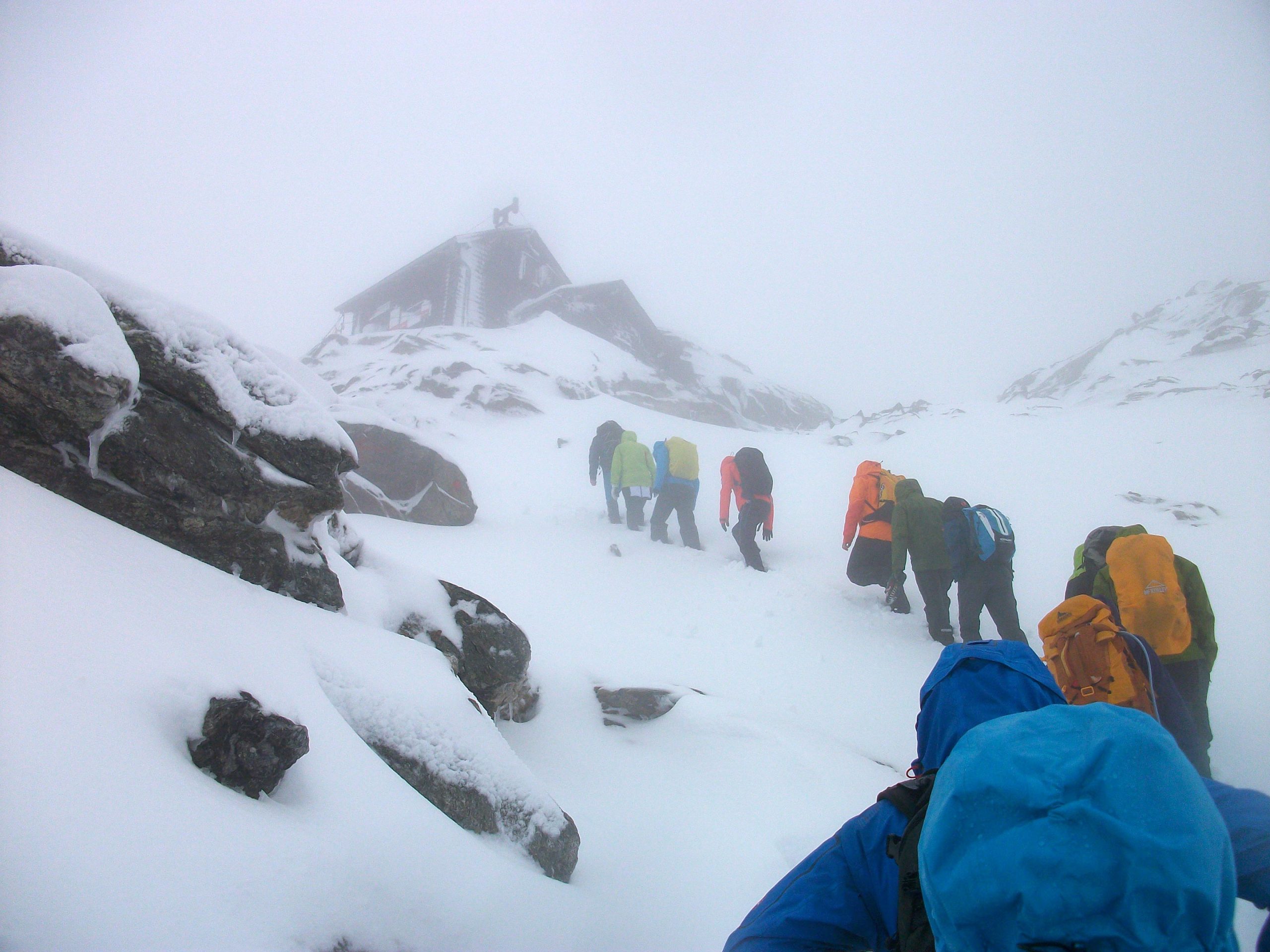
The scientists studied a small area at an altitude of 3106 meters (10,190 feet) at the top of the mountain “Hoher Sonnenblick” in the “Hohe Tauern” National Park in Austria. An observatory of the Central Institute for Meteorology and Geodynamics has been located here since 1886. The observatory is run by meteorologist and Arctic researcher Elke Ludewig. Since research began here in the late 19th century, the observatory has only been non-operational for four days. The research station also served as a base for the study of the spread of nanoplastics in remote areas.
Every day, and in all weather conditions, scientists removed a part of the top layer of snow around a marker at 8 AM and carefully stored it. Contamination of the samples by nanoplastics in the air or on the scientists’ clothes was a particular challenge. In the laboratory, the researchers sometimes had to remain motionless when a colleague handled an open sample.
The origin of the tiny particles was traced with the help of European wind and weather data. The researchers could show that the greatest emission of nanoplastics into the atmosphere occurs in densely populated, urban areas. About 30% of the nanoplastic particles measured on the mountain top originate from a radius of 200 kilometers (124 miles), mainly from cities. However, plastics from the world’s oceans apparently also get into the air via the spray of the waves. Around 10% of the particles measured in the study were blown onto the mountain by wind and weather over 2000 kilometers – some of them from the Atlantic.
Nanoparticles in the Bloodstream
It is estimated that more than 8,300 million tonnes of plastic have been produced worldwide to date, about 60% of which is now waste. This waste erodes through weathering effects and mechanical abrasion from macro- to micro- and nanoparticles. But discarded plastic is far from the only source. Everyday use of plastic products such as packaging and clothing releases nanoplastics. Particles in this size range are so light that their movement in the air can best be compared to gases.
Besides plastics, there are all kinds of other tiny particles. From Sahara sand to brake pads, the world is buzzing through the air as abrasion. It is as yet unclear whether this kind of air pollution poses a potential health threat to humans. Nanoparticles, unlike microparticles, do not just end up in the stomach. They are sucked deep into the lungs through respiration, where their size may allow them to cross the cell-blood barrier and enter the human bloodstream. Whether this is harmful or even dangerous, however, remains to be researched.
Reference: “Nanoplastics transport to the remote, high-altitude Alps” by Dušan Materic, Elke Ludewig, Dominik Brunner, Thomas Röckmann and Rupert Holzinger, 9 July 2021, Environmental Pollution.
DOI: 10.1016/j.envpol.2021.117697
Never miss a breakthrough: Join the SciTechDaily newsletter.
Follow us on Google and Google News.
1 Comment
Because of BPH, I am sensitive to small particles in my diet, including ultra fine ground spices, and a few years ago I learned that plastic teabags break down in boiling water, leaving the micro and nano particles in the tea itself. Living with BPH was causing a average of 1 urination in the middle of each night, until I made tea from a different manufacturer who had changed from paper tea bags to a plastic made from corn. The night after that deadly cup I had to make 5 visits to the biffy to pee. I contacted the customer service of the holding corporation of the Red Rose tea brand, and defined the results that their new bag had on my urinary tract. I told them that I was going to try the test again, after my system had returned to normal. After a week, with normality restored, I once again had the tea, from the same box as before. Again I was up 5 times, once an hour, to clear my bladder. I contacted the company with the results of the second test, and got a ho-hum reply suggesting that I try another of their products that used less plastic in the tea bag! Later I found an article from Harvard University, that described a connection they had made with both prostate cancer and breast cancers and micro plastic pollution in the bodies of those afflicted with these cancers. Regarding the corporation making the teas bags, I sent links to them concerning all the articles that I had read about microplastic pollution from plastic tea bags, as well as the Harvard article. I also asked them why they had moved away from using paper teabags, and received no answer, but did get a $10 cheque to compensate me for the tea that I couldn’t drink. Also, in my testing I removed the tea from the plastic bag, and steeped it in a glass pot with a stainless steel sieve. Using their tea this way caused no change from my normal 1 visit/night to the biffy! I wonder how else we are getting poisoned by food manufacturers?