
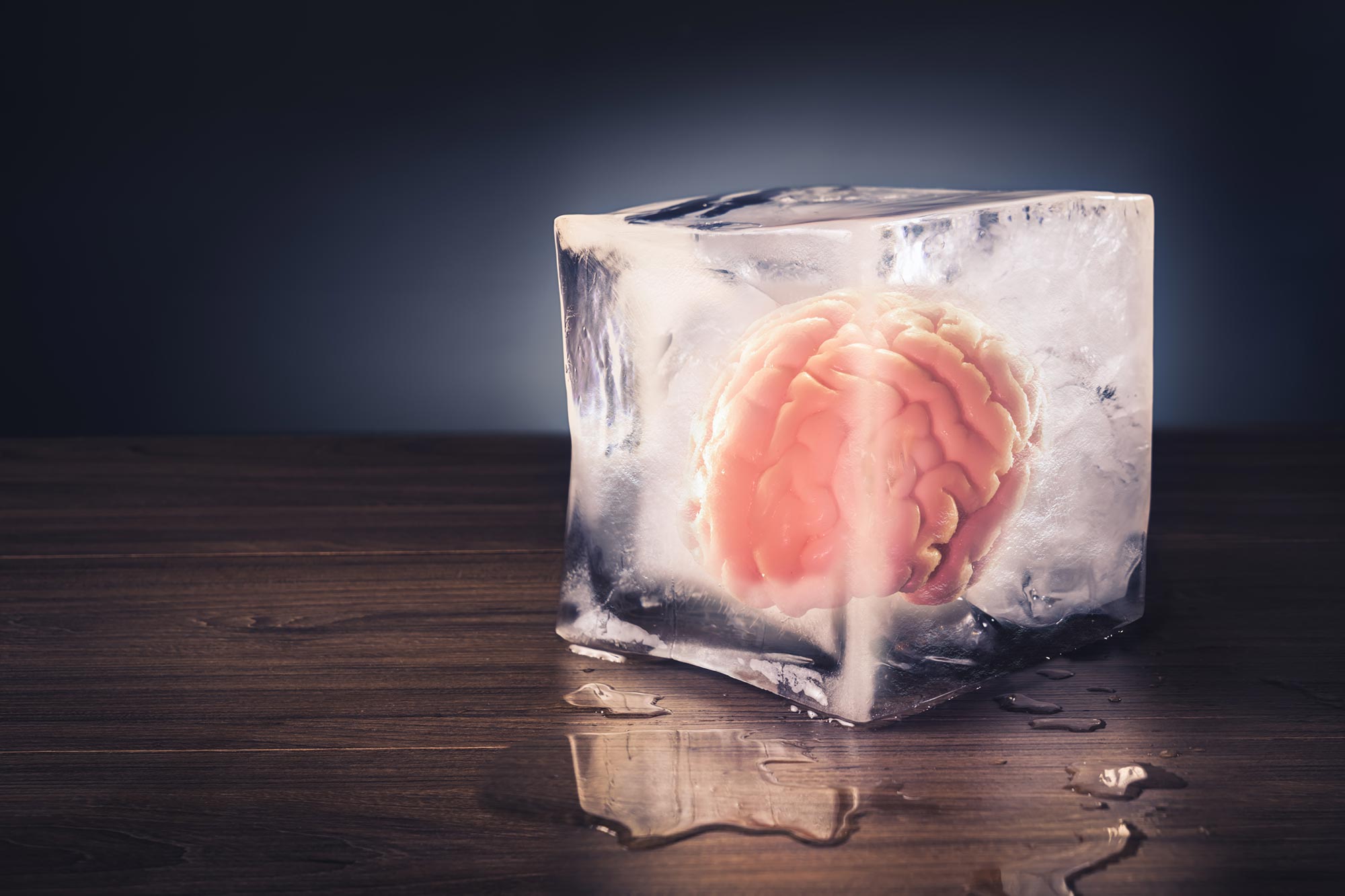
Scientists have taken a major step toward safely freezing and reviving brain tissue by preventing the microscopic damage normally caused by ice crystals.
What if living tissue could be frozen for years, or even decades, and later revived without losing its function? Scientists searching for ways to make this possible have turned to an unlikely source of inspiration: the Siberian salamander, a tiny amphibian capable of surviving some of the harshest cold on Earth.
According to some reports, the Siberian salamander can remain in hibernation at temperatures approaching 50 degrees below freezing and endure for decades trapped in permafrost. Once conditions warm, it simply resumes normal activity. Researchers say the secret lies in the animal’s remarkable natural “antifreeze” system.
The salamander’s liver produces glycerol, an alcohol that lowers the freezing point inside its body and helps protect cells and tissues during freezing and thawing. Without such protection, extreme cold is usually devastating to living organisms because ice crystals form inside tissues.
“The formation of ice crystals is the reason why extreme cold is usually so harmful to living beings,” explains Dr. Alexander German from the Department of Molecular Neurology at Uniklinikum Erlangen. “This is because the crystals can mechanically damage cells, thereby destroying the sensitive nanostructure of the tissue.”
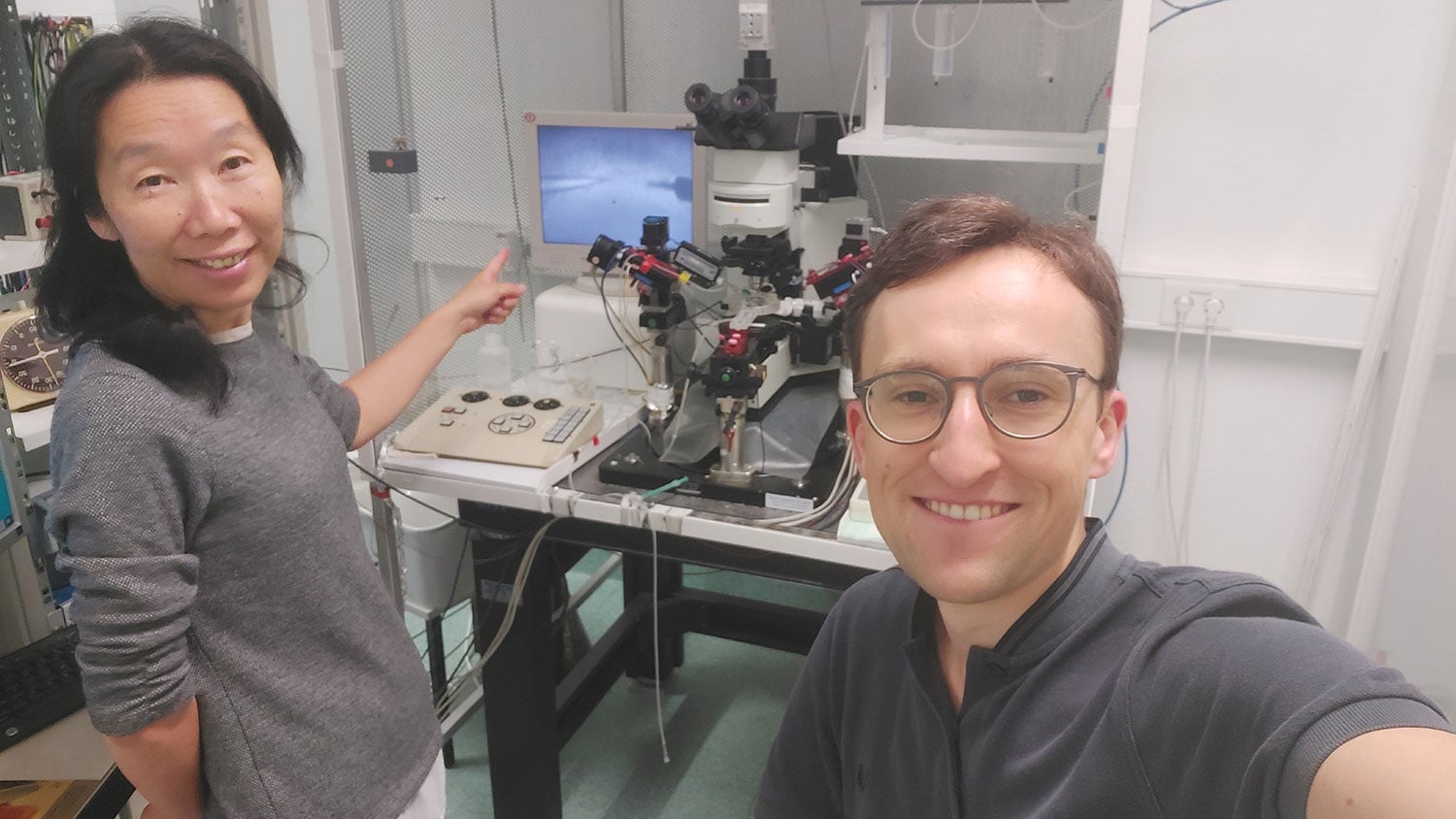
Tissue fluid solidifies into a glass-like state
Human embryos can also be stored for many years through extreme deep freezing. For this to work, the cells are treated with chemicals that, similar to glycerol, stop ice crystals from forming. “The tissue also solidifies when cooled to below -130 degrees,” says German. “However, the water in and between the cells transitions into a glass-like state.” Glass is solid like ice, but its molecules are arranged randomly rather than in the orderly pattern seen in crystals.
This process is known as vitrification. Until now, however, researchers have not been able to freeze nerve tissue, or even whole brain regions, in a way that allows them to function again after thawing. One major obstacle is that the antifreeze substances used in the process can be toxic to delicate cells. Brain tissue is especially vulnerable because it contains hundreds of millions of nerve cells connected by countless tiny contact points called synapses. Neurons communicate through these connections.
Optimized preservatives and freezing process
Earlier vitrification techniques disrupted this intricate network and damaged the synapses. Even if the cells themselves survived, the preserved structure could no longer work properly. “However, we have optimized the composition of the preservatives and the cooling process so that the neural tissue remains intact,” emphasizes German.
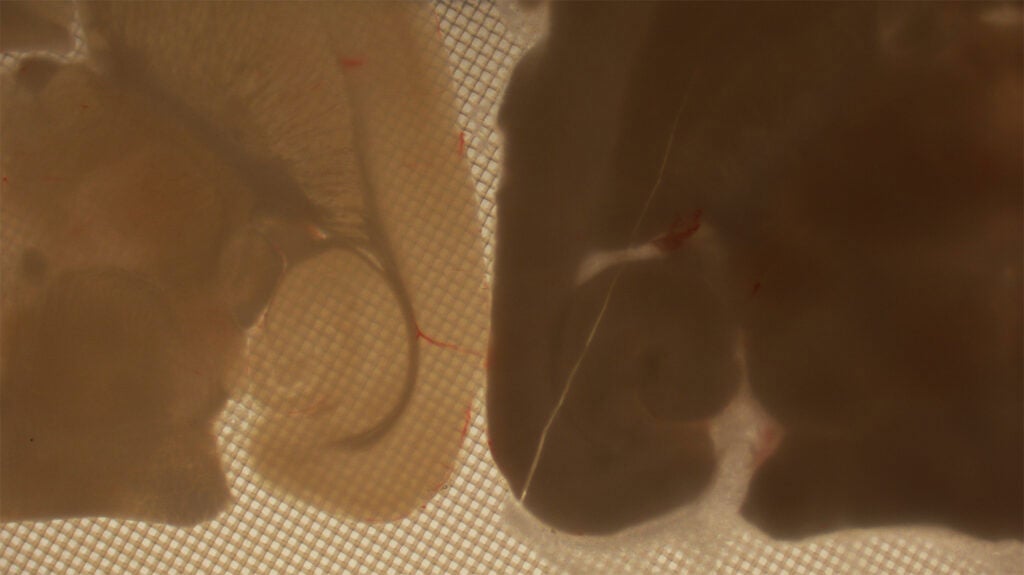
The team tested the method on brain sections. Using their approach, the researchers cooled the hippocampus, a region of a rodent brain involved in memory storage, to -130 degrees Celsius. “We were able to use electron microscopy images to prove that the nanostructure of the tissue was not altered by the freezing process,” says German. “After thawing, electrical signals spontaneously formed again in the hippocampus, propagating normally through the neural networks.”
The nerve cells did more than resume signaling. Dr. Fang Zheng, a brain researcher at the Institute of Physiology and Pathophysiology (Director: Prof. Dr. Christian Alzheimer) at FAU, showed that long-term potentiation could also be triggered at the synapses of the nerve cells. This is a key cellular process in which frequently used synapses become stronger, allowing them to transmit information more effectively. “This mechanism is of central importance for learning processes and the storage of new memory content,” says German.
Could treatment of incurable diseases be scheduled for the future?
The method developed in the study appears to allow brain tissue to be preserved in a functional state for long periods and then examined later to test whether it still works. For example, in some epilepsy patients, surgeons remove nerve cells during an operation. Samples like these could be stored and used years later to test medications. Cryopreservation of diseased tissue could also support research into neurodegenerative disorders.
Alexander German also hopes that one day it may be possible to place entire organisms into a form of artificial hibernation and revive them after a long period. “This could be an option for space travel, for example, or for people suffering from a currently incurable disease,” he says. “Because at a later date, there may be a treatment option that can help the person affected.”
Reference: “Functional recovery of the adult murine hippocampus after cryopreservation by vitrification” by Alexander German, Enes Yağız Akdaş, Cassandra Flügel-Koch, Ezgi Erterek, Renato Frischknecht, Anna Fejtova, Jürgen Winkler, Christian Alzheimer and Fang Zheng, 3 March 2026, Proceedings of the National Academy of Sciences.
DOI: 10.1073/pnas.2516848123
This work was supported by German Society of Cryobanks (A.G. and J.W.); German Research Foundation grants SFB 1483 and FOR 5534 (A.G.); and Interdisciplinary Center for Clinical Research Erlangen project J111 (A.G.), E37 (A.F.), and ELAN project P166 (E.Y.A.).
Never miss a breakthrough: Join the SciTechDaily newsletter.
Follow us on Google and Google News.
2 Comments
thanks for this
Here B -the key- to life-extension efforts – but ya got to freeze yourself BEFORE your brain cells die.