
From soda bottles to car bumpers to piping, electronics, and packaging, plastics have become a ubiquitous part of our lives. Advancements in materials have made plastics low cost, flexible, hygienic, lightweight, durable, and readily available. While some plastics are recyclable, only a fraction — about 8.4% nationally in 2017, according to the Environmental Protection Agency — are recycled. The vast majority is piling up in our landfills and oceans.
To help address this problem, researchers at the Department of Energy’s Oak Ridge National Laboratory are joining the Bio-Optimized Technologies to keep Thermoplastics out of Landfills and the Environment, or BOTTLE, Consortium.
In collaboration with other national laboratories, ORNL scientists will support the development of new plastics that are recyclable-by-design and customize microbes and processes to break down current plastics into chemical building blocks that can be used to make higher-value products.
These efforts simultaneously aim to reduce waste in landfills and to grow the nation’s bioeconomy through renewable generation of valuable chemicals.
“Plastic pollution is being found essentially everywhere researchers are looking for it,” said Greg Beckham, a senior research fellow at National Renewable Energy Laboratory and lead for the BOTTLE Consortium. “Besides accumulating in landfills and creating garbage patches in our oceans, recent work shows that microplastic particles are accumulating in our wilderness areas at an alarming rate — more than 1,000 metric tons per year are falling via wind and rain in remote areas of the Western United States.”
“The consortium’s biggest advantage is the passion each partner has in working together for the common goal of solving one of the world’s biggest environmental problems,” he added.
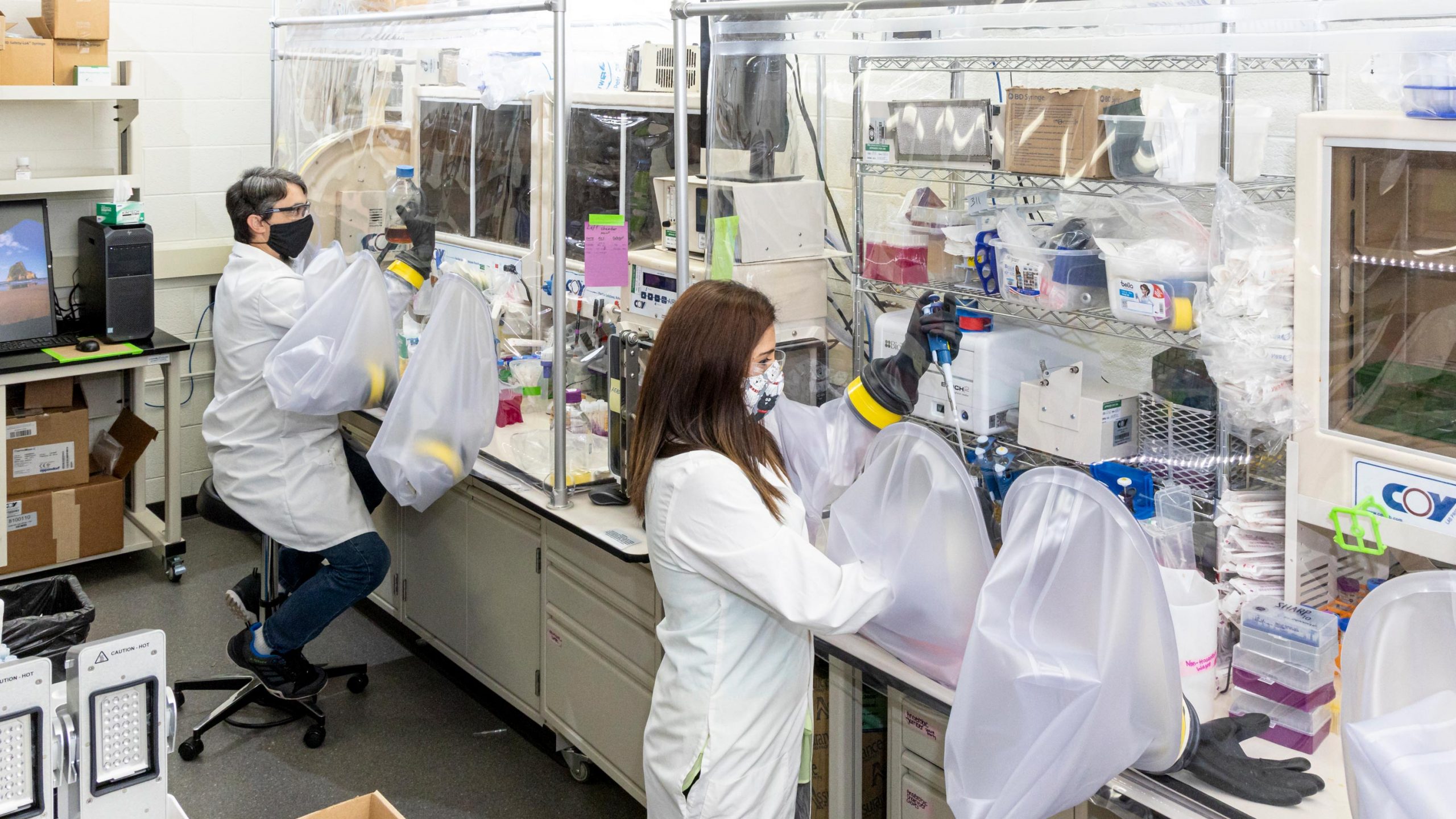
The BOTTLE team will work together to develop new, selective, and scalable technologies to deconstruct today’s plastic goods using a combination of chemical and biological processes. The deconstructed raw material can then be upcycled into higher-value materials or used to create new plastic goods that are designed to facilitate recycling.
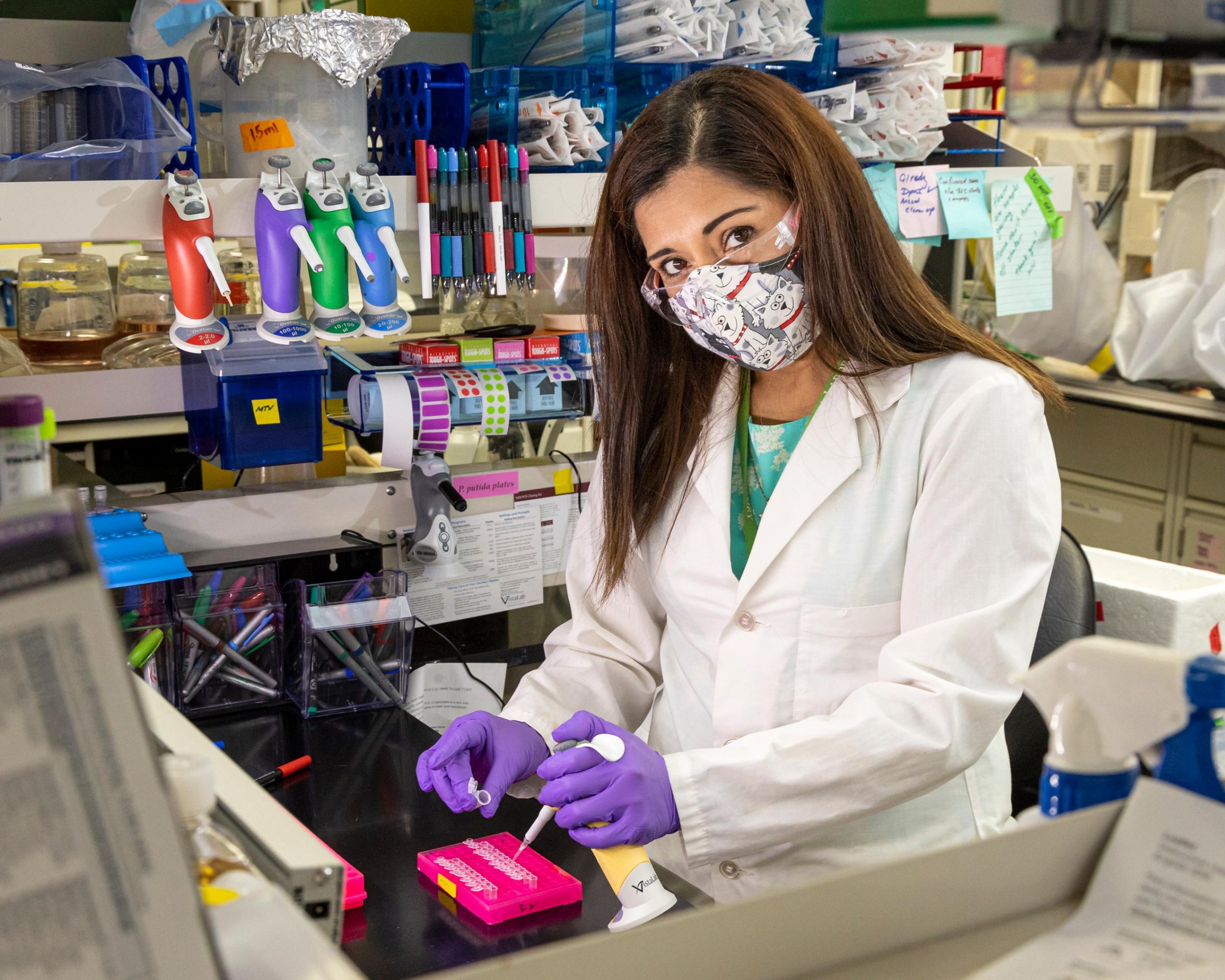
ORNL’s Adam Guss is leading the effort focused on biological means of upcycling waste plastics into new and more valuable chemicals. Guss, a genetic and metabolic engineer in the Biosciences Division, is developing new tools to modify non-model microbes, which are organisms that are difficult to grow in the lab and are not as well-studied as model microbes such as E. coli and yeast.
Recently, he led an ORNL team that modified a single microbe to simultaneously consume five of the most abundant components of lignocellulosic biomass, a significant step toward a cost-effective biochemical conversion process to turn plants into renewable fuels and chemicals.
Guss is enthusiastic about applying similar tools and methods to engineer microbes to upcycle plastics.
“Microorganisms in the environment have an amazing array of genes and metabolic pathways that could be incredibly useful for converting plastics into new chemicals, but many of these organisms have not been discovered yet,” Guss said. “By finding these organisms and discovering the genes involved, we can design microbes to convert complex plastic waste into new industrial chemicals.”
Guss and collaborators are now isolating bacteria from soil, compost and other environments that can grow on deconstructed plastics. With a better understanding of target microbes and their existing metabolic pathways, Guss and his collaborators can enhance the organisms’ efficiency in consuming plastics and converting them into new molecules. These biological processes could create the chemical components needed to produce the next generation of easy-to-recycle plastics.
“Although plastics are essential to modern life, plastic waste can currently subsist for centuries in the biosphere,” Beckham said. “Urgent action on a global scale will be required to stem the rising tide of plastics that enter landfills and the natural world. Overcoming these challenges are at the core of BOTTLE’s mission.”
BOTTLE includes researchers from National Renewable Energy Laboratory, ORNL, Argonne National Laboratory, Los Alamos National Laboratory and SLAC National Accelerator Laboratory; Colorado State University; the Massachusetts Institute of Technology; Montana State University; Northwestern University; and the University of Portsmouth.
The effort is an important component of DOE’s Plastics Innovation Challenge, designed to accelerate innovations in energy-efficient plastics recycling technologies by 2030. The research is funded by the DOE Bioenergy Technologies Office and Advanced Manufacturing Office within the Office of Energy Efficiency and Renewable Energy.
Never miss a breakthrough: Join the SciTechDaily newsletter.
Follow us on Google and Google News.
2 Comments
My feeling is that it’s already too late. The world is awash with plastic. There are entire “rivers” in the Indian sub-continent & further East that are loaded with plastic & more is being added every day. The only way people will stop it is to have some significant financial advantage to recycling it. We did it with glass bottles many years ago. We can do it with plastics.
I agree that government driven financial incentives and disincentives are key to driving recycling. I also would like to see the problem simplified by legally limiting packaging applications to 3 plastics: LDPE/HDPE, PP. and PET, with very prominent markings to help consumers segregate by type.