
Close Menu
    Facebook X (Twitter) Instagram
    SciTechDaily
    • Biology
    • Chemistry
    • Earth
    • Health
    • Physics
    • Science
    • Space
    • Technology
    Facebook X (Twitter) Pinterest YouTube RSS
    SciTechDaily
    Home»Space»Hera Team Congratulates Japan Aerospace Exploration Agency on Hayabusa2’s Asteroid Sample Return
    Space

    Hera Team Congratulates Japan Aerospace Exploration Agency on Hayabusa2’s Asteroid Sample Return

    By European Space Agency (ESA)December 6, 2020No Comments5 Mins Read
    Facebook Twitter Pinterest Telegram LinkedIn WhatsApp Email Reddit
    Share
    Facebook Twitter LinkedIn Pinterest Telegram Email Reddit
    Hayabusa2 Sample Capsule Reentry
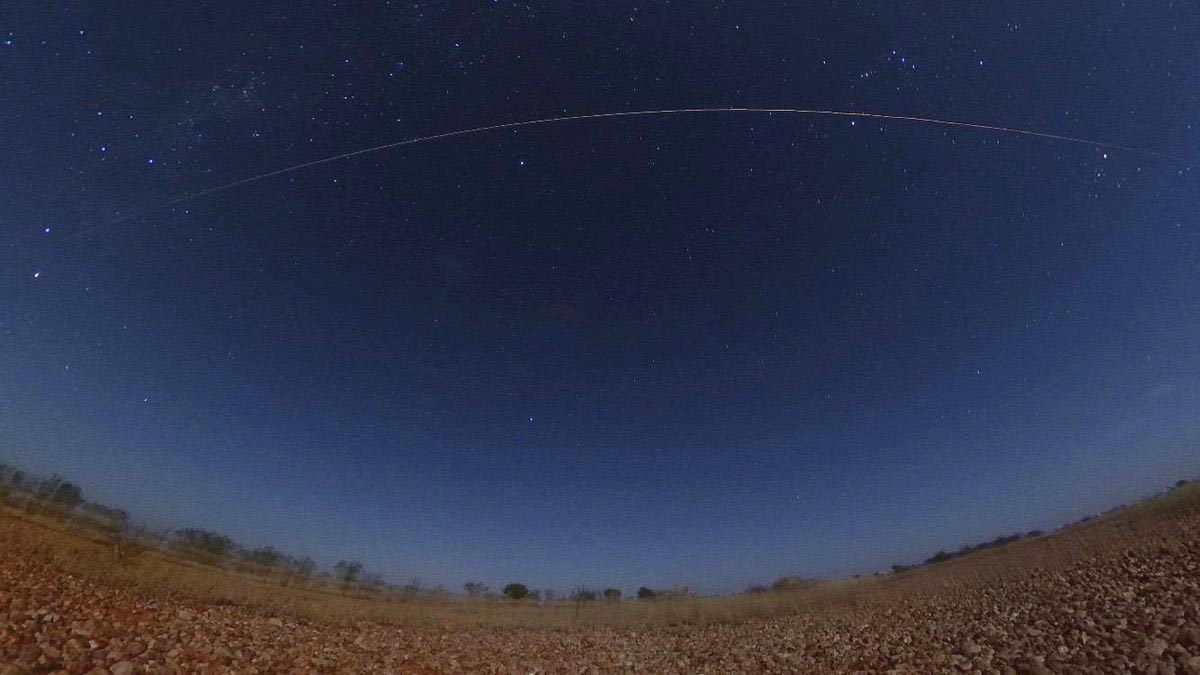
    Hayabusa2’s reentry capsule forms a fireball in the desert sky over Australia’s Woomera Prohibited Area as it arrives back on Earth on December 5, 2020, laden with pristine samples from the Ryugu asteroid. Credit: Hayabusa2 Collection Team M

    The team behind ESA’s Hera asteroid mission for planetary defense congratulates JAXA for returning Hayabusa2’s capsule to Earth laden with pristine asteroid samples. They look forward to applying insights from this audacious space adventure to their own mission.

    After 3.2 billion km of travel through space, Hayabusa2’s reentry capsule parachuted down to Australia’s remote desert Woomera Prohibited Area on Saturday, December 5, 2020.
    Hayabusa2
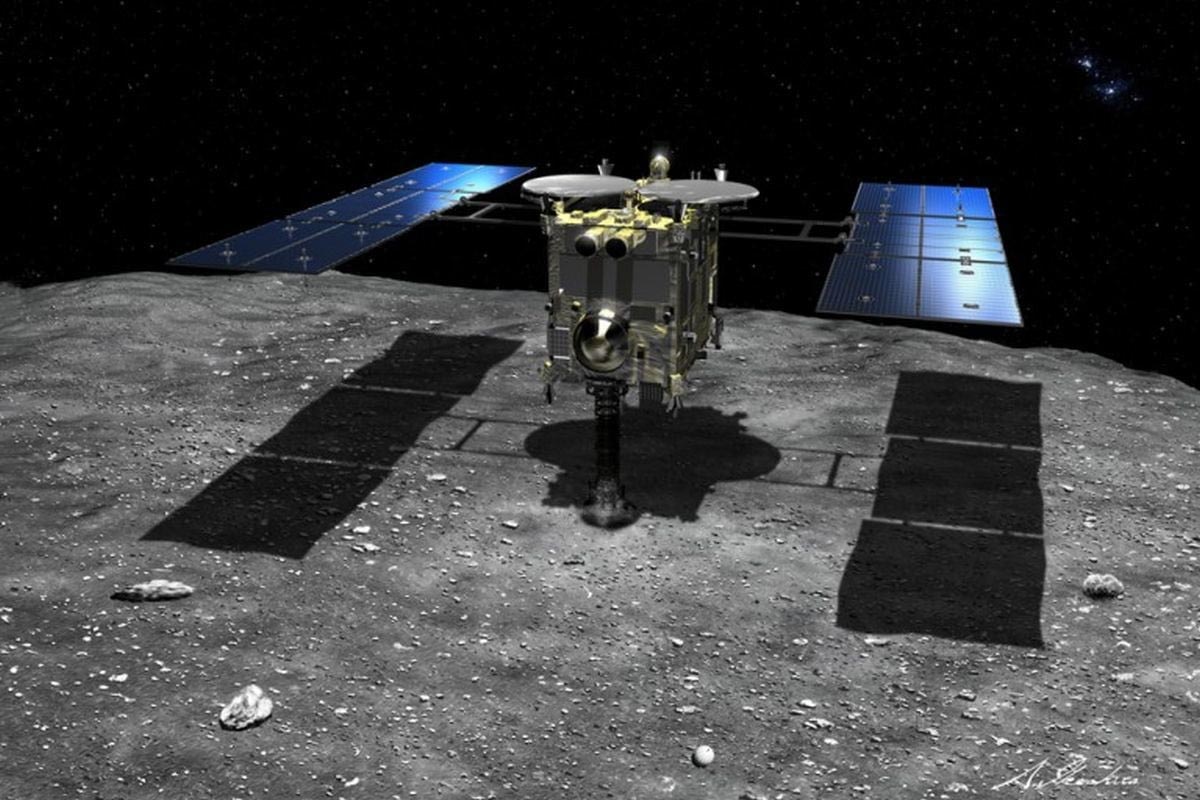
    Japan’s Hayabusa2 mission to asteroid Ryugu. Credit: JAXA

    Within the capsule is material gathered from the Ryugu near-Earth asteroid during two sampling operations: an initial touchdown sampling in February 2019 was followed by a second one in July that year that collected subsurface samples after blasting the face of the asteroid with an explosive impactor.

    Patrick Michel, CNRS Director of Research of France’s Côte d’Azur Observatory, serves as co-investigator and interdisciplinary scientist on the Japanese mission and as Principal Investigator on ESA’s Hera. He comments: “Hayabusa2’s samples should give us an extraordinary opportunity to measure with high accuracy the composition and other material properties of its carbonaceous asteroid target.
    Hera CubeSats Didymos
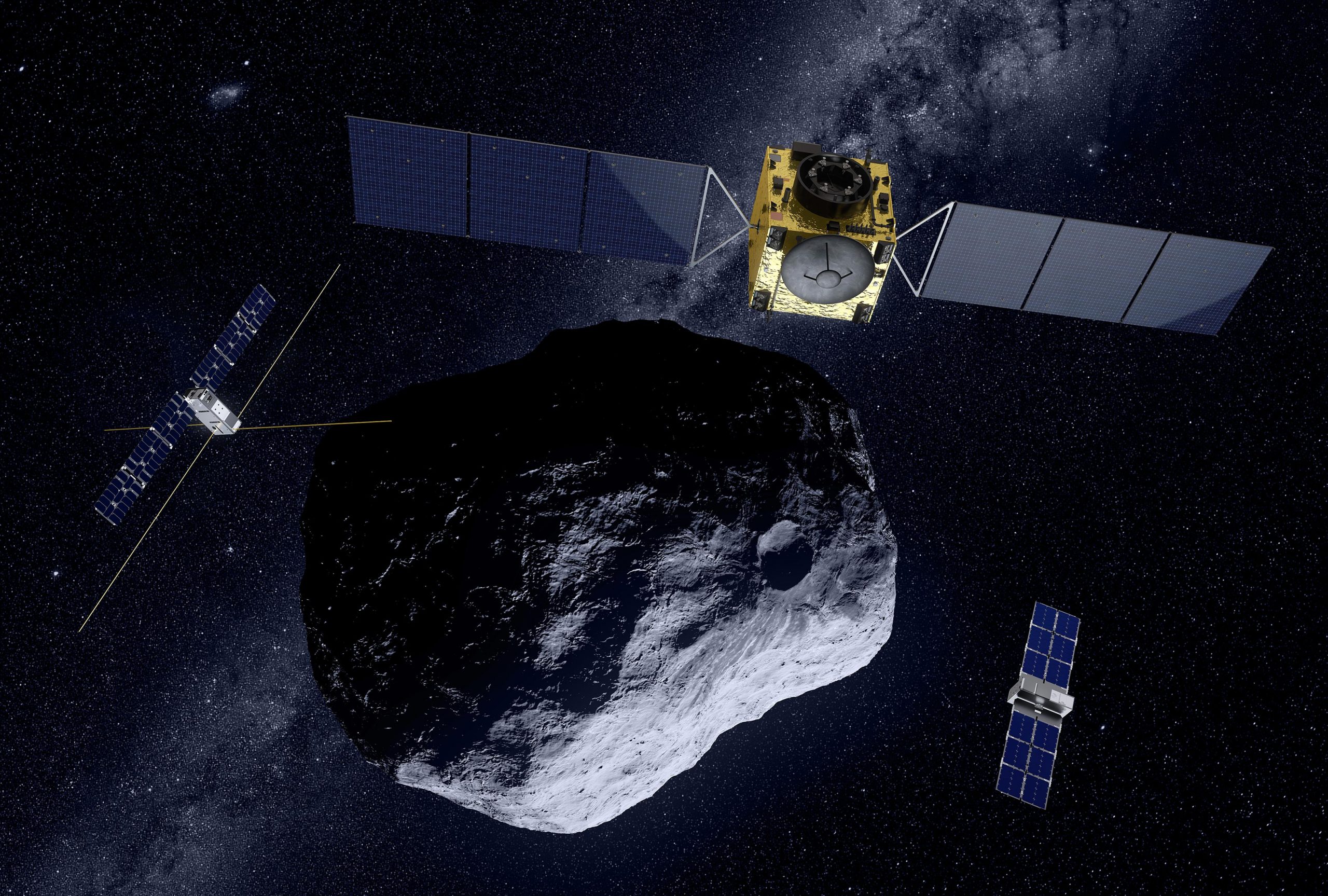
    Hera, her CubeSats, and their rocky target destination. Credit: ESA/Science Office

    The 900-m (0.6-mile) diameter Ryugu has a spinning top shape; its density is very low and based on the results of the Small Carry-on Impactor (SCI) impact experiment performed in April 2019, its surface appears cohesionless. These findings are extremely relevant to planetary defense, which is the prime goal of the Hera mission.”

    Hera will not return any samples to Earth, but will be following Hayabusa2’s approach in one notable respect.
    NASA DART Impacting Asteroid
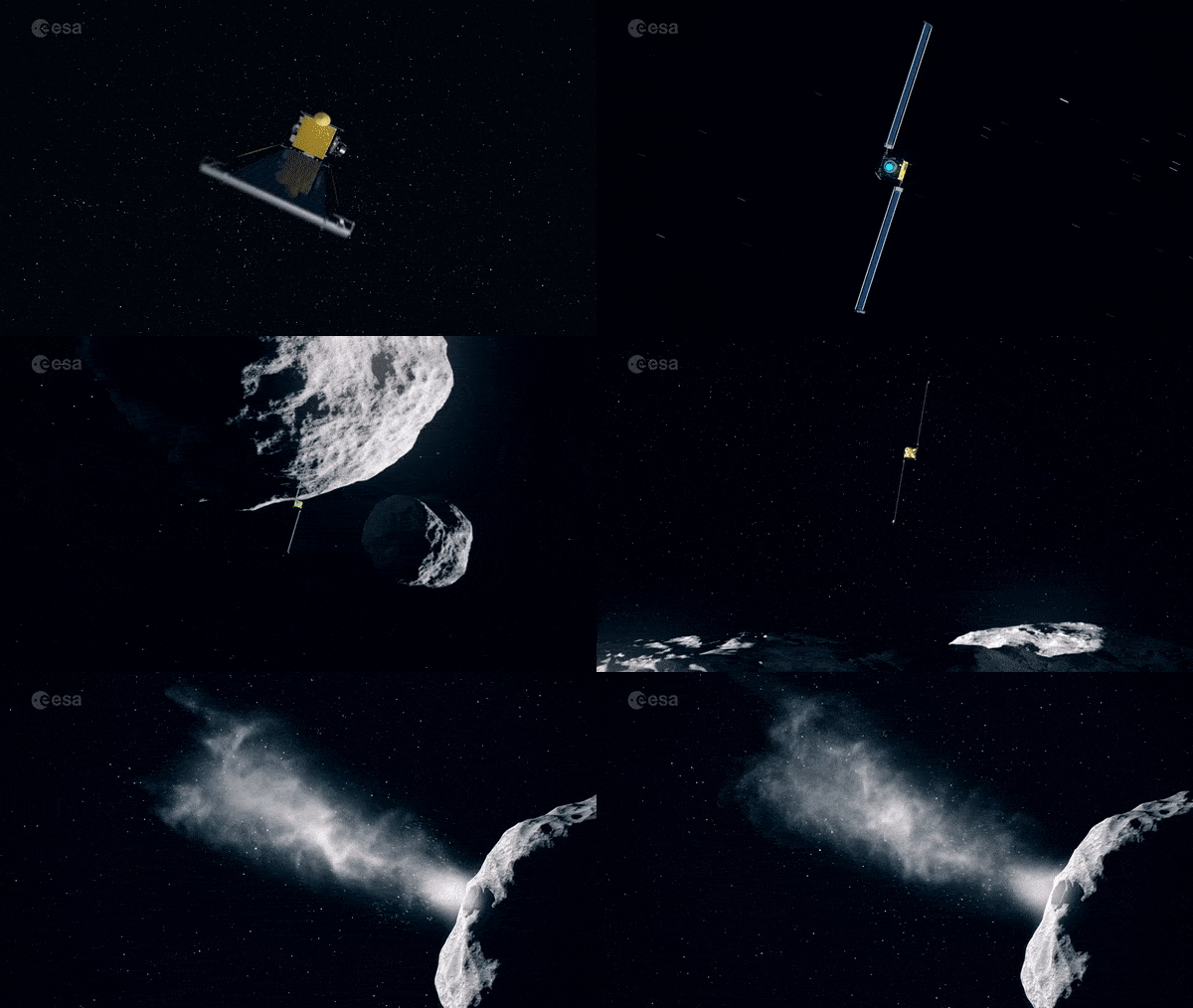
    NASA’s Double Asteroid Redirect Test, DART, mission is intended to collide with the smaller of two bodies of the Didymos binary asteroid system in autumn 2022. ESA’s Hera mission will then perform follow-up post-impact observations. Credit: ESA

    When it arrives at its target Didymos asteroid system in late 2026 ESA’s desk-sized spacecraft will similarly examine subsurface material, this time excavated by a far more powerful explosive impact: NASA’s DART spacecraft will in the meantime have collided with the smaller of the two Didymos asteroids in 2022, which will attempt to shift the orbit of the asteroid in a measurable way.

    To give an idea, Hayabusa2’s SCI 2.5-kg (5.5-lb) copper projectile shot into the surface of the 900-m (0.6-mile) diameter Ryugu asteroid at a velocity of around 2 km per second. NASA’s DART will have a mass of 550 kg (1,200 lb), and will strike Didymoon at 6 km/s (3.7 mi/s).

    Patrick Michel adds: “Hayabusa2’s impact represents a crucial first data point, in anticipation of DART’s impact, striking an asteroid five times smaller with an object more than 200 times larger while moving three times as fast, to move its orbit.”
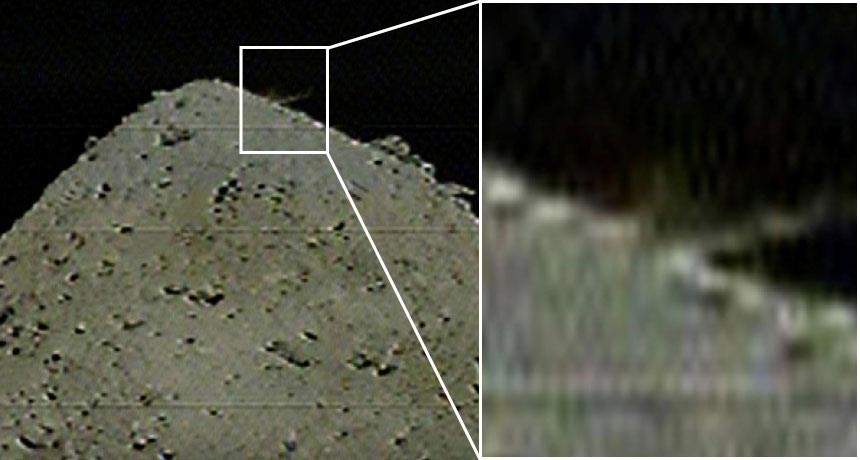
    Plume From Impact
    Hayabusa2’s deployable camera, DCAM3, successfully photographed the ejector from the ‘Small Carry-on Impactor’ or SCI for short colliding with the Ryugu asteroid’s surface. On April 5, 2019, SCI was released from the spacecraft, carrying a plastic explosive charge that shot a 2.5-kg copper projectile at the surface of the 900-m diameter Ryugu asteroid at a velocity of around 2 km per second. The objective is to uncover subsurface material to be brought back to Earth for detailed analysis. Credit: JAXA/The University of Tokyo/Kochi University/Rikkyo University/Nagoya University/Chiba Institute of Technology/Meiji University/The University of Aizu/AIST

    Hera, along with a pair of deployed deep space CubeSats, will focus on the crater left by the impact – along with close-up measurements of the target asteroid’s mass, composition as well as its subsurface, and internal properties. In so doing Hera will help turn DART’s grand-scale deflection experiment into a well-understood planetary defense technique, with the potential to be reused as required to safeguard Earth from incoming asteroids.

    The parent Didymos asteroid shares the same spinning-top shape with Ryugu, as well as being broadly comparable in size, at 780 m in diameter. “Hera will be taking a close look at both Didymos and Dimorphos,” adds Patrick Michel. “How will their surfaces compare with that of Ryugu? Will they also be cohesionless in nature?
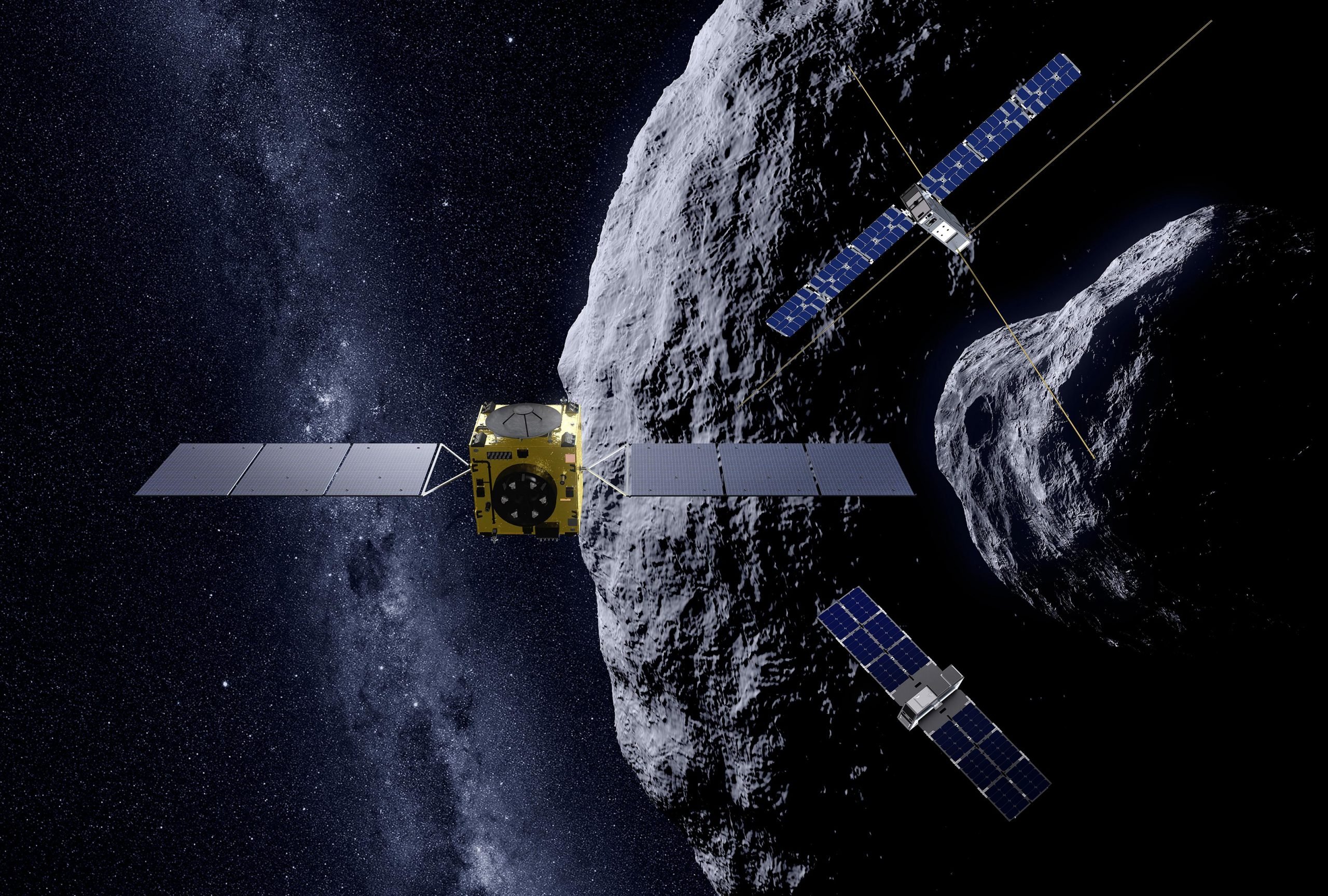
    Hera Mission Family Portrait
    Hera mission family portrait. Credit: ESA/Science Office

    “The observation of natural craters as well as the measurements of DART’s crater should allow us to answer this question and therefore to determine whether the asteroid population’s compositional diversity comes along with mechanical diversity. This is extremely important not only for our scientific understanding, but also to design planetary defense missions, because the mechanical properties have a high influence on deflection efficiency.”

    Later in the Hera’s lifetime, the team will get their chance to make their own impression on the asteroids’ surfaces, by landing their two CubeSats on Dimorphos then bringing Hera itself down to Didymos at mission end.
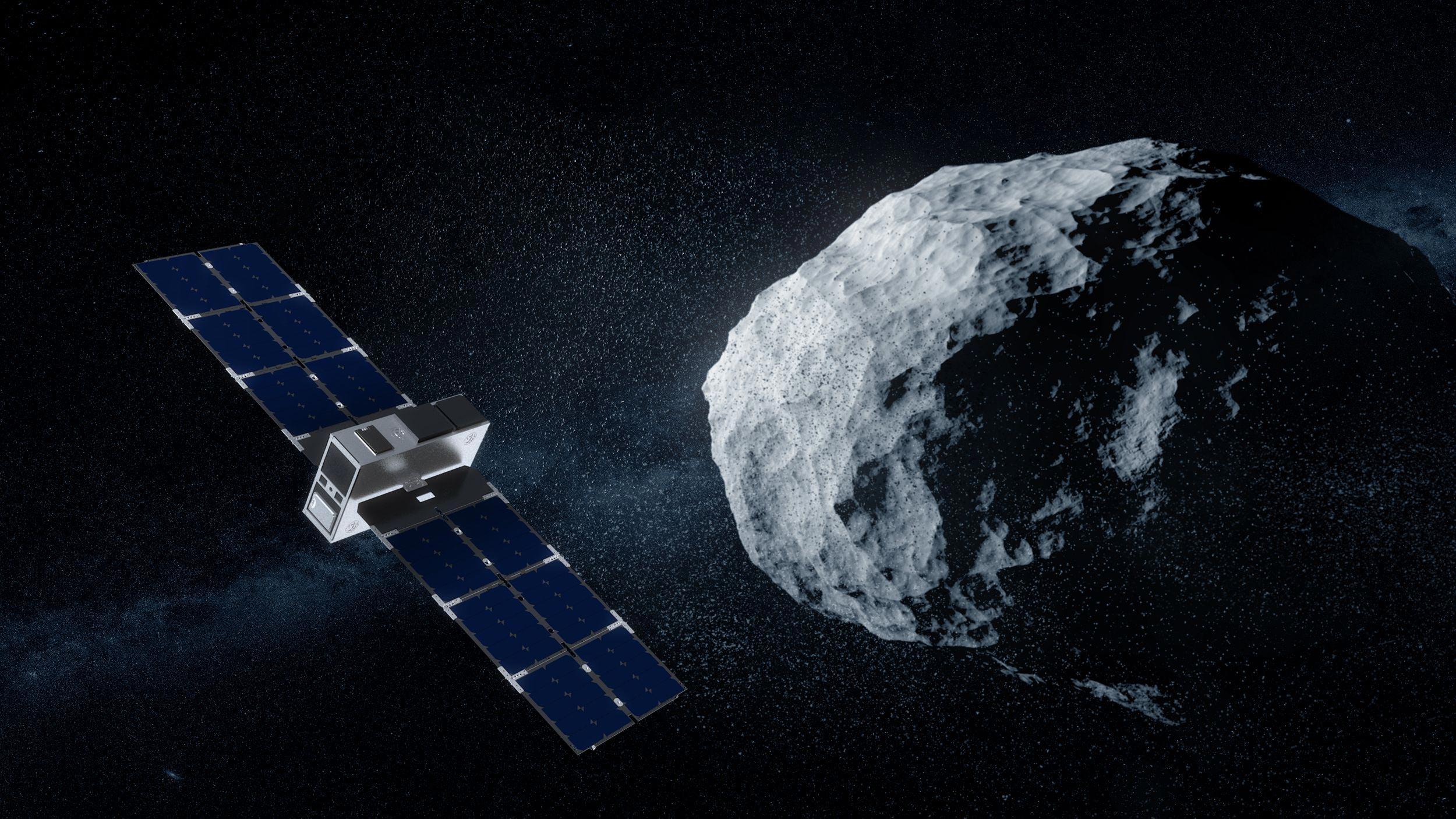
    Milani Studies Asteroid Dust
    This artist’s impression shows the Milani CubeSat carrying out one of its main tasks – studying asteroid dust particles. Credit: ESA/Science Office

    DART and Hera together are supported by the international double-spacecraft Asteroid Impact & Deflection Assessment (AIDA) cooperation.

    “Each new space mission reshapes our vision of asteroids,” says Ian Carnelli, overseeing Hera for ESA. “Hayabusa2, with its treasure trove of returned asteroid material will certainly revolutionise our understanding of those objects and their history. Then later this decade Hera will make its own contribution, while also serving to probe how humans might defend Earth in the future.”

    Never miss a breakthrough: Join the SciTechDaily newsletter.
    Follow us on Google and Google News.

    Asteroid ESA's Hera European Space Agency Hayabusa2 Mission JAXA
    Share. Facebook Twitter Pinterest LinkedIn Email Reddit

    Related Articles

    ESA’s Planetary Defense Mission: Hera Asteroid Spacecraft Is Complete

    ESA’s Planetary Defense Mission: Time of Trial for Hera Spacecraft

    Samples From Asteroid Ryugu Shed New Light on Solar System History

    Catching DART Asteroid Deflection Mission’s First Words

    Next Target Asteroid for Hayabusa2 Photographed by Subaru Telescope

    World’s First Gas Sample From Deep Space Returned With Asteroid Ryugu Material From Hayabusa2

    Asteroid Ryugu Sample Collected in Space and Delivered to Earth – Now NASA Astrobiologists Prepare to Probe It

    Australia-Bound Asteroid Sample From Japan’s Hayabusa2 Mission May Reveal Life’s Origins

    ESA’s Ambitious Hera Planetary Defense Mission Awards $153 Million Contract

    Leave A Reply Cancel Reply

    • Facebook
    • Twitter
    • Pinterest
    • YouTube

    Don't Miss a Discovery

    Subscribe for the Latest in Science & Tech!

    Trending News

    Artificial Sweeteners May Harm Future Generations, Study Suggests

    Splashdown! NASA Artemis II Returns From Record-Breaking Moon Mission

    What If Consciousness Exists Beyond Your Brain

    Scientists Finally Crack the 100-Million-Year Evolutionary Mystery of Squid and Cuttlefish

    Beyond “Safe Levels”: Study Challenges What We Know About Pesticides and Cancer

    Researchers Have Found a Dietary Compound That Increases Longevity

    Scientists Baffled by Bizarre “Living Fossil” From 275 Million Years Ago

    Your IQ at 23 Could Predict Your Wealth at 27, Study Finds

    Follow SciTechDaily
    • Facebook
    • Twitter
    • YouTube
    • Pinterest
    • Newsletter
    • RSS
    SciTech News
    • Biology News
    • Chemistry News
    • Earth News
    • Health News
    • Physics News
    • Science News
    • Space News
    • Technology News
    Recent Posts
    • What if Dark Matter Has Two Forms? Bold New Hypothesis Could Explain a Cosmic Mystery
    • Researchers Expose Hidden Chemistry of “Ore-Forming” Elements in Biology
    • Geologists Reveal the Americas Collided Earlier Than We Thought
    • 20x Difference: Study Reveals True Source of Airborne Microplastics
    • Scientists Uncover Hidden Force Powering Yellowstone’s Supervolcano
    Copyright © 1998 - 2026 SciTechDaily. All Rights Reserved.
    • Science News
    • About
    • Contact
    • Editorial Board
    • Privacy Policy
    • Terms of Use

    Type above and press Enter to search. Press Esc to cancel.