
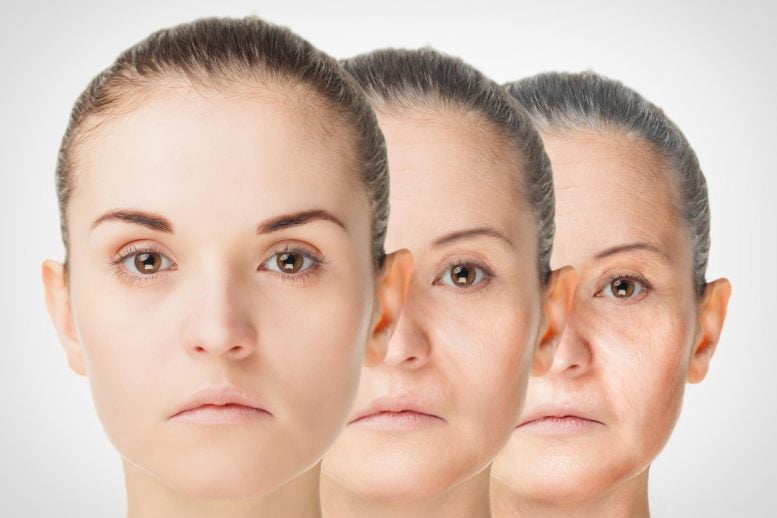
Findings underline the importance of a strength-based rather than a deficit-based focus on aging and older adults.
What are the keys to “successful” or optimal aging? A new study followed more than 7,000 middle-aged and older Canadians for approximately three years to identify the factors linked to well-being as we age.
They found that those who were female, married, physically active, and not obese and those who had never smoked, had higher incomes, and who did not have insomnia, heart disease or arthritis, were more likely to maintain excellent health across the study period and less likely to develop disabling cognitive, physical, or emotional problems.
As a baseline, the researchers selected participants who were in excellent health at the start of the approximately three-year period of study. This included the absence of memory problems or chronic disabling pain, freedom from any serious mental illness and absence of physical disabilities that limit daily activities — as well as the presence of adequate social support and high levels of happiness and life satisfaction.
“We were surprised and delighted to learn that more than 70% of our sample maintained their excellent state of health across the study period,” says the first author, Mabel Ho, a doctoral candidate at the University of Toronto’s Factor-Inwentash Faculty of Social Work (FIFSW) and the Institute of Life Course and Aging. “Our findings underline the importance of a strength-based rather than a deficit-based focus on aging and older adults. The media and research tend to ignore the positive and just focus on the problems.”
Age and Successful Aging Trends
There was considerable variation in the prevalence of successful aging based on the respondents’ age at the beginning of the study. Three quarters of the respondents who were aged 55 to 64 at the start of the study period maintained excellent health throughout the study. Among those aged 80 and older, approximately half remained in excellent health.
“It is remarkable that half of those aged 80 and older maintained this extremely high bar of cognitive, physical, and emotional well-being across the three years of the study. This is wonderful news for older adults and their families who may anticipate that precipitous decline is inevitable for those aged 80 and older,” says Mabel Ho. “By understanding factors associated with successful aging, we can work with older adults, families, practitioners, policymakers, and researchers to create an environment that supports a vibrant and healthy later life.”
Older adults who were obese were less likely to maintain good health in later life. Compared to older adults who were obese, those who had a normal weight were 24% more likely to age optimally.
“Our findings are in keeping with other studies which have found that obesity was related to a range of physical symptoms and cognitive problems and that physical activity also plays a key role in optimal aging,” says co-author David Burnes, Associate Professor at the University of Toronto’s FIFSW and a Canada Research Chair in Older Adult Mistreatment Prevention. “These findings highlight the importance of maintaining an appropriate weight and engaging in an active lifestyle throughout the life course”.
Income and Aging Well
Income was also an important factor. Only about half of those below the poverty line aged optimally compared to three-quarters of those living above the poverty line.
“Although our study does not provide information on why low income is important, it is possible that inadequate income causes stress and also restricts healthy choices such as optimal nutrition. Future research is needed to further explore this relationship,” says senior author Esme Fuller-Thomson, Director of the Institute for Life Course & Aging and Professor at the University of Toronto’s Factor-Inwentash Faculty of Social Work.
Lifestyle factors are associated with optimal health in later life. Older adults who never smoked were 46% more likely to maintain an excellent state of health compared to current smokers. Previous studies showed that quitting smoking in later life could improve survival statistics, pulmonary function, and quality of life; lower rates of coronary events, and reduce respiratory symptoms. The study found that former smokers did as well as those who had never smoked, underscoring that it is never too late to quit.
The study also found that engaging in physical activity was important in maintaining good health in later life. Older adults who engaged in moderate to strenuous physical activity were 35% to 45% more likely to age well, respectively.
Sleep in Healthy Aging
The findings indicated that respondents who never or rarely experienced sleep problems at baseline were 29% more likely to maintain excellent health across the study.
“Clearly, good sleep is an important factor as we age. Sleep problems undermine cognitive, mental, and physical health. There is strong evidence that an intervention called cognitive-behavioral therapy for insomnia (CBT-I) is very helpful for people living with insomnia,” says Esme Fuller-Thomson.
The study was recently published online, in the International Journal of Environmental Research and Public Health. It uses longitudinal data from the baseline wave (2011-2015) and the first follow-up wave (2015-2018) of data from the Canadian Longitudinal Study on Aging (CLSA) to examine factors associated with optimal aging the first two waves. In the CLSA, there were 7,651 respondents who were aged 60 years or older at wave 2 who were in optimal health during the baseline wave of data collection. The sample was restricted to those who were in excellent health at baseline, which was only 45% of the respondents.
Reference: “Successful Aging among Immigrant and Canadian-Born Older Adults: Findings from the Canadian Longitudinal Study on Aging (CLSA)” by Mabel Ho, Eleanor Pullenayegum, David Burnes and Esme Fuller-Thomson, 13 October 2022, International Journal of Environmental Research and Public Health.
DOI: 10.3390/ijerph192013199
Never miss a breakthrough: Join the SciTechDaily newsletter.
Follow us on Google and Google News.
3 Comments
Restating the findings:
“They found that those who were male, un-married, physically in-active, or obese and those who had smoked, had lower incomes, or who had insomnia, heart disease or arthritis, were less likely to maintain excellent health across the study period and more likely to develop disabling cognitive, physical, or emotional problems.”
This is clickbait junk science. I am still unclear about how someone who is obese with heart disease and arthritis is in “excellent health” to begin with. And if they those things developed during the study then its not surprising those people were no longer in “excellent health”.
Rose, it states the opposite in the article. However, I agree that this is junk science. Basically “We followed people who were doing really well in life and found they continued to do really well, seeing as they of them were happy with how well they’ve done.” 😂😂 It sounds like Monty Python.
Sample was extremely small and homogenized, noted that there’s no control group. Trash study if this is the case.
Optimal aging would be going toward 25…from whichever direction.