
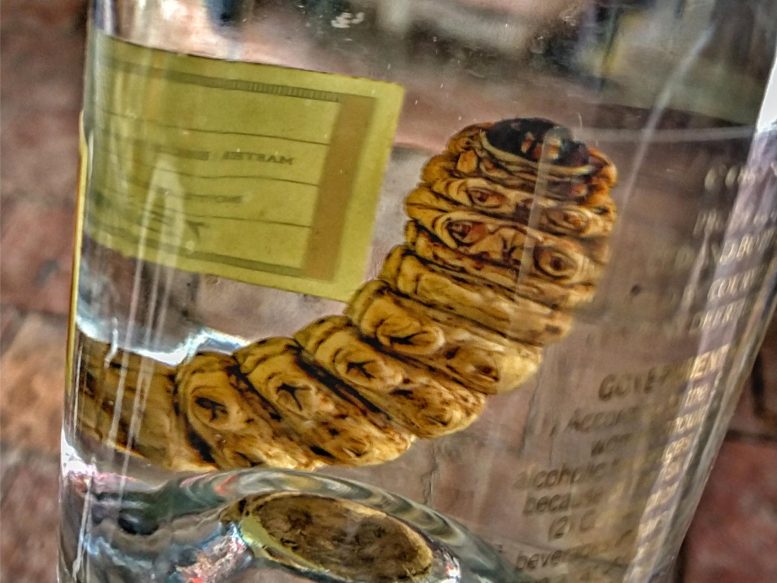
A genetic study has finally solved the mystery of the worm inside mezcal bottles.
While speculation ranged from butterflies to weevils, DNA analysis revealed that all sampled larvae came from a single moth species, Comadia redtenbacheri. This insect is a traditional delicacy in Mexico, believed to offer health and even aphrodisiac benefits.
The Mystery of Mezcal’s Worm
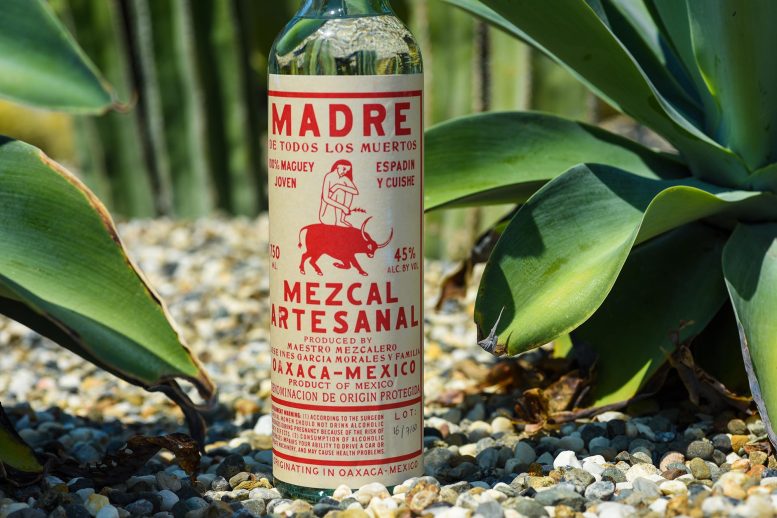
A study in PeerJ Life & Environment set out to determine exactly which species of larva ends up in bottles of mezcal. Mezcal, a distilled spirit made from agave, is sometimes paired with orange slices and worm salt, a seasoning blend of chili peppers, salt, and crushed larvae from a species of moth called Hypopta agavis.
For decades, there has been debate over the true identity of the so-called “mezcal worm.” Are drinkers consuming the larva of the skipper butterfly Aegiale hesperiaris, or the moth Comadia redtenbacheri (a species thought to have declined in recent years)? Could the worm actually be a type of weevil, or perhaps an insect that has not yet been identified? To answer these questions, scientists analyzed the DNA of larvae found in 21 different brands of mezcal sold commercially.
Collecting the Specimens
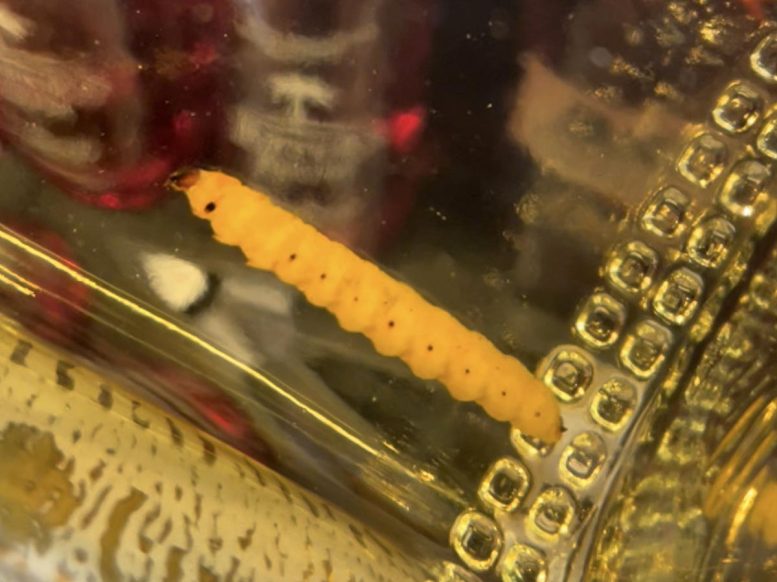
The larvae were obtained from mezcal bottles purchased between 2018 and 2022. At first glance, they all looked nearly identical, with a defined head capsule and prolegs typical of caterpillars. Some were pale white, while others showed a pinkish-red tint. Of the 21 samples, DNA was successfully extracted and sequenced from 18.
DNA Evidence Revealed
The findings surprised the researchers. Mexico has a long tradition of eating insect larvae, with more than 60 species commonly consumed, among them the Tequila giant skipper (A. hesperiaris), whose name suggests it might also appear in tequila and mezcal.
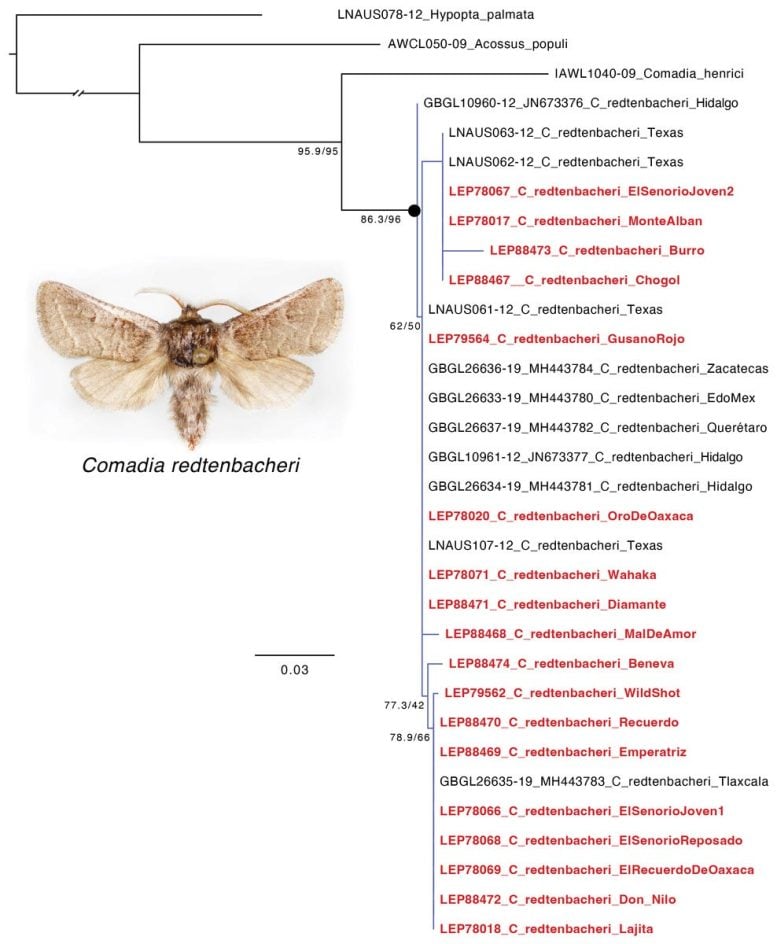
Instead, the genetic analysis confirmed that every larva tested belonged to a single moth species, Comadia redtenbacheri. This discovery highlights the significance of C. redtenbacheri not only as an iconic part of mezcal culture but also as one of the most widely eaten edible insects in Mexico.
Adding larvae to Mexican beverages and foods (salts, garnishes, powders, etc.) is driven by health benefits and by beliefs that these larvae contain aphrodisiac properties (Contreras-Frias, 2013). This trend is resulting in greater demand, which is applying pressure to local larval populations.
In response to the declining number of mezcal larvae, researchers have begun to develop methods to cultivate these larvae in captivity.
For more on this research, see Scientists Discover the Unexpected True Identity of “Tequila” Worms.
Reference: “Mezcal worm in a bottle: DNA evidence suggests a single moth species” by Akito Y. Kawahara, Jose I. Martinez, David Plotkin, Amanda Markee, Violet Butterwort, Christian D. Couch and Emmanuel F.A. Toussaint, 8 March 2023, PeerJ.
DOI: 10.7717/peerj.14948
A version of this article was initially published in March 2023.
Never miss a breakthrough: Join the SciTechDaily newsletter.
Follow us on Google and Google News.
11 Comments
I’m laughing. They could have also gone to the bottling facilities and studied the worms before they went into the Mezcal, but no… they had to buy 18 bottles. Science!
Where’s the fun in that? One needs to sacrifice one’s liver in the name of knowledge.
Mezcal is not processed by the liver it’s processed by the tongue do some research
Made bets I could get the worm out of a full bottle without pouring it out. Only thing I got out of eating the worm was waking up with a pounding headache.
Made bets I could get the worm out of a full bottle without pouring it out. Only thing I got out of eating the worm was waking up with a pounding headache.
Maybe they could have asked some Agave farmers. Distilleries should know how to get the larva out of the plant w/o smashing them, some would be more mature and some would probably be ready to fly so they’d know which bug it was and could identify it. The fact is though, Camposinos will test the gullibility of a suit by telling them anything that sounds plausible. The unspoken rule is that it has to be a false. Jesus always forgives them. 🙂
What does a dead rabbi have to do with Mezcal?
Made bets I could get the worm out of a full bottle without pouring it out. Only thing I got out of eating the worm was waking up with a pounding headache.
I was momentarily horrified when I read that they tested mezcal worms from bottles for 4 years. Horrible visions of alcohol being poured out through a strainer and down the drain to obtain the worm. Simple alcohol abuse. This should be a crime. 😅
Made bets I could get the worm out of a full bottle without pouring it out. Only thing I got out of eating the worm was waking up with a pounding headache.
Stfu