
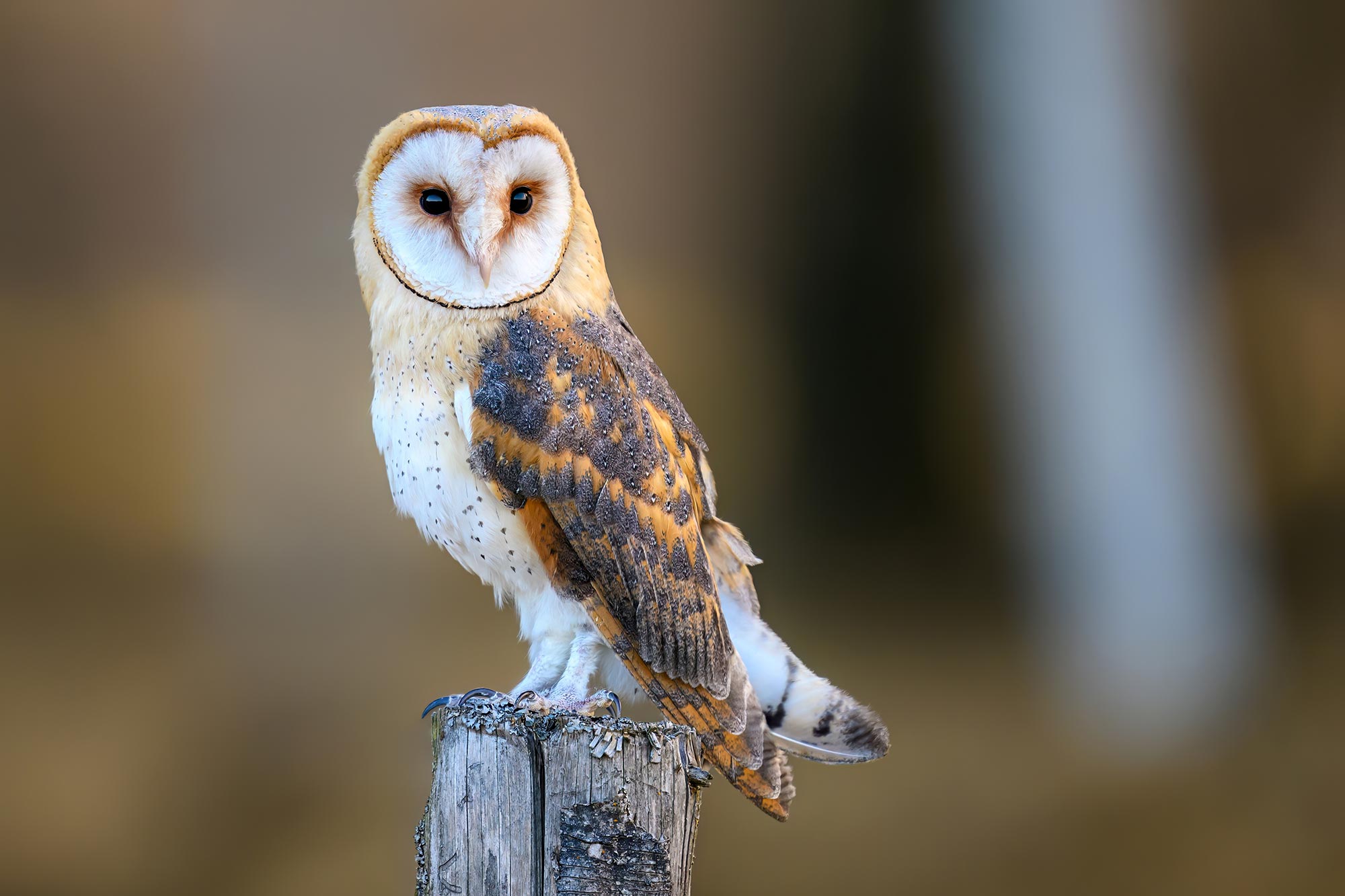
DNA from more than 3,000 barn owls reveals natural selection at work, but the advantage behind their changing feathers may involve coping with stress rather than color itself.
Swiss barn owls have become more reddish-brown and more heavily spotted over the past 30 years. By tracking the DNA variants linked to their plumage, researchers have found evidence of natural selection acting over about ten generations, offering a detailed view of evolution unfolding in the wild.
The study, published in Nature Communications, was led by Dr. Tristan Cumer, a research fellow in the Department of Ecology and Evolution at the University of Lausanne (Unil)’s Faculty of Biology and Medicine. Working in Professor Jérôme Goudet’s team, Cumer and his colleagues examined how genetic variants associated with color and spotting became more or less common over time. The challenge was to distinguish changes that could occur randomly from those shaped by natural selection.
“We compared the changes observed in the population with simulations in which evolution was entirely random. A genetic variant associated with reddish-brown plumage became far more common than chance alone could explain. Only simulations that included natural selection reproduced the changes we observed,” explains Cumer, the paper’s first author.
Redder feathers may be a byproduct
The analysis depended on both extensive genetic sequencing and records collected through decades of fieldwork.
“Drawing on the exceptional volume of data collected by Alexandre Roulin and his group, who have monitored these birds of prey in the field for decades, we were able to sequence the complete genomes of more than 3,000 owls and identify the DNA variants associated with color and spotting. This is one of the most in-depth genetic analyses ever conducted on a wild population,” says Goudet, the study’s last author, who is also affiliated with the SIB Swiss Institute of Bioinformatics.
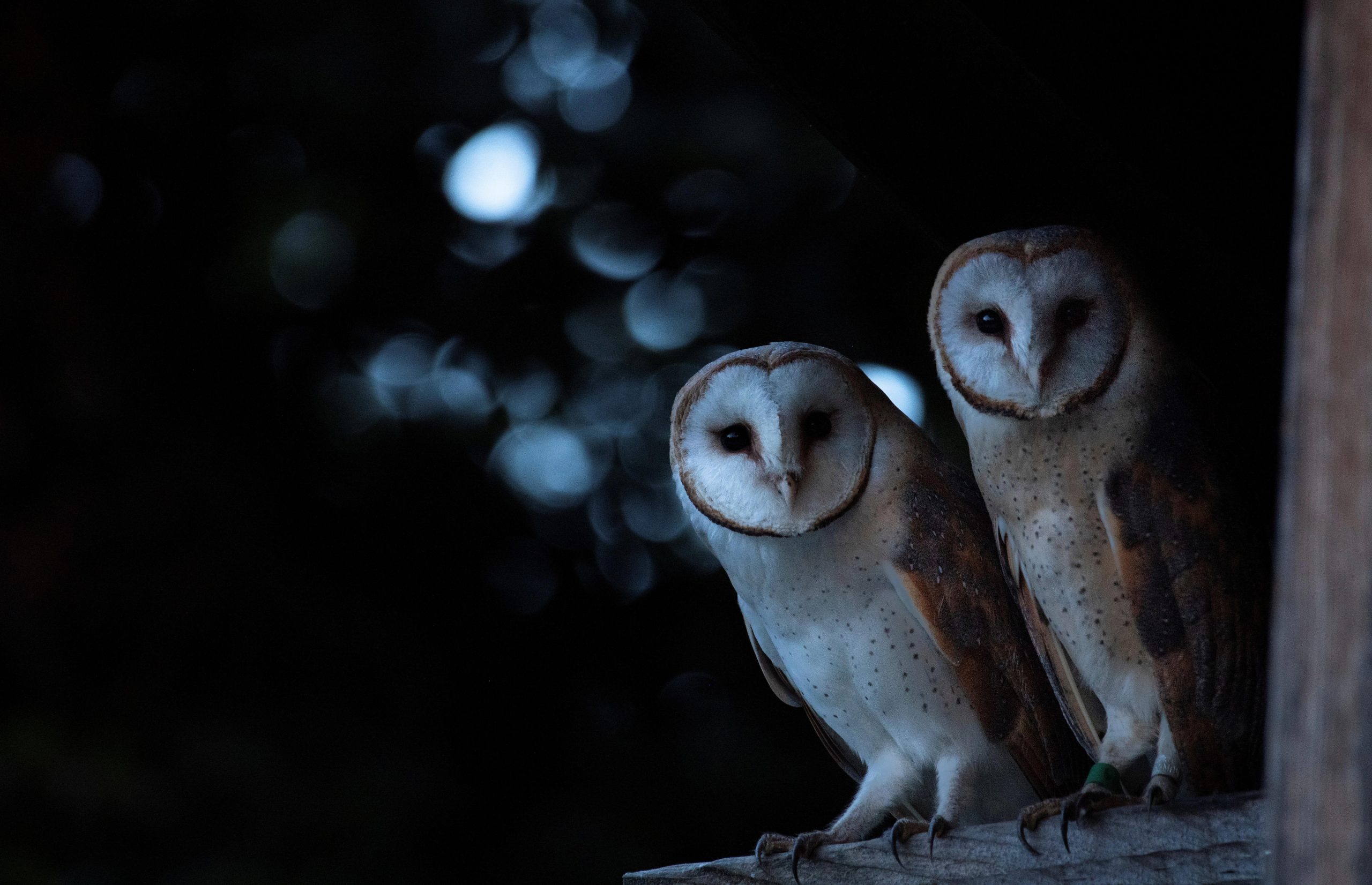
The researchers identified genetic regions that play a major role in the birds’ appearance. These include MC1R, a gene already known to affect pigmentation, and a region on a sex chromosome whose contribution to both color and spotting they clarified. Identifying these links, however, does not establish which trait natural selection is favoring.
“We also do not know whether plumage color is itself the trait directly favored by natural selection,” says Goudet. “MC1R plays a role in pigmentation, but it is part of the melanocortin system, which has also been linked to other traits, including stress responses and aggression. Selection may therefore be acting on one of these traits, with the change in the owls’ appearance simply arising as a consequence.”
Food and stress could shape plumage
Barn owl plumage ranges from pure white to deep reddish-brown, with shades of golden brown in between. Some birds have only a few faint dark spots on their chests, while others carry many more prominent markings. Research at Unil has linked this variation to aspects of the birds’ lives beyond their appearance.
Plumage color is associated with fertility, hunting strategies, and diet. White barn owls, for example, use moonlight to their advantage when attacking prey, as described in an earlier Unil report in French. Spotting is associated with immunity and the ability to cope with stress. Birds with large black spots appear better able to withstand certain stressful conditions, including food shortages and parasites.
These connections offer possible explanations for the recent changes, although the ecological factors driving them remain unidentified. Roulin, a professor in Unil’s Department of Ecology and Evolution and a co-author of the study, suggests that shifts in food supplies or environmental stress could be involved.
“A change in prey availability may have favored reddish-brown barn owls, which eat more voles, whereas white owls tend to feed more on wood mice. The increase in spotting could be linked to greater environmental stress. Despite the striking differences in color between individuals, it remains extremely difficult to determine which ecological factors explain these variations.”
Evolution tracked across ten owl generations
The study’s evidence for natural selection is clearer than the explanation for what is driving it.
“Conducted in collaboration with the Swiss Ornithological Institute in Sempach, this study is one of the rare cases in which the genetic basis of recent evolution has been traced with such precision in the wild. This kind of demonstration is much harder in animals living in their natural environment than in a laboratory,” adds Goudet.
For almost a decade, Goudet and his team have been working to decode the barn owl genome and establish the species as a model for studying evolution in the wild. Their work includes sequencing and assembling its reference genome, a DNA sequence that serves as a guide for genetic research, and reconstructing its evolutionary history across Europe and the Mediterranean. They have also investigated genetic recombination, which reshuffles DNA from one generation to the next, and studied how mutations arise and are passed on within populations.
“Research on this scale is possible because field teams, genomics specialists, and members of the Faculty of Biology and Medicine’s core facilities work together,” says Professor Goudet.
The changes documented in the owls show that detectable genetic evolution need not take millions of years. Cumer sees potential implications for how wild species respond to changing conditions, while the pressures acting on these owls remain unresolved.
“The study carries an encouraging message: it shows that species living in the wild can evolve over a short period. This capacity for rapid adaptation could help them cope with environmental change, including climate change,” says Cumer.
The team now plans to use computer analysis of photographs to measure color and spotting more precisely. Researchers also intend to reconstruct the plumage color of birds that died very young using their genetic data, allowing them to investigate whether particular plumage features are associated with better chances of survival.
Reference: “Genomic bases of short-term evolution in wild barn owls revealed by long-term monitoring and population-scale sequencing” by Tristan Cumer, Alexandros Topaloudis, Eleonore Lavanchy, Anne-Lyse Ducrest, Sonia Sarmiento Cabello, Anna Hewett, Paolo Becciu, Céline Simon, Julien Marquis, Aline Charpagne, Bettina Almasi, Alexandre Roulin and Jérôme Goudet, 12 October 2026, Nature Communications.
DOI: 10.1038/s41467-026-78632-4
This work was supported by SNSF grants number 31003A_173178, 310030_200321/1 and ICC00I0-23168 to A.R. and 31003A_179358 and 310030_215709 to J.G.
Never miss a breakthrough: Join the SciTechDaily newsletter.
Follow us on Google and Google News.