
Close Menu
    Facebook X (Twitter) Instagram
    SciTechDaily
    • Biology
    • Chemistry
    • Earth
    • Health
    • Physics
    • Science
    • Space
    • Technology
    Facebook X (Twitter) Pinterest YouTube RSS
    SciTechDaily
    Home»Biology»Climate Change Drives Babbler Birds Into “Ecological Trap”
    Biology

    Climate Change Drives Babbler Birds Into “Ecological Trap”

    By University of ExeterDecember 16, 2020No Comments3 Mins Read
    Facebook Twitter Pinterest Telegram LinkedIn WhatsApp Email Reddit
    Share
    Facebook Twitter LinkedIn Pinterest Telegram Email Reddit
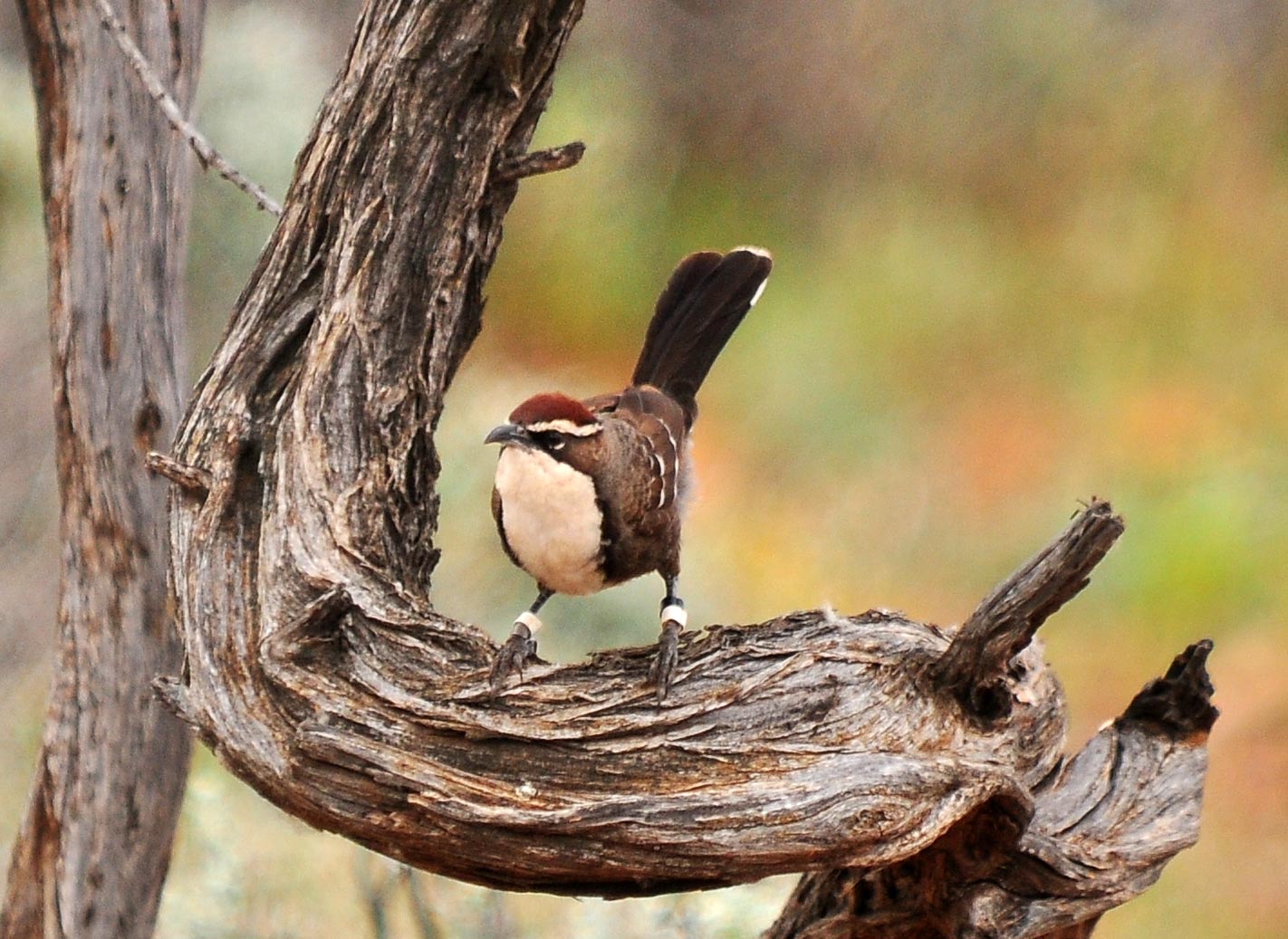
    Chestnut-Crowned Babbler
    A chestnut-crowned babbler. Credit: Niall Stopford

    Animals can fall into an “ecological trap” by altering their behavior in the “wrong direction” in response to climate change, researchers say.

    The so-called “rescue hypothesis” suggests many species might successfully adapt to changing conditions, especially those that are flexible in their behavior.

    But a new study, by the University of Exeter, found that chestnut-crowned babbler birds responded to rising temperatures by changing their behavior in ways that could actually reduce successful breeding.

    This occurred because they reacted to warm peak temperatures in early spring by breeding earlier – but average temperatures at this time are still colder than later in spring, which is bad for incubating eggs.

    Instead of spending more time incubating, females responded to the cold by incubating less – which might improve their own survival chances but expose their developing eggs to harmful, low temperatures.

    “We hope that animals that are more responsive to changes in their environment can cope better with climate change, but unfortunately they can make mistakes that make their situation even worse,” said Alex Cones, who worked on this research during her masters at the University of Exeter.

    Professor Andy Russell, of the Centre for Ecology and Conservation on Exeter’s Penryn Campus in Cornwall, said: “Many animals breed as early as they can in spring, and climate change is causing this to happen earlier and earlier.

    “Paradoxically, our study shows that earlier breeding in response to warming means babbler eggs and offspring are more exposed to the cold.

    “Babblers should respond by incubating their eggs more, but they don’t.

    “Incubating eggs is more costly for the mother in terms of energy in low temperatures, so they focus on their own survival and reduce incubation.”

    Professor Russell added: “Parental care is adaptable, not fixed, but in this case the birds adapt in the wrong direction for their chicks’ survival – falling into an ecological ‘trap’.”

    Chestnut-crowned babblers live in desert habitats in south-east Australia.

    Their eggs must be kept at more than 25°C (77°F) to survive, and development happens best and fastest at about 38°C (100°F).

    The researchers say more studies are required to discover whether “plastic” (adaptable) parenting could provide an “evolutionary rescue package” to protect species from environmental change.

    But they conclude that the evidence from this study is “not encouraging.”

    Reference: “Temperature-mediated plasticity in incubation schedules is unlikely to evolve to buffer embryos from climatic challenges in a seasonal songbird” by Alexandra G. Cones, Andrea L. Liebl, Thomas M. Houslay and Andrew F. Russell, 16 December 2020,  Journal of Evolutionary Biology.
    DOI: 10.1111/jeb.13743

    The study was funded by the Natural Environment Research Council (NERC).

    Never miss a breakthrough: Join the SciTechDaily newsletter.
    Follow us on Google and Google News.

    Biodiversity Birds Climate Change Ecology Evolution University of Exeter
    Share. Facebook Twitter Pinterest LinkedIn Email Reddit

    Related Articles

    Rare Hybrid Bird Discovered in Texas Backyard

    Devastating Hurricane Changes “Rules of the Game” in Monkey Society

    Smaller Bodies, Longer Wings, Earlier Migrations: Untangling the Multiple Impacts of Climate Warming on Birds

    Monitoring Species Condemned to Extinction May Help Conservationists Save Others As Global Temperatures Rise

    Pace of Life: Friends and Enemies “Make Sense” for Long-Lived Animals

    Higher Elevation Himalayan Songbirds Sport Thicker Down “Jackets” to Survive the Cold

    Native Biodiversity Collapse in the Eastern Mediterranean – Most Native Species Are Going Locally Extinct

    Some Birds Live Fast and Die Young – Scientists Study of Thousands of Species to Explain Why

    Birds Can Thrive in Urban Environments With Either Big Brains or Frequent Breeding

    Leave A Reply Cancel Reply

    • Facebook
    • Twitter
    • Pinterest
    • YouTube

    Don't Miss a Discovery

    Subscribe for the Latest in Science & Tech!

    Trending News

    Artificial Sweeteners May Harm Future Generations, Study Suggests

    Splashdown! NASA Artemis II Returns From Record-Breaking Moon Mission

    What If Consciousness Exists Beyond Your Brain

    Scientists Finally Crack the 100-Million-Year Evolutionary Mystery of Squid and Cuttlefish

    Beyond “Safe Levels”: Study Challenges What We Know About Pesticides and Cancer

    Researchers Have Found a Dietary Compound That Increases Longevity

    Scientists Baffled by Bizarre “Living Fossil” From 275 Million Years Ago

    Your IQ at 23 Could Predict Your Wealth at 27, Study Finds

    Follow SciTechDaily
    • Facebook
    • Twitter
    • YouTube
    • Pinterest
    • Newsletter
    • RSS
    SciTech News
    • Biology News
    • Chemistry News
    • Earth News
    • Health News
    • Physics News
    • Science News
    • Space News
    • Technology News
    Recent Posts
    • What if Dark Matter Has Two Forms? Bold New Hypothesis Could Explain a Cosmic Mystery
    • Researchers Expose Hidden Chemistry of “Ore-Forming” Elements in Biology
    • Geologists Reveal the Americas Collided Earlier Than We Thought
    • 20x Difference: Study Reveals True Source of Airborne Microplastics
    • Scientists Uncover Hidden Force Powering Yellowstone’s Supervolcano
    Copyright © 1998 - 2026 SciTechDaily. All Rights Reserved.
    • Science News
    • About
    • Contact
    • Editorial Board
    • Privacy Policy
    • Terms of Use

    Type above and press Enter to search. Press Esc to cancel.