
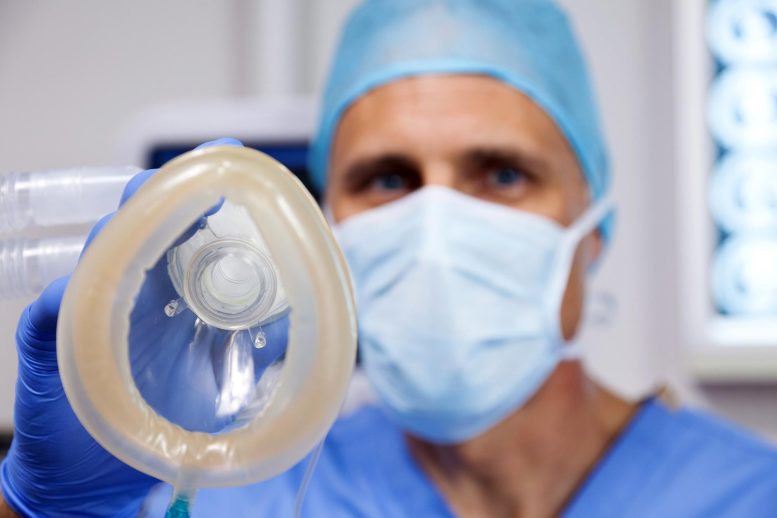
Anesthesia is a modern miracle with a very long history. Aside from the convenience of not having to feel pain, it allows doctors to perform life-saving surgeries. If you’ve ever had surgery, you may recall being asked to count down from 10 and not being able to get past five or six. That unique mix of drugs administered by a doctor was anesthesia. It not only induces unconsciousness but also prevents movement. Imagine a heart surgeon trying to tinker with your arteries while you were twitching. It’s a recipe for disaster. But how exactly does this medicine work? It’s time to talk about one of the most familiar yet least understood elements of modern medicine.
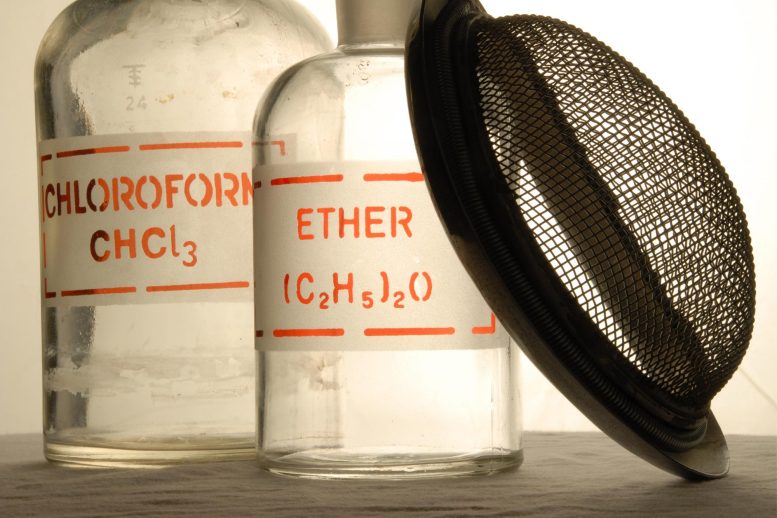
A Little History
Anesthetics are as old as civilization itself. Documents from ancient cultures mention local anesthetics such as opium poppy and alcohol. While not as sophisticated as modern methods, getting drunk will reduce pain in a pinch. A large portion of the history of anesthetics involves accidents. People would use a drug for one purpose and discover that it reduced pain in the process. Take alcohol, for instance; people noticed that they felt less pain while drunk, so they would get drunk before having to undergo something painful.
We also have more modern examples. Ether was a common anesthetic for hundreds of years, but it was first used as a recreational drug. Doctors noticed that people wouldn’t notice some injuries while under the influence of ether and began using it to numb pain. Cocaine also has a long history as an anesthetic and was discovered to have numbing properties when a scientist accidentally got some on his tongue.
As you may have noticed, these examples feature fairly dangerous substances: opium, alcohol, and cocaine. Anesthesiologists (doctors who administer anesthesia) no longer use these substances. Instead, compounds were created that have the same properties without all the negative effects. The process of discovering and refining technology is a key piece of anesthesia’s success story.

The Basics
Your body transmits pain signals via the nervous system. Without nerves carrying electrical signals through your body, you wouldn’t even know what pain was. Understandably enough, anesthesia works by interfering with your body’s ability to transmit pain signals, but it can also do much more.
There are three basic types of anesthesia: local, inhalation, and intravenous. Local anesthetics block signals from your body’s nervous system in a single place. When local anesthetics are in use, you likely aren’t having major surgery. That’s because major surgery requires doctors to do some things that otherwise would be exceptionally painful. In these cases, they need you not only unable to feel anything in a particular area but also unable to move. Inhalation or intravenous anesthesia accomplishes that.
Both inhalation and intravenous anesthetics are whole-body anesthetics. In other words, they prevent your brain from processing pain from any part of your body rather than from a single area. Inhalation anesthesia is inhaled, and intravenous anesthesia is injected into the bloodstream. Anesthesiologists usually combine multiple types of anesthesia to get the mixture just right. They have to tailor the mixture of drugs so that you lose consciousness, don’t move, and feel no pain, all without causing other problems such as your heart slowing down too much or your brain being unable to process more basic signals.
The Science Behind It All
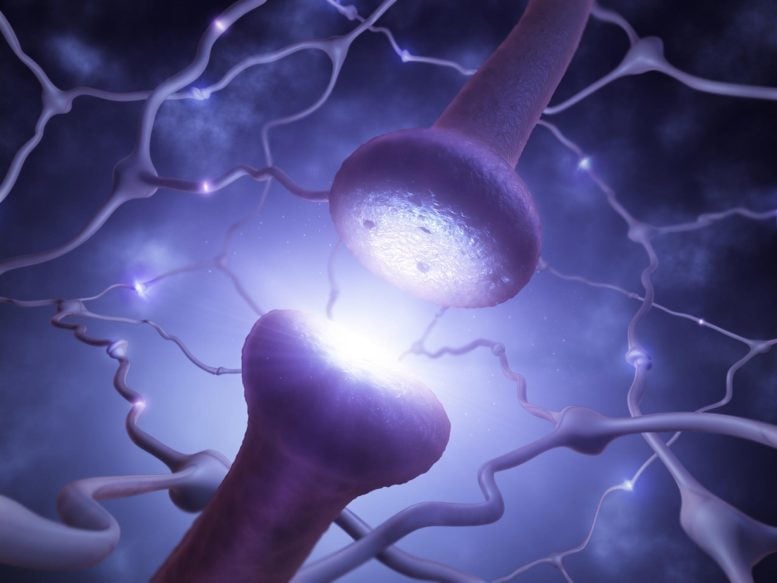
Given all of that, how does it work? Your brain is made up of a network of cells called neurons. These neurons are separated from each other by little gaps called synapses. Anesthesia works by getting into neurons and synapses and preventing chemical signals from taking the correct path.
Different drugs accomplish this by blocking different chemicals at different points. Some anesthetics bind to proteins in the cell membranes of neurons, which allows a lot of negatively charged particles to enter. A huge part of successful transmission is keeping the right balance of positive and negative chemicals, which are called ions. Letting a lot of one type of ion or another will prevent neurons from successfully communicating with one another, thus preventing pain from registering.
New research from scientists at the Okinawa Institute of Science and Technology Graduate University has demonstrated how general anesthetics (the most commonly used kind for putting people to sleep during surgery) work. They studied the effects of a drug called isoflurane. What they found helped researchers understand just how anesthesia allows doctors to induce an immobile, unconscious state free from pain without stopping more basic bodily functions.
They discovered that the drug hinders brain signals in two ways. First, it interrupts the flow of ions in cells, which is critical to the transmission of brain signals. When enough ions build up in a neuron, it releases a batch of chemicals called neurotransmitters into a synapse. Neighboring neurons detect these chemicals and release their own into the next synapses. This chain reaction is how information travels throughout the brain. By hampering the flow of ions, not enough of them build up to cause a release of neurotransmitters.
The second way that isoflurane impedes signal transmission is by traveling into the synapse itself. Here, the chemical binds to areas where the packet of neurotransmitters would normally release. Have you ever seen a cartoon firehose that comically bulges near the spout right before it shoots out a flood of water? Something similar happens to the parts of neurons that are about to release neurotransmitters. Scientists discovered that, as the surface area increases, isoflurane can bind to more and more areas and thus prevent the firehose from ever releasing, so to speak.
These two mechanisms combined are enough to create all the side effects of anesthesia, but without negative consequences. Because isoflurane affects very active processes, ones that cause lots of ions to enter the cell or cause lots of neurotransmitters to be released, more inactive processes are relatively unaffected. In other words, things your body doesn’t need much brainpower to do (such as cause your heart to beat or your lungs to inflate) are not stopped by the anesthetic. It gives us the best of both worlds.
Wrapping It Up
Without the balance between activity and inactivity, anesthesia would be useless. Thankfully, experts can strike that balance quite well. Operating on patients who can’t move and don’t feel pain has allowed doctors to create new and better surgeries for hundreds of years. Incisions have gotten smaller, and outcomes have gotten better because doctors didn’t have to worry about patients kicking and screaming while they were trying to operate. If you like all that modern medicine has to offer, you can thank anesthetics. Without them, we’d all face a lot more pain.
Never miss a breakthrough: Join the SciTechDaily newsletter.
Follow us on Google and Google News.
18 Comments
Hypnosis takes care or removes pain without any medication. Add in that to the history… still used today.
I dont think that you know what you’re talkin about. I guarantee you that if you hipnotized me not to feel pain I would definitely feel pain. No way can hipnosis stop me from being 8n excruciating pain 8f you tried to pull my molar! This is silly
Anesthesia is it’s good but unfortunately it’s not working it’s not always work on certain people at the average dose we found this out when I was young cuz I had a knee injury in football are still in high school bad cliff and pretty in the middle of the knee surgery I just set up and ask them if they were finished the doctor said no lay down go back to sleep okay that’s what I did well Penn my wrist done man this is 20 years later for the toll standard thing with wrist they have to do a little thing cleaning out the carpal tunnel I said surgery and I woke up on he did my first hand I woke up on him and he is supposed to be said okay cool I can do that we did the second surgery made sure I didn’t wake up by increasing the dose I had better film broke my back off top of my trailer and bad thing is broken three spots was there for three days till somebody found me well they finally got to do a hospital taking care of and I woke up twice with him because the amount of pain involved and one time I fell off the table still got surgery done works fine as that every 10 years seems as I do something major but I fell backwards and impelled myself on three pipes well that’s pretty serious surgery and in the middle of surgery was probably had going several times and several things they had to do but in the middle of one of them I woke up on it and I would stop and I said you’re hurting me and they said lie down we’ll take care of lie down well you understand I was this time but it’s the wrong end of the table he had to come back and it just trying to get more in it well it was too late and I tore every line it was hooked up to me out came off that table and they started to try and grab me and well unless you say the military training I had was more than sufficient broke one guys or one I guess you’d be a nurse but rough one of the destination he charged after yesterday some other people over the top of the surgery table and was kind of boxed it a little bit in a corner and they said I look like hulk Hogan ready to Tangled and we’re seeing was I’d already discovered that the front of me was wide open so I had my left hand holding yes definitely had my left hand there and it was a nightmare well yeah see I just got my attention and she knew that I wouldn’t attack her talk to me gently I have no idea what they are doing this job in my neck and it took a while for that to take effect but at least so she can call me and not moving as fast and I just oh they send it took about 2 minutes for that to go into effect where I slid down the wall and was very peaceful and then I closed my eyes but I told my eyes to touch my feet and does any reaction no you on the table and let’s get this on gear scared the hell out of my other is too I guess so whenever you go to the hospital and you’re going to have surgery you make sure and tell the sctologist everything about what might go wrong that’s what they asked you do you have any problems with anesthesia or that stuff I tell him no not if you give me the right amount and I don’t I’ll explain five surgeries and I woke up in every one of them because wrong amount wasn’t enough well it’s everybody’s choice but before I sign off on that form that you have a CTR is a sign I’ll bring in very deep I wake up during surgery and I’ll sign the form so they’ve been free warm on that I know they’ll come out with something much much better than what we have and I instead of trying to type this out on my phone I’m saying it verbally so I’ll go through it I’ll correct the things I need to that always tell your surgeon and the anesthesiologists are to the really make sure you stay alive and don’t have pain much more than that not much I can say guys. Very sorry this is so long.
Sorry but I gotta ask! Wtf are you talking about. I only speak english but I would have a better chance interpreting russian 5han understand anything you said! Wow
In majority surgical cases in USA anesthesia is administered by Certified Nurse Anesthetist. The statement that the doctor administers the anesthesia is wrong in most cases!!!
Nurse Anesthesiologists also perform anesthesia services, not just doctors. They were actually the first ones to specialize in anesthesia, before doctors. They are also required to have a doctoral degree.
Yes I have had surgeries where not only do I wake up I spoke with the Doctor while he did an Umbilical Surgery on me. The Anathesiologist said he had never experienced anything like this where someone stays awake during Surgery. Also Once had a Rectal Fissure repaired and I felt as though I could not breath as they were taking there sweet time to put the Tube down my throat as the doctor was talking about some Real estate he had purchased. That was scary as hell!
So then if its so safe why every time i get anesthesia my bp drops? What gives? I hate having surgery because of this.
I’ve awakened during oral dental surgery when implants were being put in. The dentist was banging on something in my mouth. In my head as I was coming too, I was singing Maxwells Hammer came down upon her head.I assume I started struggling I heard him yelling at the nurse to “put her out now!” Even for twilight sedation it takes 4 doses of Versed for me to stop talking. Last surgery I was on the OR table mask over my face listening to the nurse stating out loud what she was administering per IV sedation.I don’t remember the first medication it started with an “M” then she said now administering 2mg or cc’s Of Fentanyl. At which point I thought to myself oh that’s not good, then I was out. My throat was bloody on one side for a week after surgery and I’m wheezing from the right lung. I had left shoulder rotator cuff surgery I’ve had many surgeries never had this problem.
I had a terrible experience with anesthesia during a cerclage placement in 2020 while pregnant of my twins. The medical staff wasn’t able to wake me for over 2 hours, my skin turned blue, when I woke up I couldn’t breathe and was coughing up blood. No explanation given, just that it sometimes happens!
Leave anesthesia to nurse Anesthetist and have the pleasure of experiencing terrible incidents described above.
The poster Sanjay is a complete moron to comment anesthesia from a CRNA would give you negative experiences. They obviously are ignorant of actual facts.
A layman’s description for the uneducated. Almost all comments reflect your target audience. Not a place for any medical professional. Im out
Are any of the people who had negative reactions to anesthesia by chance have Red hair? Fact Red heads need more anesthesia to put them under than average people. Learned this by waking up during a hernia repair and researched it for months until I found the reason.
lim a nurse anesthesia in iran i very love this jub and its a very hight risk job
if you have eny bidding job for me kind apprise me by my email or my page inestagram (__milad.88)
My father had a hernia operation at the age of 84..before he had the surgery he spoke rationally ..the day after he was totally incoherent..he improved slightly only to stay impaired mentally,,,this difference happened in a 24 hr period…HE NEVER RECOVERED and developed dementia…did l mention he was a doctor…..then l realized why he kept postponing the surgery…to any anesthesiologist who says that can’t happen…l saw it happen..l was THERE..YOU WEREN’T!!!
I have pseudocholinesterase deficiency, my mother also had it. I tell them every time I have had surgery and they still give me sux and I don’t wake up for several hours. The last time I could hear them saying my name and saying squeeze my hand and of course I could not move and then I was out again.
July 2015 had carpal tunnel surgery on left hand didn’t feel a thing, August 2016 had carpal tunnel surgery on left hand I guess doctor thought I was fast asleep when they started cutting I pulled my hand away I felt everything like Someone put my hand on fire when pulling my hand away I heard doctor say give her a higher dose , when they did that I was out after 3 months my right hand thumb started getting effective still in pain doctor said that I would needed another surgery on my right hand that was in 2016 still waiting, for an update by the way this was at Kaiser hospital off Mack road Sacramento California