
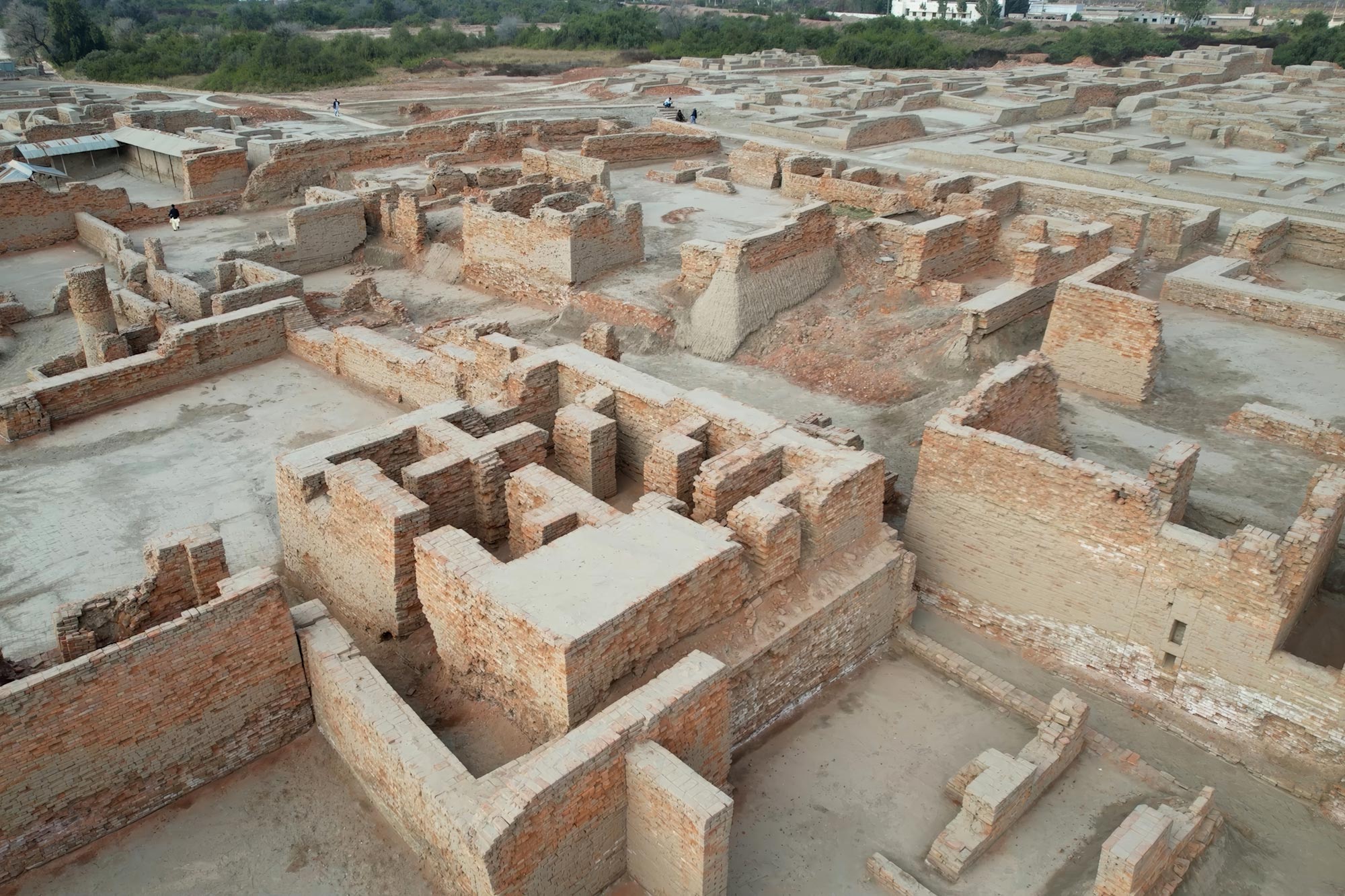
A new study of the ancient Indus city of Mohenjo-daro challenges a long-held view of history by suggesting that prosperity did not lead to greater inequality.
Unlike ancient Egypt, with its pyramids and powerful pharaohs, or Mesopotamia, with its ruling elites and monumental palaces, the Indus city of Mohenjo-daro left behind few obvious signs of concentrated wealth or authority. Now, researchers think they know why.
A new University of York study suggests that the 4,000-year-old city became increasingly equal as it grew and prospered. By examining the sizes of homes throughout Mohenjo-daro, the team found evidence that wealth disparities declined over time, defying a pattern that historians have long considered a hallmark of early urban development.
Historians have long argued that when small villages developed into cities, inequality usually increased. In many early urban societies, a narrow class of rulers, kings, and priests gained control of wealth, widening the divide between rich and poor.
A new University of York study of Mohenjo-daro, the largest city of the Indus civilization, points to a very different outcome. After examining house sizes across the ancient city, researchers found that Mohenjo-daro was more equal than comparable societies in Mesopotamia and Greece and that it became increasingly egalitarian over time.
Mohenjo-daro Challenges Ancient Inequality Models
Lead author Dr. Adam Green, from the University of York’s Department of Archaeology and Department of Environment and Geography, said, “Legacy data from the ancient city shows that as the city matured, the gap between the largest and smallest homes narrowed. In fact, by its later years, the wealth gap in this massive urban center had dropped to levels typical of the first farming villages.
“While ancient Egyptians were building pyramids for god-kings, and the Greeks were constructing massive palaces at Knossos, the people of the Indus were building something entirely different.
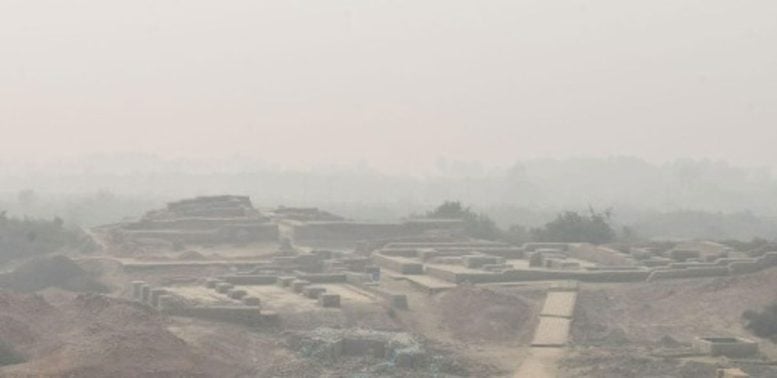
“Instead of gold-filled tombs and huge temples, Mohenjo-daro focused on sophisticated brick-lined drains and organized street layouts. Instead of allowing the perks of society to accumulate with a tiny elite, the city’s amenities were widely distributed amongst the everyday households.”
This pattern was especially clear in the spread of Indus seals, which were used in trade and business. These seals were usually found inside ordinary homes rather than public buildings, and the city had no palaces where such tools of authority could be concentrated.
Shared Wealth and Everyday Access to Power
The evidence suggests that resources were not controlled by one ruler. Instead, residents appear to have worked collectively to maintain broad access to a good quality of life.
The city’s investment in practical systems, including drainage and street upkeep, also points to cooperation for the public good. A standardized system of weights and measures used across the region helped keep trade fair for everyone.
Published in the journal Antiquity, the findings challenge the idea that inequality must rise as economies grow. According to the researchers, Mohenjo-daro shows that a society can be technologically advanced and highly productive while sharing prosperity widely rather than concentrating it among a few people.
Public Infrastructure and Collective Prosperity
Dr Green, said: “Mohenjo-daro is often cited as being famous for what it doesn’t have, such as the absence of palaces for kings, gold-filled tombs, and no statues of rulers. But what it does have is so important.
“In the period when inequality appears to be lowest, productivity appears to rise. It challenges the idea that prosperity requires us to concentrate decision-making powers in the hands of the few.
“It is quite an interesting lesson for modern societies, as the Indus civilization demonstrates clearly that an urban society can be highly productive and inventive at scale, whilst also ensuring that resources and power are shared equitably. In fact, doing so may even have been essential to sustaining prosperity over the centuries.”
Reference: “Inequality declined in the Bronze Age city of Mohenjo-daro” by Adam S. Green, Iqtedar Alam and Cameron Petrie, 18 May 2026, Antiquity.
DOI: 10.15184/aqy.2026.10359
Never miss a breakthrough: Join the SciTechDaily newsletter.
Follow us on Google and Google News.
4 Comments
SINCE WHEN DID TODAY’S COLLEGE OR UNIVERSITY LEVEL OR HIGH SCOOL LEVEL INSTRUCTORS,RESEARCHERS,LECTURERS,etc ~ GIVE A BLEEP ABOUT CONSPICUOUS AND//OR EXTREME DIFFERENCES IN WEALTH AS SOCIETIES CYCLE THRU WHAT ARCHEOLOGIST CALL “CITIFICATION.”
THE STUDY OF 📖 📓 GREEK AND ROMAN CULTURE AND “CIVILIZATION”
IS CONSIDERED “CANNON” AND “FOUNDATIONAL”.
PROBABLY SHOULD NOT BE ALLOWED TO GRADUATE WITHOUT IT.
REGULAR PERIODS OF WARFARE,CIVIL WAR,INVASIONS,PANDEMICS,USE OR NON~USE OF THE “WHEEL”,NATURAL DISASTERS ~ EXACTLY WHAT TYPE
OF CIVILIZATION IS BEST “EQUIPPED” TO DEAL WITH WHAT KIND OF CHALLENGE.
DO THE MATH.
THANKYOU.
NETERU (X)⁸
NYC//U.S.A..
What exactly is your point?
Very interesting article and I have no doubt there are other examples of ancient societies working for the greater godcof all. The fact that we continue to follow and push the “strong man” narrative and the “greed is good” narrative is leading us to the brink. Time to change both the narrative and the practice.
the size difference is too great