
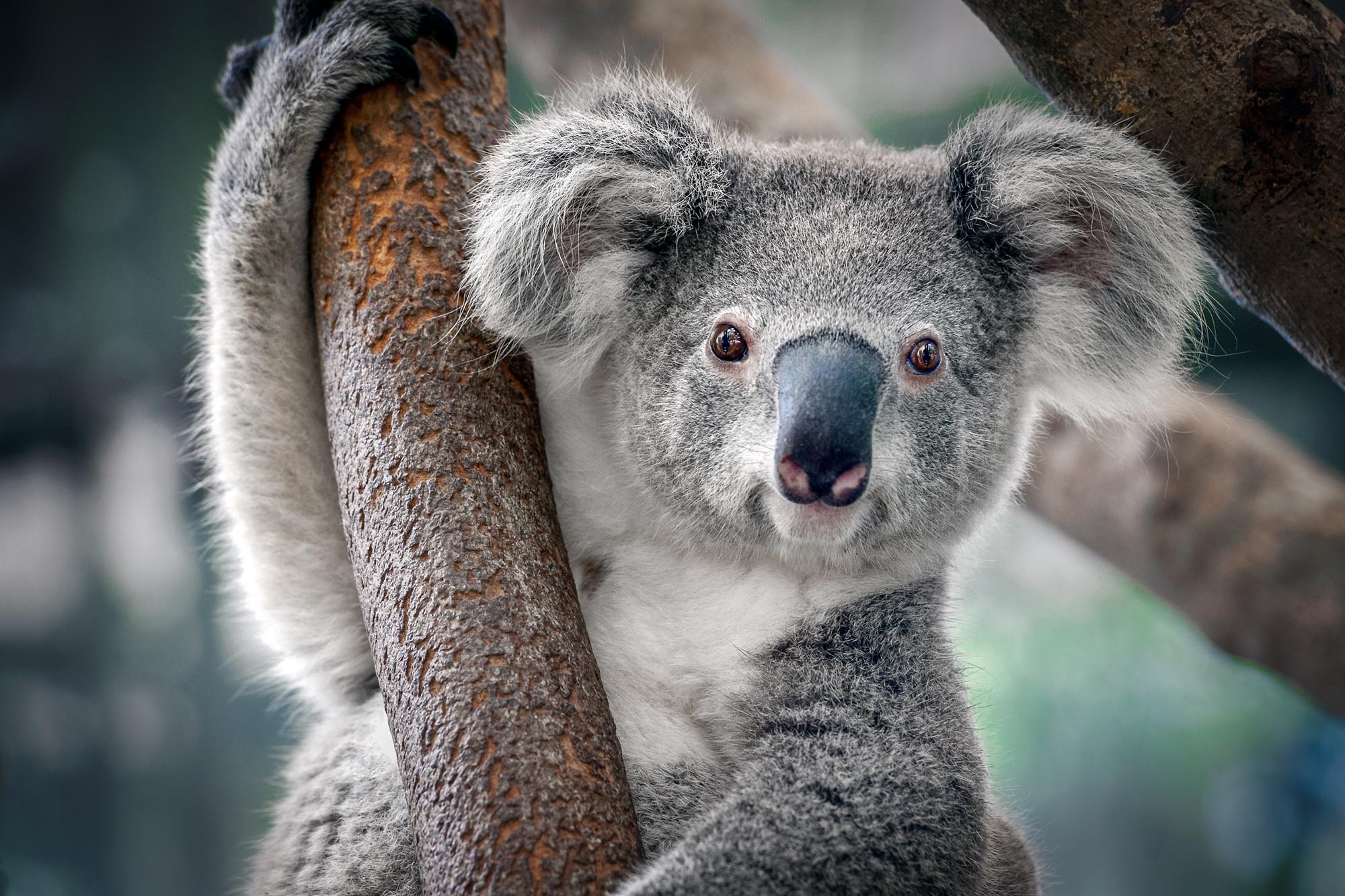
Koalas survived a climate-driven population crash 100,000 years ago, and new genomic research is helping scientists better protect the species today.
A major genomic study has transformed scientists’ understanding of koala (Phascolarctos cinereus) evolution, showing that the species underwent a dramatic population decline about 100,000 years ago, long before humans reached Australia.
Researchers found that every koala alive today traces its ancestry to a single population that survived severe climate shifts, including glacial cycles and extended periods of cold, dry conditions linked to changes in Australia’s environment as the continent moved northward.
Today, koalas face a different set of challenges, including hunting, habitat destruction, bushfires, and disease. Since 2022, the species has been listed as endangered in Queensland, New South Wales, and the Australian Capital Territory.
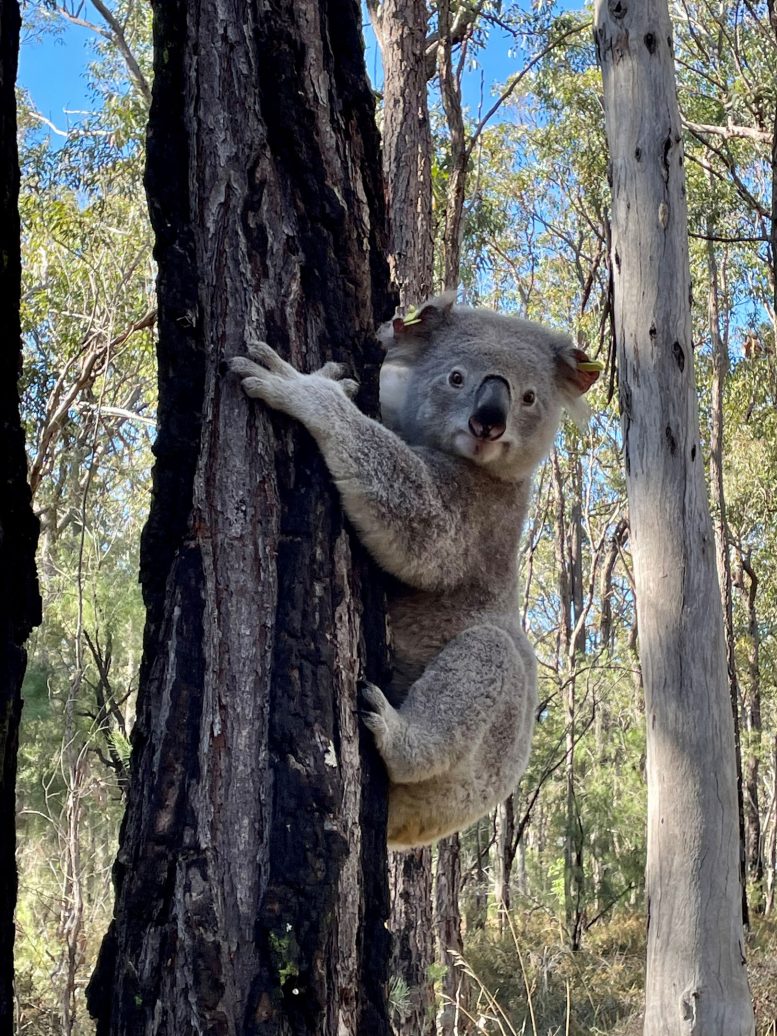
The research, led by scientists from the University of Sydney and Texas A&M University, challenges earlier studies that attributed major koala population declines to human arrival in Australia. The findings were published in the journal Molecular Biology and Evolution.
Genomic Evidence Rewrites Koala History
“The study rewrites the timeline for the koala’s genetic history in Australia,” says PhD student Toby Kovacs, who led the research.
“By calculating the mutation rate of modern koala populations, we can estimate and build the genetic timeline backwards all the way to 100,000 years ago to get a glimpse of genetic diversity and the sizes of ancient koala populations.”

How Ancient Climate Shifts Shaped Koala Survival
“Fossil records are too sparse to know exactly how big koala populations were 100,000 years ago, so studying their genomes offers vital clues to their evolutionary history,” said Mr. Kovacs. “Genomic analyses show that koalas have experienced major population declines in the past due to climate change and habitat loss.”
“When environmental conditions improved, their populations recovered and expanded across much of eastern Australia. It’s important to make clear many of the threats facing modern koala populations are caused by humans, which include habitat loss and hunting.
“Understanding how koala populations responded to past declines and recoveries can help guide the science-based conservation strategies needed to protect the species into the future.”
To reconstruct the koala’s genetic past, researchers focused on its mutation rate, which measures how often new genetic changes appear in a species’ genome.
New mutations naturally arise in every generation. The number of these changes per generation varies between species, making mutation rates an important tool for tracing evolutionary history.
First Direct Koala Mutation Rate Measured
The team sequenced the genomes of four parent-offspring trios and counted newly occurring mutations. Using these data, they calculated a koala mutation rate that was about half the rate observed in humans.
Researchers then applied this newly established rate to 457 koala genomes, allowing them to track changes in population size over long periods of time.
The study marks the first direct measurement of mutation rates in koalas and in any member of the marsupial order Diprotodontia, which includes kangaroos, wombats, and possums.
Earlier studies concluded that koala numbers fell sharply after humans arrived in Australia about 65,000 years ago. However, those analyses relied on mutation rates borrowed from distantly related mammals such as mice and humans.
Climate Change Drove Population Bottleneck
The new analysis showed that koala populations began declining around 100,000 years ago and reached a severe bottleneck approximately 60,000 years ago.
Researchers found that this collapse coincided with a period of major environmental upheaval during the late Pleistocene, well before any human contact.
Australia’s landscape changed dramatically over millions of years. During the Paleogene (23 – 66 million years ago), much of the continent was covered by wet forests. Conditions shifted significantly during the Miocene (5- 23 million years ago) as the Australian tectonic plate drifted northward.
Later, during the Pleistocene (2.5 million to 11,700 years ago), repeated cycles of cold, dry glacial periods and warmer, wetter interglacial periods reshaped ecosystems across the continent, creating increasingly dry and fire-prone environments.
Habitat Loss and Range Fragmentation
As Australia became more arid, the expansion of the Nullarbor Plain about 70,000 years ago created a vast semi-arid region that reduced suitable koala habitat and separated eastern and western populations.
The western population eventually disappeared, but a small eastern population survived through the harshest climatic conditions.
When the current interglacial period brought more favorable conditions, the surviving koalas expanded again. Between 16,500 and 6,000 years ago, they split into five genetic populations that gave rise to the groups found along Australia’s east coast today.
“Given these results, we’re now curious to see if other Australian species, including the closest relatives of extinct megafauna, also experienced population declines before humans arrived,” says Mr. Kovacs.
New Genetic Tools for Koala Conservation
Beyond revealing the species’ ancient history, the newly calculated mutation rate could help researchers better understand present-day koala populations and support conservation efforts.
Beyond revealing the species’ ancient history, the newly calculated mutation rate could help researchers better understand present-day koala populations and support conservation efforts.
“Our team is generating enormous genomic resources for koalas, but to fully understand what these datasets can tell us, we also need to know how quickly new genetic changes arise in the species,” says Mr. Kovacs.
“Estimating the mutation rate improves our ability to reconstruct koala population history, understand their capacity to adapt, and make more informed conservation decisions for the future.”
Reference: “Mutation rate estimate and population genomic analysis reveals decline of koalas prior to human arrival” by Toby G L Kovacs, Nicole M Foley, Luke W Silver, Elspeth A McLennan, William J Murphy, Carolyn J Hogg and Simon Y W Ho, 9 June 2026, Molecular Biology and Evolution.
DOI: 10.1093/molbev/msag108
Never miss a breakthrough: Join the SciTechDaily newsletter.
Follow us on Google and Google News.