
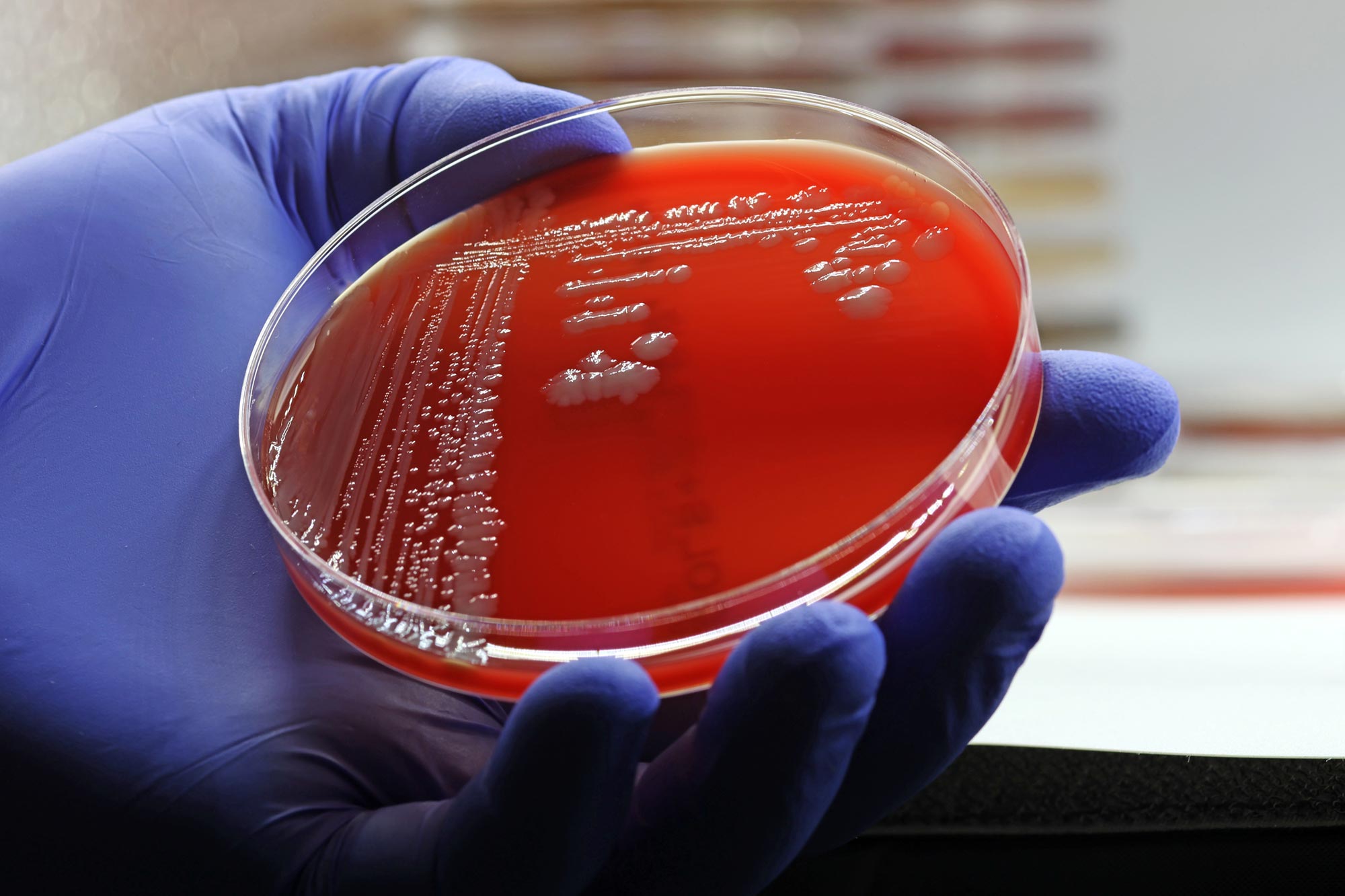
A small molecule restored vancomycin’s activity against resistant bacteria by blocking a key bacterial enzyme.
A trusted antibiotic can lose its power when bacteria evolve ways to resist it. As this problem spreads, infections that were once manageable can become dangerous, while routine surgery and cancer treatment carry greater risks because antibiotics may no longer prevent or control infection.
Researchers are therefore looking beyond the traditional search for entirely new antibiotics. One alternative is to pair existing drugs with antibiotic adjuvants, compounds that do not directly kill bacteria but instead disable the defenses that make the microbes resistant.
Existing antibiotics gain new partners
John Moses and his colleagues at Cold Spring Harbor Laboratory (CSHL) have spent years developing chemical reactions that make it faster and easier to create potential drug molecules.
Their work includes a method called diversity-oriented clicking (DOC), which was developed in the Moses laboratory. Using this approach, researchers assembled a library containing more than 150 compounds with varied molecular structures. That collection has already supported research into both antibiotic resistance and cancer.
A collaboration with Scripps Research has now used the library to restore the effectiveness of vancomycin, an important antibiotic used against serious infections, including those caused by MRSA and Clostridium difficile (C. diff).
These bacteria can develop resistance and become “superbugs” that evade frontline treatments such as vancomycin. Resistant strains can then spread through hospitals, nursing homes, and communities, narrowing the available treatment options.
A small molecule restores vancomycin
Researchers from the Moses laboratory at CSHL and Howard Hang’s group at Scripps focused on secreted antigen A (SagA), a bacterial enzyme linked to antibiotic resistance. They found that a small molecule called pghi-4 could inhibit this enzyme.

Pghi-4 was first identified in the Moses laboratory in 2020. When researchers combined it with vancomycin against drug-resistant E. faecium, the antibiotic regained its ability to kill the bacteria.
The finding did not emerge from a project designed specifically to discover another antibiotic. Instead, it grew out of fundamental chemistry aimed at creating new reactions and expanding the range of molecules available for biological testing.
“This discovery came from fundamental chemical research,” he explains. “Reaction development led to the discovery of the first inhibitor of an important enzyme involved in antibiotic resistance. This is a process we’re constantly refining to both keep our library of molecules up to date and add more for collaborators to take advantage of in their research.”
Shared chemistry broadens the search
By making the molecular library available to collaborators, the researchers hope it can support similar efforts against other resistant pathogens. Possible future targets include drug-resistant strains of tuberculosis.
“This work reflects a philosophy of chemistry that’s designed to accelerate drug discovery in its purest form,” says Moses. “By using reliable, robust, and intelligent chemical reactions, we can build new molecules more efficiently. That’s exactly the approach we used here.”
As antibiotic resistance grows, some of the most useful treatments may come not from replacing existing drugs, but from finding molecules that help those antibiotics work again. In this case, a compound created through basic chemical research restored vancomycin’s activity against resistant bacteria, showing how discoveries at the laboratory bench can provide new ways to protect established medicines.
Reference: “Genetic and pharmacological inactivation of peptidoglycan remodeling increases antibiotic susceptibility of vancomycin-resistant Enterococcus faecium” by Kyong T. Fam, Pavan Kumar Chodisetti, Zifei Wang, Joshua A. Homer, Christopher J. Smedley, Seiya Kitamura, Benjamin Silva, Yijun Xiong, Althea Hansel-Harris, Matthew Holcomb, Simeon Babarinde, Adrianna M. Turner, Daria Van Tyne, Ian A. Wilson, Stefano Forli, Benjamin F. Cravatt, Donghyun Park, Dennis W. Wolan, John E. Moses and Howard C. Hang, 16 June 2026, Nature Communications.
DOI: 10.1038/s41467-026-74057-1
Funding: National Institutes of Health, National Cancer Institute, Australian Research Council, New York State Biodefense Commercialization Fund, F.M. Kirby Foundation, Starr Foundation
Never miss a breakthrough: Join the SciTechDaily newsletter.
Follow us on Google and Google News.